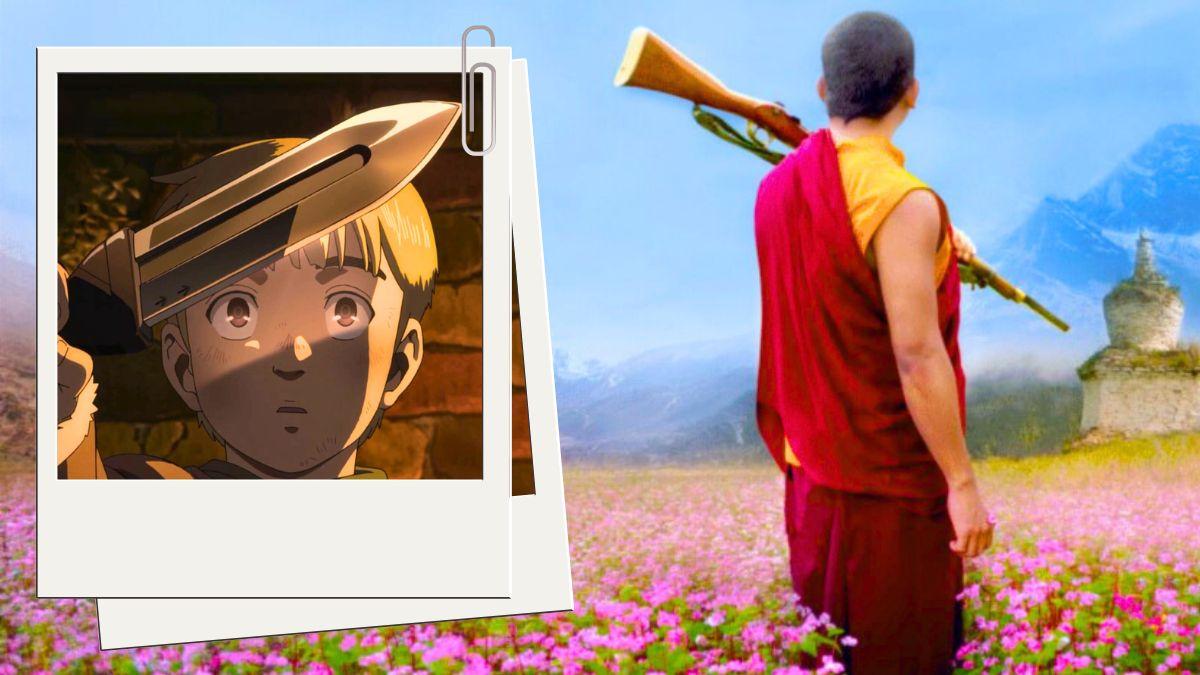
Stills from ‘Vinland Saga’ and ‘The Monk and the Gun’
| Photo Credit: Crunchyroll, MUBI
Whether you’re an old hand at arthouse or just dipping a toe into the rising otaku subculture of anime aficionados around the world, this column lists curated titles that challenge, comfort, and occasionally combust your expectations.
This week’s picks bring two very different journeys into reckoning. One traces a Viking warrior’s brutal path through war, loss, and vengeance until he stands at the threshold of atonement. The other accompanies a Buddhist monk and a foreign outsider across a Himalayan kingdom as democracy, media, and modernity knock on the door of a lifetime lived simply. Vinland Saga (available on Crunchyroll and Netflix) and The Monk and the Gun (streaming on MUBI) are stories about history’s long shadow and what it demands when ordinary people try to begin again.


From the drawing board
Makoto Yukimura’s Vinland Saga, has long been regarded by critics and readers as one of the most accomplished contemporary manga for its meticulous historical reconstructions and moving inward excavations. Set in the early 11th century, the story follows Thorfinn, a young Icelandic warrior who grows up chasing the man who killed his father. This Hamletian pursuit of revenge across England and the North Sea gradually expands into a broader chronicle of conquest, enslavement, and the human cost of war. As Thorfinn moves from battlefield prodigy to a man reckoning with everything he has done, the narrative traces his attempt to unlearn violence and imagine a life beyond the machinery of empire.

The anime adaptation translates its gilded battle tableaux into sequences that obsess over what the violence leaves behind. The show’s first season revels in kinetic cruelty while the second turns its camera inward, staging Thorfinn’s undoing and slow repair as a study in moral apprenticeship. What feels most valuable about the adaptation is how it balances its spectacle and spiritual work. Thorfinn’s much-quoted vow — the steadfast claim “I have no enemies” — functions as a moral instrument that the story composes into practice. And Yukimura’s research and obsession with historical detail let the myth feel provisional.

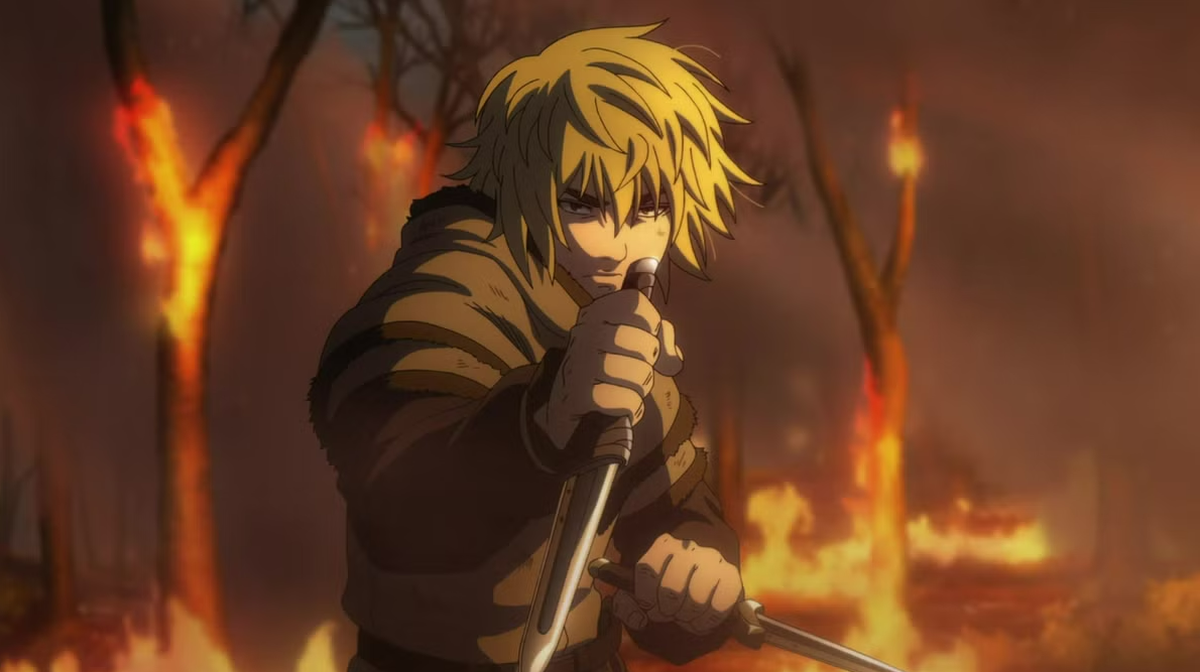
A still from ‘Vinland Saga’
| Photo Credit:
Crunchyroll
Equally interesting is the fandom this work has cultivated. People come to Vinland Saga for the carnage and stay for its life-changing meditations. The series has been read and watched again and again as a manual for tempering anger and contempt, and that reception is part of the text’s meaning. People often mention how the work sits on the same shelf as Berserk, Vagabond or Attack on Titan because of the scale of its ambition and the way it treats violence as something with weight rather than shock value. It also feels spiritually close to Shusaku Endo’s novels and Cormac McCarthy’s introspections.
Foreign affairs
The Monk and the Gun stages a different lesson. Pawo Choyning Dorji’s sophomore feature is a gentle political satire that places Bhutan’s first experiments with democracy beside the absurdities of cultural contact. A rural monk asking for guns to bury in a stupa and an American collector hunting an antique rifle compose a comic fable about value and meaning. Dorji’s eye is at once affectionate and skeptical. He captures the choreography of a village learning the rituals of voting and how modernity arrives through soda bottles, television, and the image of James Bond.

Stylistically, the film evokes the reflective pacing and intimate observation of filmmakers like Edward Yang and Hirokazu Kore-eda, while its moral and spiritual compass is unmistakably shaped by Pawo Choyning Dorji’s mentor, Dzongsar Khyentse Norbu — the seasoned Bhutanese filmmaker and Buddhist teacher, best known for Hema Hema and Travellers and Magicians.


A still from ‘The Monk and the Gun’
| Photo Credit:
MUBI
The film’s most telling gestures are intimate, like a daughter asking for an eraser while adults argue about policy, or a wooden phallus that becomes an emblem both bawdy and devotional. Dorji’s humour never evacuates the stakes, and his satire asks whether the forms of democracy can be grafted onto a life that still answers to older sources of authority and meaning.
Ctrl+Alt+Cinema is a fortnightly column that brings you handpicked gems from the boundless offerings of world cinema and anime.
Published – November 28, 2025 07:39 pm IST