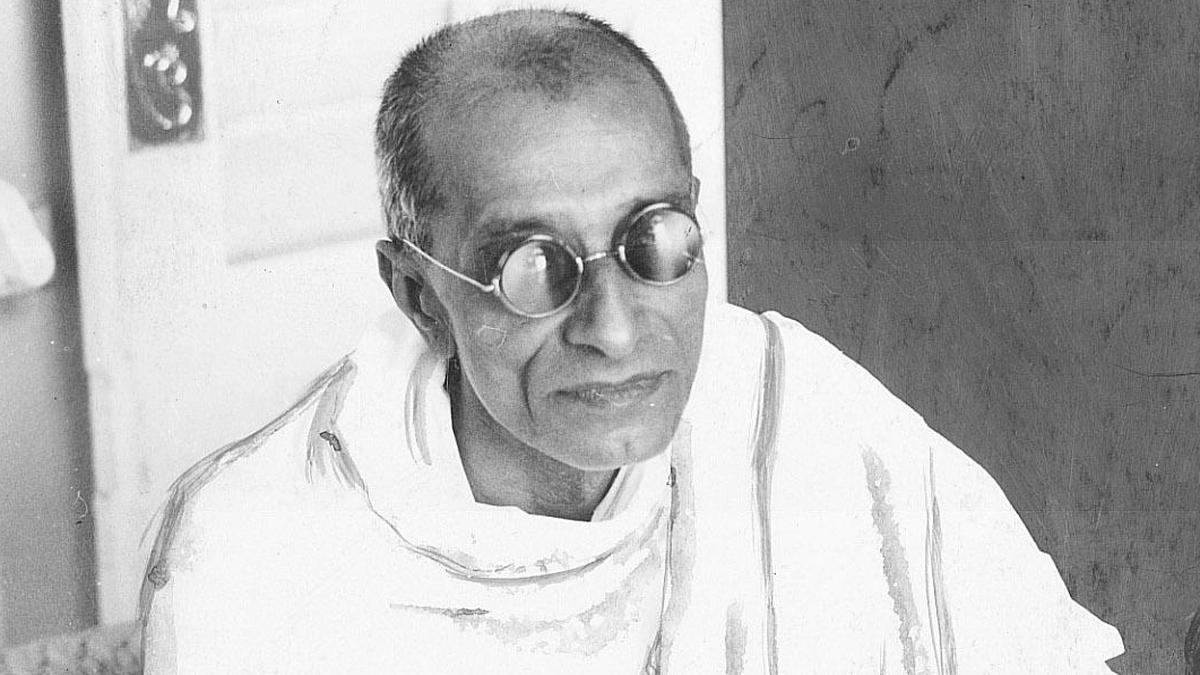
K. Kamaraj
| Photo Credit:
THE HINDU ARCHIVES
Thirupparankundram has been in news these days for the controversy over the lighting of a traditional lamp near the Subramaniyaswamy temple during the Tamil month of Karthigai (mid-November to mid-December). Eighty years ago, the same place saw two warring groups in the State unit of the Congress breaking the ice, even though no final resolution was reached then for the power struggle between them. While one faction was headed by Tamil Nadu Congress Committee (TNCC) president K. Kamaraj, the other was led by veteran leader C. Rajagopalachari (C.R. or Rajaji).
The Thirupparankundram conference in October 1945 debated on the formal re-entry of Rajaji into the organisation. Before the party launched the Quit India struggle in August 1942, he quit the organisation following his differences with Mahatma Gandhi and other leaders of the party over the Muslim League’s demand for the creation of Pakistan and the agitation. The conference was held after the three-year ban on the Congress party was lifted following the Labour Party’s stunning success in the general election in the United Kingdom in July 1945.
In the first week of September 1945, there came an announcement for a vacancy in the TNCC from Thiruchengodu taluk (then in Salem district and now in Namakkal district). The election took place on September 5 and Rajaji was elected, as his was the only nomination. “The [Taluk Congress] Committee duly declared Rajaji elected as member of the Tamil Nadu Provincial Congress Committee and a delegate to the Indian National Congress,” stated a brief news item of The Hindu on September 8. (The vacancy arose because of his resignation from the party in 1942). But, the development came as a surprise to Kamaraj, who, according to Kamaraj: A Study (V.K. Narasimhan, National Book Trust, 2008), knew nothing about it. He had immediately challenged the validity of the election, which took place amid efforts to bring about rapproachment between the groups. Even the idea of a joint tour by Rajaji and Kamaraj was mooted, as there were widespread expectations that elections to the provincial legislatures would be held soon.
Not surprisingly but to the TNCC chief’s annoyance, Congress president Maulana Abul Kalam Azad, in no time, made it public the correspondence that he had with Rajaji in August, wherein he had welcomed the latter’s decision to rejoin the party. Kamaraj, who had developed a strong emotional antagonism towards Rajaji over the exclusion of his mentor, S. Satyamurti, from the Congress’ Council of Ministers in the Madras Presidency in 1937, however, quoted the rules of the party, which, in his interpretation, did not allow Rajaji’s election.
Organisation rules
In Kamaraj: Oru Sahaptam, seasoned Congress leader A. Gopanna recalls as per the rules of the AICC and the TNCC, a person should have been a member for three consecutive years, a rule which Rajaji did not fulfil. Besides, the popular mood in the party was against his accommodation in the organisation, the condition of which was reflected at a meet of the Congress workers in Ariylaur, where 670 out of 674 delegates voted in favour of a resolution that those who did not participate in the 1942 struggle should be kept out of the party. When the Ariylaur event took place, Kamaraj was still in jail in Amaravati in Maharashtra. The run-up to the Thirupparankundram conference was marked by the spar between the two groups, expressing views for and against Rajaji’s re-entry. At a public meeting in Thanjavur in mid-October which was, this newspaper reported on October 19, attended by around 15,000 people, Rajaji said when he left the Congress in 1942, he had “no quarrel” with leaders in the State and his differences were with the All India Congress Committee (AICC). When he decided to serve the Congress again, he “naturally intimated” it to the all-India panel. Further, all State-level Congress Committees were not functioning at the time he applied for re-admission to the Congress president.
On October 30, the day before the proposed conference of the TNCC, the State unit’s working committee met at the conference site, wherein 13 out of 14 members had taken part, the lone absentee being C.P. Subbiah, who contested against Kamaraj in 1940 for the post of president.
After the meet was over, journalists alluded to the Rajaji affair in their interaction with the TNCC chief and asked whether there was anything noteworthy about the day’s meeting. The reply: “Absolutely no hitch or trouble.” As the deliberations of the working committee were on, the news was out that Mahatma Gandhi had come out in support of Rajaji.
In a letter to L.N. Gopalaswami, secretary of the State Harijan Sevak Sangh, Gandhi said that to accuse Rajaji of “betrayal” was “not to know him.” He said Rajaji was “too good to do anything mean.”
Meanwhile, the Andhra Provincial Congress Committee had resolved against allowing Rajaji to be “a four-anna member” of the Congress, a move that triggered a strong reaction from pro-Rajaji members of the TNCC, who had met separately in Thirupparankundram on October 31 and passed a counter motion. In fact, these members were among those, numbering 200, who claimed that they were denied permission to attend the workers’ meet that was held on the afternoon of the previous day, despite being duly elected members of the TNCC. In fact, Gopalaswami had also complained that he was not originally allowed to attend the workers’ meet, but he had eventually gained entry as he was also a member of the Provincial Congress Committee. In the melee, he had lost his purse and pen but the volunteers had contributed ₹100 for him on the spot.
Inaugurating the workers’ meet, which took place under the chairmanship of K.P. Yegneswara Sarma, former TNCC chief C.N. Muthuranga Mudaliar indirectly attacked the Rajaji group which, he said, was trying to enjoy the fruits of power, even though it kept itself out of the Congress during 1942-45, when most of the party members had undergone “untold sufferings” in prisons.
On D-Day, Kamaraj had eventually sounded conciliatory, even though objections came from T.S.S. Rajan, a close associate of Rajaji, on procedural aspects of a motion that reiterated the State Working Committee’s stand against Rajaji’s election. This resolution drew support from leaders including U. Muthuramalinga Thevar, who later left the Congress to head the Forward Bloc. Even though the probe went on into the validity of the election subsequently, Kamaraj used the Thirupparankundram conference to declare that he “wholeheartedly welcomed” Rajaji’s re-entry into the party and would accept his cooperation. The political differences between the State’s two great leaders — Rajaji and Kamaraj — remained for nearly 25 more years, till the two formed a coalition in 1971 to oppose a front, which included the Congress, spearheaded by Indira Gandhi, and the DMK.
Published – December 19, 2025 08:25 am IST