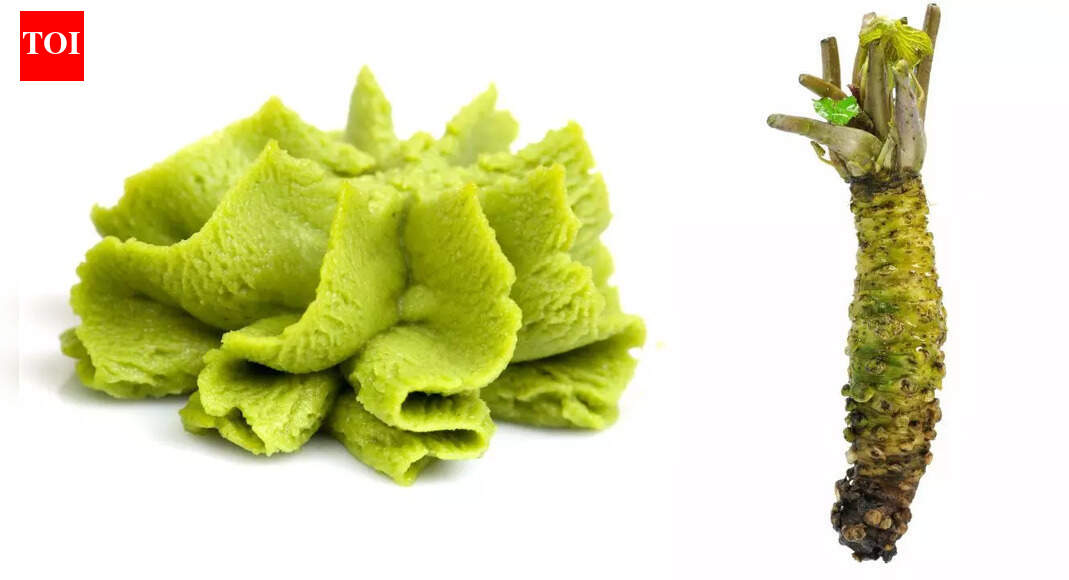
If a little dab of wasabi is your thing when eating sushi, then here is some good news and bad news. First, wasabi may provide a few health benefits because of its natural compounds and antioxidants. The bad news is that the brightly coloured green paste that is usually served with sushi is, most of the time, not wasabi at all. It’s basically a mixture of horseradish, mustard powder, and green colouring. Genuine wasabi, or Wasabia japonica, is quite rare and is very difficult to locate even in the case of places outside Asia. Though wasabi, as a matter of fact, remains a fascinating food with a possibility of having some health-supporting features.
What is wasabi
Wasabi is a root vegetable from the Brassicaceae family, which is the same family as radishes, mustard plants, and horseradish. Historically, wasabi grew in nature in Japan, where it required cold and shady streams or rivers. Because of wasabi’s unique growing conditions and its short shelf life, production is limited, and it is consequently costly.The root is the part that is consumed after being finely grated to make the fresh wasabi paste. Also, wasabi powder is available; however, fresh wasabi is regarded as the most flavourful and healthy.
Is wasabi actually healthy
Wasabi has tiny traces of nutrients like vitamin C, calcium, potassium, and fibre. Still, the major health benefit of wasabi is due to the presence of compounds known as isothiocyanates (ITCs). These compounds are one of the main reasons for the fiery flavour of wasabi, and the plant’s anti-inflammatory and antioxidant properties come from them.A number of possible health benefits have been associated by scientists with ITCs, amongst which they mention the strengthening of the immune system, support for memory, and cancer prevention.
Wasabi may help protect against food poisoning
Wasabi’s antibacterial property is one of its most famous effects. Research published on Frontiers indicates that chemicals in wasabi may be able to stop the bacteria that cause food poisoning; most are E. coli and Staphylococcus aureus.One particular compound, allyl isothiocyanate (AITC), seems to be largely responsible for the protective effect. Consequently, it might be one of the reasons why wasabi is conventionally served with raw fish, like sushi. In case there are some benefits from wasabi, it is still not advisable to let it replace the correct way of handling food, maintaining hygiene, and using the safe preparation methods.
Wasabi could support memory and brain health
Research published on MDPI is pointing to wasabi as a potential help for the brain, especially for memory. A recent study in Japan observed that older adults between 60 and 80 years of age who took wasabi supplements had their short-term and long-term memory enhanced to a great extent as compared to the control group.While the study uncovered only very subtle effects in focus and decision-making areas, the results are still promising. It is assumed by scientists that antioxidants in wasabi may be the agents that protect the brain from ageing.If anyone is thinking of taking wasabi supplements, it is definitely better to see a doctor first.
Wasabi may help protect against cancer
Cruciferous vegetables have been in the spotlight for their cancer-preventive effects, with wasabi being one of them. Research published on the US National Library of Medicine indicates that the isothiocyanates (ITCs) in wasabi root and leaf can lower the risk of cancer by detoxifying the body from harmful compounds.One of these harmful compounds is acrylamide, which is a product that can form in fried or baked (starchy) foods at high temperatures and has been classified as a potential human carcinogen. Limited studies signal that ITCs in wasabi may lower the production of acrylamide and its harmful effects in the body.Although the evidence is still insufficient, the inclusion of cruciferous vegetables such as wasabi in your daily meals may be a source of health protection in the future.Wasabi is not just about the heat and flavour. Its distinctive compounds might be beneficial for the immune system, memory, and cancer protection. But authentic wasabi is limited, and the majority of people are eating imitations. Nevertheless, wasabi is still a tasty weapon of flavour in the arsenal of meals if it is used in moderation.Just like any other food or supplement, wasabi needs to be consumed as part of a balanced diet and not as a treatment for all diseases.(Disclaimer: This article is for informational purposes only and does not replace professional medical advice. Always consult a qualified healthcare provider before making dietary or supplement changes.)