In Bengaluru, Megha Gupta runs a small gaming studio, Wala Interactive, with a workforce of half a dozen people. They are working on Spook-A-Boo, a ghost-hunting “couch co-op” game in which multiple players work together to trap an evasive group of ghosts across a series of levels with progressively challenging layouts.
Gupta started the studio in 2017, but this will be its first game for personal computers (PCs) and gaming consoles, and one of just a few of its original titles. Most of the work her team has done over the last few years has been relatively invisible: developing mobile games for “hypercasual” game publishers who hire firms like Wala Interactive to develop the gaming ideas they come up with.
“We actually developed over 50 games in two and a half years with a team of four,” Gupta says over a phone call. Those games involved over 70 different mechanics – a wealth of experience. They earned the studio a small fortune that she chose to invest in Spook-A-Boo, a “bootstrapped” game that she is self-financing with $200,000. It appears to be in an advanced stage of development, given that her firm has released its demo on the PC gaming storefront, Steam.
Wala Interactive is part of a growing movement within India’s creative industries – animation, video games, comics, and more traditional entertainment industries – to progress from being a supplement to the world’s major Hollywood studios and game publishers’ low-cost workforce to actually ideating and therefore owning intellectual property (IP) and selling it to audiences around the world.
Occasional hits
India doesn’t have a breakout franchise that has resonated worldwide despite having firms that work behind the scenes for many global franchises. There are occasional titles that have had some success such as the Telugu blockbuster RRR, which benefited from a re-release in the United States that carried it to the Oscars, where it made history by winning the Academy Award for Best Original Song for the track Naatu Naatu.
Actor Aamir Khan’s films generally do well in China when authorities permit their screening under the annual quota for foreign theatrical titles. However, Indians’ creative endeavours are yet to yield a steady stream of cultural production and the financial gains it entails.

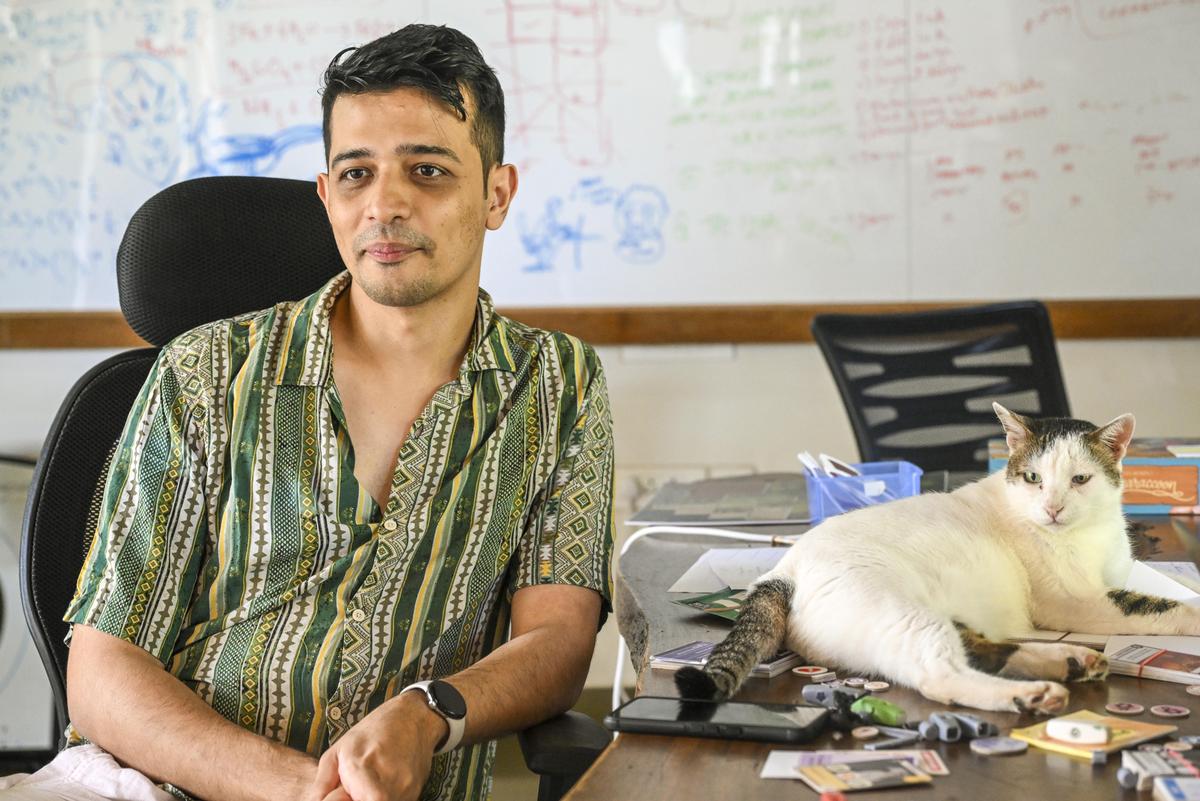
Author and game designer Zain Memon at his office in Panaji, Goa.
| Photo Credit:
Emmanual Yogini
One hurdle is finding an audience at home itself. Gupta points out that PC and console gaming are “practically non-existent” in India, while mobile gaming is big enough to garner global attention – Battlegrounds Mobile India (earlier known as PUBG Mobile) has been downloaded over 240 million times, giving its Korean developer, Krafton, Inc., a scale that only China can rival. For gaming on larger screens, the numbers are far dimmer: industry estimates suggest that India has fewer PlayStation 5 consoles than gram panchayats. Only around 10% of households have a desktop PC or a laptop.
“It will always be that 10% of the audience and we have to fight for that 10% of audience’s time,” Gupta says, which explains the decision to go global by design. The global video gaming industry is worth hundreds of billions of dollars and much of that value comes from players spending significant sums on PC and console titles. The market for those lucrative segments is thriving abroad, though limited in India.

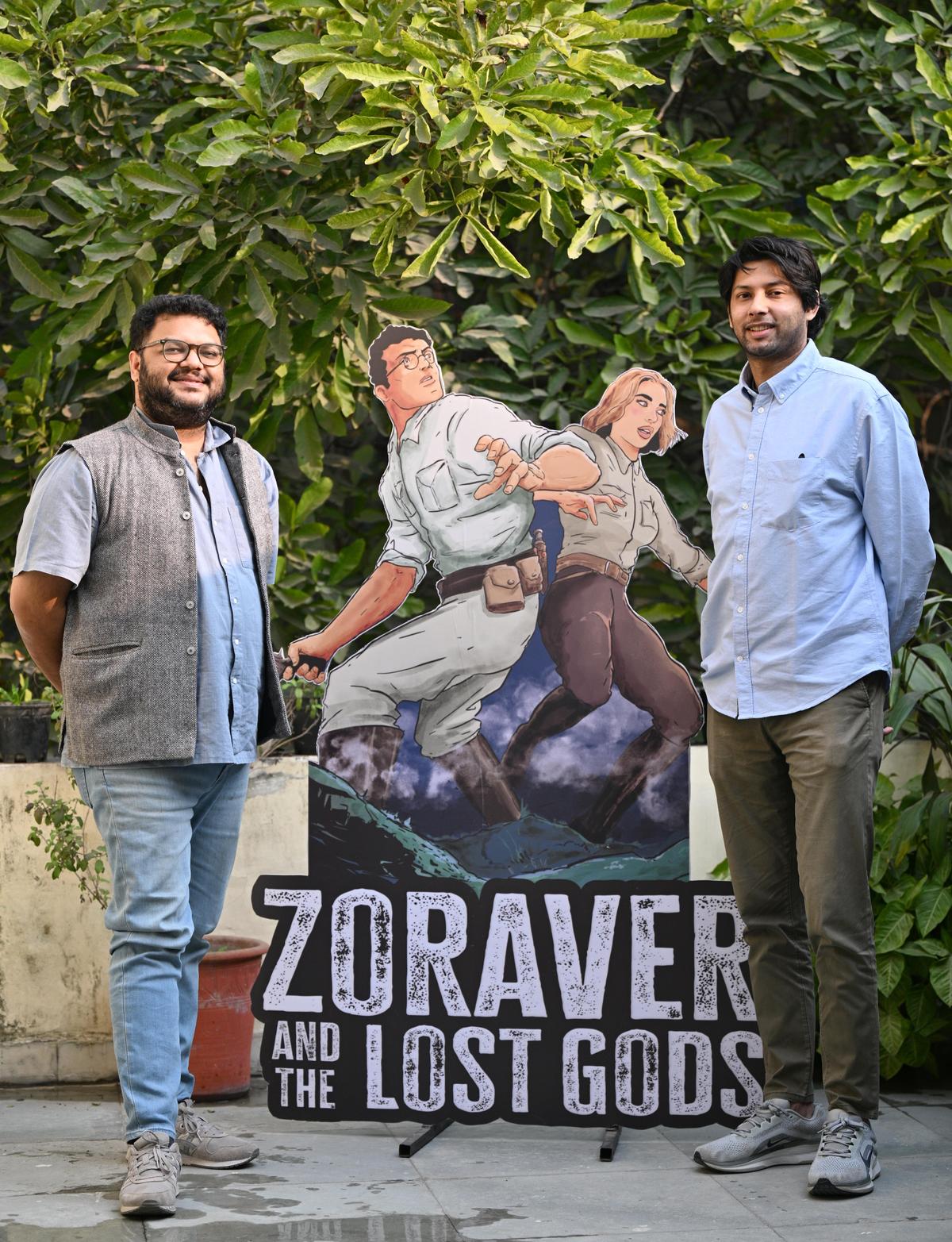
Abeer Kapoor and illustrator Ujan Dutta who have published a graphic novel, Zoraver and the Lost Gods.
| Photo Credit:
Shashi Shekhar Kashyap
Govt. initiative
There is a recognised gap between Indian artists’ work on games, movies, and other big-ticket content and the scale of globally resonating creations originating in the country.
A major effort by the Union government to bridge this gap was the establishment of the National Centre of Excellence for Animation, Visual Effects, Gaming, Comics, and Extended Reality (AVGC-XR), targeting the very sectors where Indian expertise is already leveraged.
“This national centre of excellence will also extensively focus on creation of India’s intellectual properties for domestic consumption and global outreach, overall leading to creation of content based on India’s rich historical and cultural heritage,” read a statement issued by the government last year.


At the World Audio Visual & Entertainment Summit in Mumbai in May this year, the government brought in speakers from firms such as YouTube and Netflix, as well as an array of Bollywood stars, to drive the aspiration to bridge this gap at home. In the run-up to the event, the government announced a $1-billion fund to support the creative economy. Support like this is crucial for one major reason – content thrives in an ecosystem – and creators slugging it out amid a lack of appetite for risking money on creative endeavours understand this deeply.
Abeer Kapoor has been running Civic Games Lab since 2018 from a converted residential flat in south Delhi. He has created board games like The Poll based on Indian elections and just published a graphic novel, Zoraver and the Lost Gods, with long-time collaborator and illustrator Ujan Dutta.

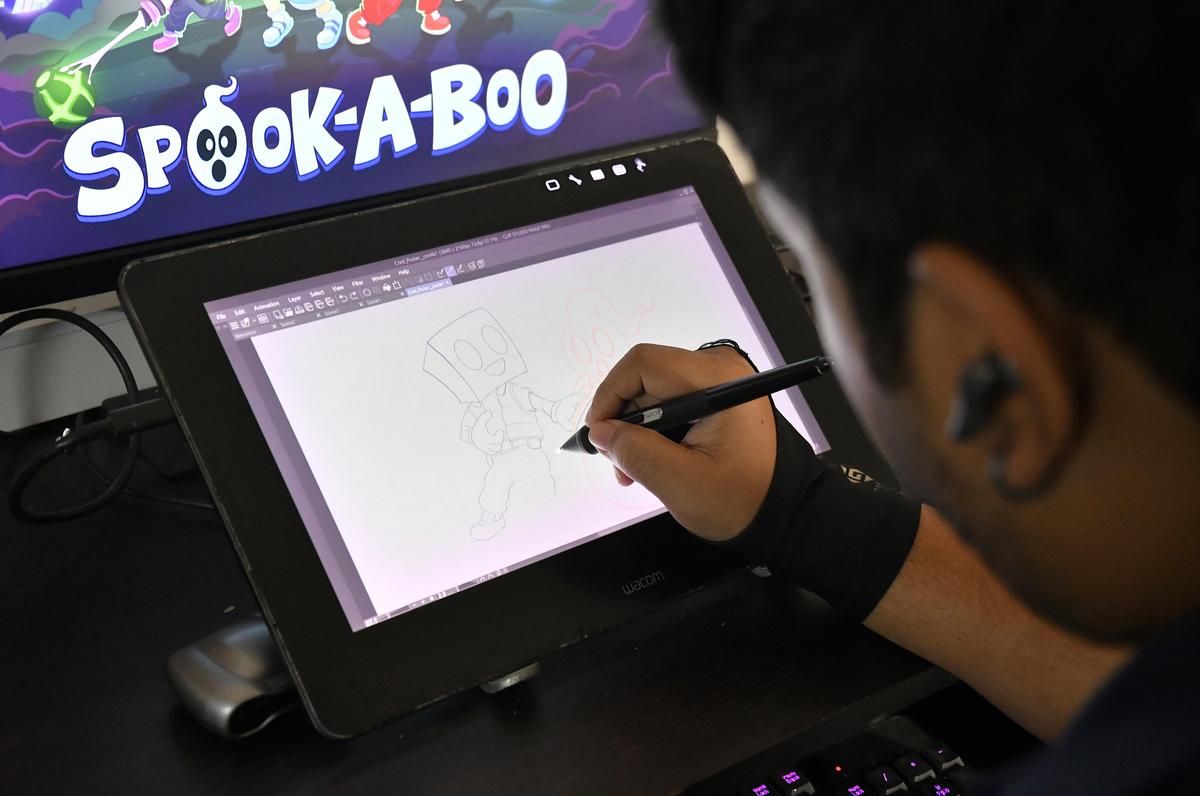
A game artist sketching character concepts at Wala Interactive game studio in Bengaluru.
| Photo Credit:
Allen Egenuse
Kapoor was able to finish many of his projects not because they held promise for investors, but because thriving ecosystems abroad and non-profit creative funds were available to him through supporters such as Deutsche Gesellschaft für Internationale Zusammenarbeit, Germany’s main foreign aid agency, and the Gates Foundation.
“We are a service delivery partner for international development organisations as game builders. And whenever we get an opportunity to build what we want, we do that,” he says.
In Germany, where Kapoor has spent some time, he saw an ecosystem where “you’re able to let an idea germinate and take it to market” and a “variety of local and state-level funding, from private to public, that invests in the business of storytelling”.
From the university and local government level to the highest reaches of the federal government, he says, Germany has a thriving AVGC-XR ecosystem – winning the country’s Spiel des Jahres (‘Game of the Year’) board game award practically guarantees a boost in sales around the world.
Beyond ecosystems, Kapoor says there is massive potential in existing IPs that he considers “incredibly undertapped”.

He points to the deal between game studio Ubisoft and action-adventure novelist Tom Clancy, in which the firm bought the rights to use his name for a series of games – a deal that runs into millions of euros.
In India, Kapoor says, there is potential to do that with the fictional town of Malgudi in R.K. Narayan’s Malgudi Days. “We are deeply obsessed with the idea of Malgudi,” he says.
Also read: The rise of India-made and India-centric video games pushes ‘play’ on representation
“India needs to continuously create and recreate types of Malgudi… India has a static IP. There is no sharing of it as in the West. Let’s take Malgudi and Tom Clancy’s novels. Both of them are full of stories. Both of them have a set of characters, right? And fundamentally, both of them are beautifully built worlds.”
The world of Malgudi could have been harnessed continuously but it hasn’t, he says. The country needs “canonical, referential works” because working with those “again and again and again is how you build a visual culture for a society”. Right now, Kapoor says, he is constantly speaking to the estate of Pran, the Hindi comic creator behind Chacha Chaudhary, trying to convince it to let him work on the property.
Leaning in to the mic during the interview, he says, “Abeer and Ujan want to be able to work on Indian IPs that are existing and old, including, but not limited to Chacha Chaudhary, Commando Dhruv, anything that is owned by Indrajal, Diamond Comics, anything. Please reach out.”
Funding from abroad
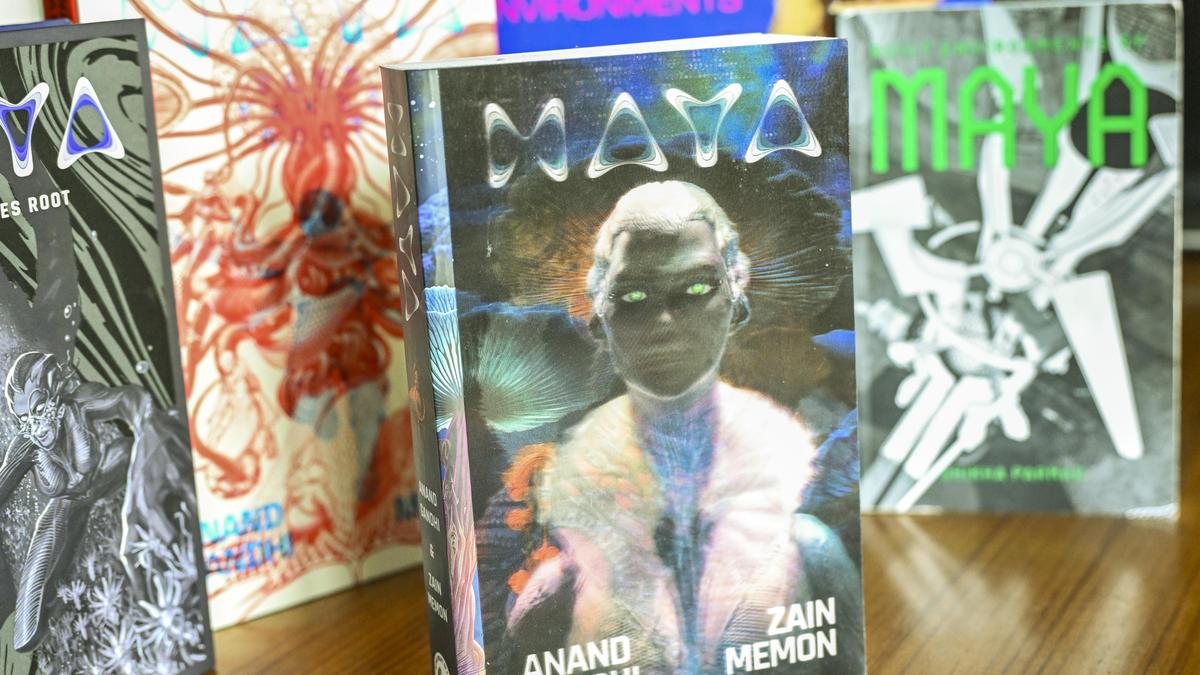
In Goa, at the office of the Department of Lore (DoL), set up by filmmaker Anand Gandhi and his long-time creative partner Zain Memon, over a dozen young people are developing an entire IP, Maya, a “transmedia” franchise they hope will resonate around the world. Like Kapoor, the team has relied largely on funding from abroad, raising funds through a campaign on the Kickstarter platform in which the majority of funds have come from U.S.-based contributors.
Memon, whose board game Shasn has been a breakout hit around the world, with strategy elements rooted in an interpretation of Indian politics, said in an interview at the DoL’s office that he and Gandhi had worked on the setting of Maya for four years, developing hundreds of pages of lore and “millions of years” of history.

Seed Takes Root – the first novel (there are plans for multiple formats, including a board game and, if all works out, a movie) – is a David versus Goliath tale of an off-the-grid upstart’s early days in Neh, a planet with mystical trees that seven species are required to “connect” to in order to dream, allowing an AI-like simulation that almost always perfectly predicts the future.
Maya has raised over $420,000 from contributors on Kickstarter, surpassing its target of $10,000. Memon and Gandhi exude confidence in the project’s international appeal, defying the funding caution that has held back projects like theirs. “For impact at scale, you need distribution at scale,” Memon says, explaining the crowdsourcing strategy before the book goes on sale next year. “For distribution at scale, money is not the end goal – money becomes a means to that end. If you stay independent, stay small, you start preaching to the choir.” He adds, “We need a cultural monument that gives adequate representation to the billions of people of the Global South on the world stage.”
Timing and resources
Why hasn’t a franchise like this already captivated global audiences and why might one do so now? Memon says this is due to a combination of timing and resources: “For the first time, our generation has started with a privilege nobody else had – we grew up on the Internet, so we grew up with the best cultural capital of the West while also having access to the best cultural capital of the East. The markets have opened up for everything from venture capital to distribution, and in the post-Internet distribution world, we have truly seen a flattening of the playing field for those who can create a great game or a great film.”
Gandhi, who has a reputation in film circles of being “ferociously cerebral”, spoke over a Zoom call from New York after attending three fantasy and comic conventions across the U.S. He says storytelling is at the heart of transmitting culture from one generation to another. “We have forgotten how powerful stories are, and we are using a nuclear reactor to make coffee,” he adds.
Is it finally time for a franchise to break out of India? Without a doubt, he says. “We have been on the receiving end of a great monologue for a couple of centuries now – and it’s been an amazing monologue,” he says.
“It’s a monologue that’s given us [Albert] Einstein and [Charles] Darwin and [J.R.R.] Tolkien and [Joseph] Campbell and [Steven] Spielberg. It has long been overdue to turn this inspiring and enlightening monologue into an inspiring and enlightening dialogue.”
aroon.deep@thehindu.co.in
Edited by Suhas Munshi