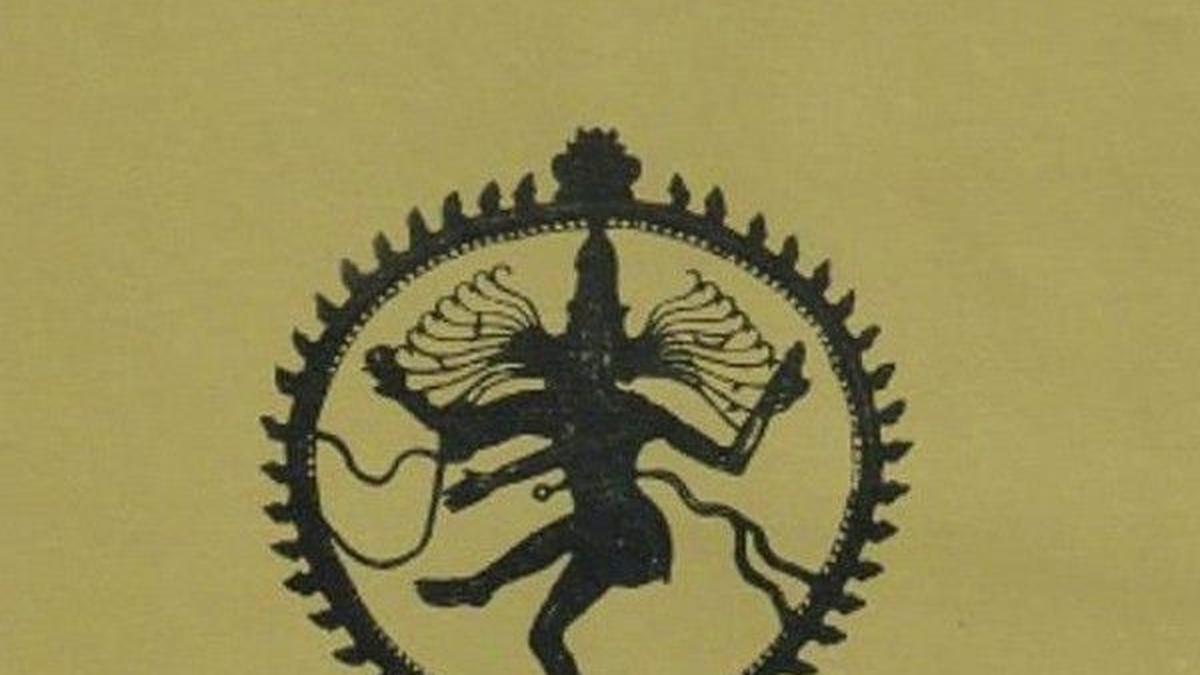
In 1868, Tamil Nadu witnessed what was quite common then, but an impossible task today. Ka. Peer Katharoli Rauthar, a Tamil scholar of Parimalakkara Veedhi at Pettai in Tirunelveli, published Thiruvasagam penned by Saivite saint Manickavasagar.
Such a venture was common since there were great Tamil scholars among the Muslims since the 12th Century. Umaru Pulavar of Ettayapuram penned Seerapuranam, the life history of Prophet Muhammad, in verse. Kunangudi Masthan Sahib, wedded to Sufism, wrote Manonmani Kanni and Rehman Kanni, and his works were said to have been the inspiration for national poet Subramania Bharati. Sadhavathani Seikuthampi Pavalar of Edalakudi in Kanniyakumari district is another well-known name in the Tamil literary world in modern times.
Printed in Kancheepuram
Peer Katharoli Rauthar’s edition was verified by Sivaloganatha Pandithar of Thirupunkur, where the Nandi at the temple is believed to have stepped aside to offer a clear view of Lord Shiva to Nandanar. The book was printed in Iyartamil Achagam, run by Thiruvenkata Mudaliar, in Kancheepuram.
“The Sivapuranam in Thiruvasagam is normally described as an agaval, but Rauthar cited the Tholkappiyam to prove that it was a kalivenba,” says Tamil writer Po. Velsamy. Though the book was republished in 2008 after a gap of 140 years by T.N. Ramachandran, Tamil scholar and president of Saint Sekkizhar School of Saiva Siddhanta in Thanjavur, there are few details about Peer Katharoli Rauthar.
“It is difficult to get the background of the author since the book was published over 150 years ago. He could be a descendant of Umaru Pulavar who settled at Parimalakkara Veedhi at Pettai. Parimalam means sweet smelling scent and it is closely associated with the life of Prophet Muhammed,” says historian Se. Divan of Tirunelveli.
An account of Tamil publishing
In his preface to the book, Ramachandran says he was able to secure a copy of the first edition of Thiruvasagam by Peer Katharoli Rauthar from Roja Research Muthiah Library in Chennai. But his introduction gives an account of Tamil publishing history, including the publication of Thiruvasagam first in 1835.
Ramachandran, who was known as Sekkizhar Adipodi (a servant of Sekkizhar), says that Thiruvasagam was first among the Saivite literary works to be printed. It was published in 1835, followed by the publication of Thirukovaiyar. It was possible because of the enactment of the Press Act, 1835, by Governor-General of India Charles Metcalfe.
Ramachandran has quoted poet Bharathidasan to support his argument that till then only the Christian Missionaries ran the press. Many Tamil books were published by the College of Fort St. George founded by F. W. Ellis in 1812 to train East India Company officials in native languages.
“Kottaiyur Sivakozhunthu Desikar, a Tamil scholar and teacher of the college, published Thiruvasagam in 1835. It was printed at Saraswathi Achukoodam owned by Venkatachala Mudaliar, a Tamil teacher of the college. Another teacher, Nayanappa Mudaliar, of Puducherry, published Thirukovaiyar in 1841,” says Ramachandran.
No credit to Roja Muthiah Chettiar
Roja Muthiah Library secured the copy of the first edition of Thiruvasagam by Sivakozhunthu Desikar. Ramachandran alleges that the person who borrowed the copy from Roja Muthiah Chettiar to keep it in the National Library in Kolkata had not given the credit to Chettiar when a book on the printing press in India was published.
Another Tamil scholar, Ramasamy Mudaliar, had published the text of Thiruvasagam in 1845. Ramachandran says the catalogue of the British Museum also had an entry about the publication of Thiruvasagam by Sivakozhunthu Desikar and Tiruttani Saravana Perumal Iyer in 1857. Two years later, Sadasivan Pillai published another edition. Yet another edition came out in 1890, produced jointly by Sivakozhunthu Desikar and Saravana Perumal Iyer. In 1862, another edition, verified by Kancheepuram Sabapathi Mudaliar, was published. A few editions came out before Peer Katharoli Rauthar published it in 1868.
Mr. Velsamy says Rauthar would have followed the 1845 edition of Thiruvasagam, published by Chinnathampi Nayakar of Pursaiwalkam, and the publications of Sivakozhunthu Desikar and Saravana Perumal Iyer and other manuscripts. The book refers to Purasaiwalkam in present day Chennai as Purasaipakkam. Pakkam means a village near a coast.
“This edition claims that Sivapuranam in Thiruvasagam is not agaval, but Kalivenba. Since Rauthar has followed this edition, he also made a reference in the footnote to the nature of the verses in Sivapuranam,” says Mr. Velsamy.
Last sermon
In 1900, G.U. Pope, the Tamil scholar and Christian Missionary, completed the English translation of Thiruvasangam. “I date this on my eightieth birthday. I find, by reference, that my first Tamil lesson was in 1837. This ends, as I suppose, a long life of devotion to Tamil studies. It is not without deep emotion that I thus bring to a close my life’s literary work,” he wrote in his preface to the translation of Thiruvasangam. It left a lasting impact on him.
“In the heart of this my last sermon lie truths that harmonise with all that is best in Thiruvasangam and Siva-nyanam [Shivajnana Bodham],” he said in his last sermon in 1907.