

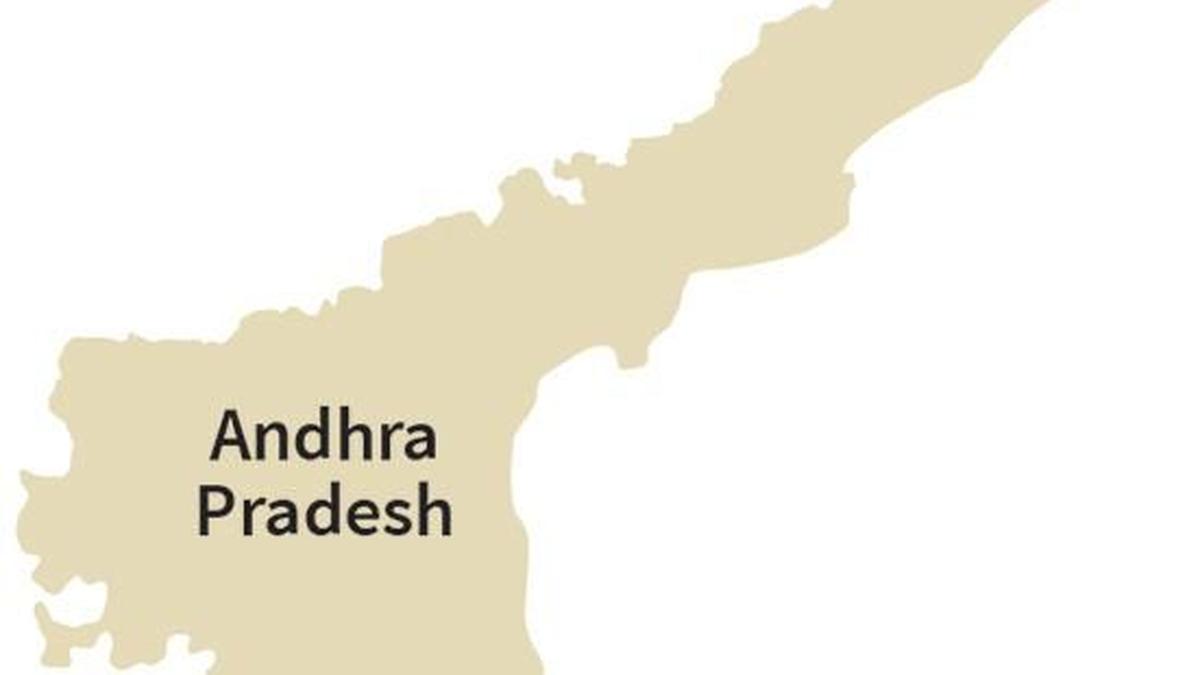
From poll promises to present-day governance, Andhra Pradesh’s political map has changed dramatically, reshaping priorities and public expectations. What once revolved around development-based narratives has now shifted into a cycle of competing assurances, aggressive political positioning, and repeated administrative experiments — most visibly, the restructuring of districts.
The State’s administrative boundaries were redrawn in 2022 and once again in 2025, each time driven more by electoral commitments and political imperatives than by long-term administrative strategy.
The first major restructuring was undertaken by the YSR Congress government led by former Chief Minister Y.S. Jagan Mohan Reddy, who, ahead of the 2019 elections, promised that each Lok Sabha constituency would be converted into a district. Fulfilling that pledge, his government reorganised the State in April 2022, increasing the number of districts from 13 to 26. The present administration, led by Chief Minister and Telugu Desam Party national president N. Chandrababu Naidu, campaigned in the 2024 elections on a pledge to correct what it called anomalies and inefficiencies arising out of that reshuffle. Less than two years after the earlier overhaul, the new NDA government approved another round of reorganisation in November 2025, creating Polavaram, Markapuram, and Madanapalle districts, taking the total to 29, along with new revenue divisions and new mandals.
This latest announcement has reignited a State-wide debate: is rapid territorial decentralisation driving meaningful governance reform, or is it merely adding layers to political cartography? Critics argue that the restructuring lacks coherence and appears politically motivated, fragmenting Assembly segments across two or three districts, shrinking district sizes, and distorting earlier geographical and administrative structures. Many fear that long-established districts will lose their historic and administrative identities, creating confusion rather than clarity.
Points of contention
One major flashpoint is the reshaping of Annamayya district, which has generated significant public resentment. The carving out of the new Madanapalle district strips Annamayya of key Assembly segments, leaving it dramatically reduced in size and administrative relevance. Similarly, Prakasam district’s disfigurement stems from splitting four important segments to form Markapuram district, forcing Ongole to absorb segments from neighbouring districts and weakening regional cohesion. However, the most contentious move is the creation of Polavaram district without Polavaram, a decision that excludes the very region after which the district is named, leading to widespread confusion even among ruling coalition members.
Defending its earlier reorganisation, the YSRCP argues that it adopted a structured model based on parliamentary constituencies, ensuring minimum population thresholds of 15 to 20 lakh, at least two revenue divisions per district, and no fragmentation of Assembly seats. Through this exercise, revenue divisions rose from 51 to 76, and balanced development was claimed as the central objective. Even Kuppam, Mr. Naidu’s longstanding constituency, became a revenue division during this period. Critics, however, argued that the Lok Sabha-based model was fundamentally flawed, lacked geographical logic, ignored historical and cultural linkages, and placed many administrative units unreasonably far from district headquarters. For example, in the Alluri Sitarama Raju district, Yetapaka in the Rampachodavaram constituency is 277 km away from Paderu, the district headquarters, requiring over seven hours of travel. Several other mandals in the region face similar logistical burdens.
Intent vs implementation
Announcing the 2025 expansion, Chief Minister Naidu said the restructuring would empower local governance, particularly in tribal and drought-prone belts, and prepare the ground for future Assembly delimitation. The changes are expected to come into effect by January 2026, subject to legislative approval and public consultations.
Yet critics caution that the earlier restructuring promised similar outcomes but faced significant implementation challenges. In 2022, while the new headquarters were created to bring administration closer to citizens — especially in rural and tribal areas — progress was uneven. Some new districts saw rapid establishment of collectorates, police offices, and infrastructure; others struggled with temporary facilities, staff shortages, lack of digital integration, and slow administrative transfers. In many remote regions, the intended benefits have only partially materialised.
The 2025 announcement presents itself as both expansion and correction, responding to long-standing demands for improved accessibility. It also reflects a political recalibration under the current government, emphasising regional inclusion and administrative rationalisation. Yet a recurring criticism is that governments seldom provide clear criteria when forming new districts. Decisions rarely clarify whether they are based on demographic, geographic, administrative, cultural, or historical considerations. The commonly cited justification, “administrative convenience,” often masks political calculations. Renaming districts also carries heavy political symbolism, projecting ideological and electoral intent.
Interestingly, both the YSRCP and the TDP have ignored voices opposing the redrawing of districts, boundaries, and names within their own parties.
Creating districts is also financially and institutionally demanding. It requires establishing new collectorates, police headquarters, zilla parishad offices, and courts; hiring additional administrative personnel; separating land, revenue, and welfare records; and building supporting infrastructure. Without parallel strengthening of local self-governance bodies, empowered under the 73rd and 74th Constitutional Amendments, the creation of smaller districts risks becoming a substitute for real decentralisation. Since local institutions remain weak, most grievances are still directed to the Collector, requiring long travel and increasing administrative dependency. Smaller districts without empowered grassroots institutions may merely redistribute administrative burden rather than reduce it.
This raises a broader question: in an era of digital governance, where information and administrative services are increasingly accessible online, is the proliferation of smaller districts still necessary for efficiency, or is it primarily symbolic?
Ultimately, the success of Andhra Pradesh’s restructuring will depend on whether political commitment is matched by administrative capacity, realistic financial planning, adequate staffing, transparent digital systems, and meaningful stakeholder participation. If these foundations are firmly established, smaller districts could enhance service delivery, improve responsiveness, and strengthen participatory governance.
Published – December 04, 2025 01:26 am IST





