

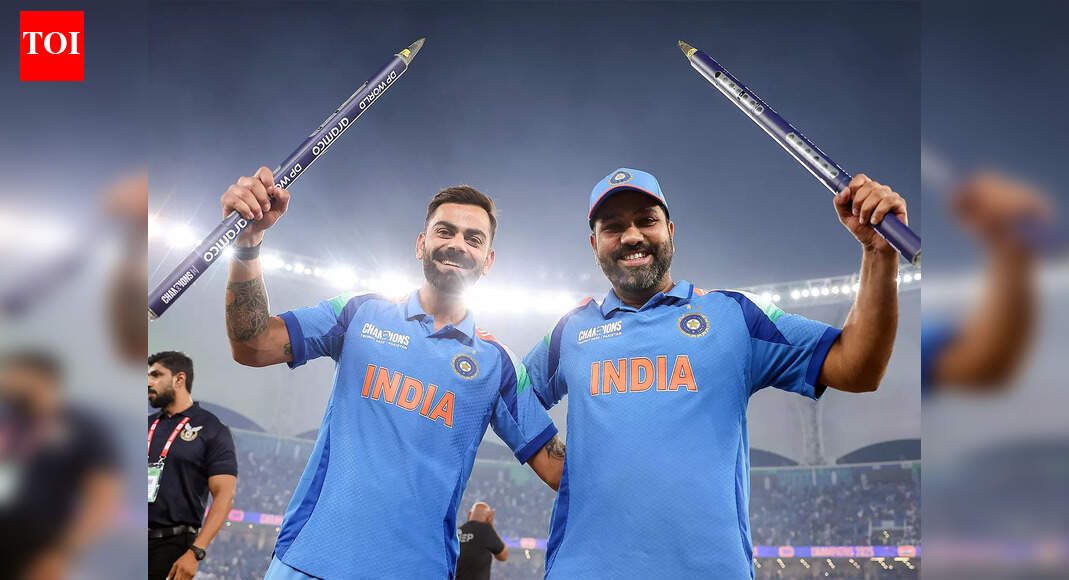
Former India off-spinner Ravichandran Ashwin has raised serious doubts over the long-term future of One-Day International cricket, warning that the format could struggle to survive beyond the 2027 World Cup once Virat Kohli and Rohit Sharma step away. Ashwin acknowledged the excitement generated by Kohli and Rohit’s recent appearances in the Vijay Hazare Trophy but pointed out that the growing dominance of T20 leagues, coupled with Test cricket’s enduring value, is steadily squeezing the space available for 50-over cricket.
“I am not sure about future of ODI after 2027 World Cup. I am a little worried about it. Of course, I am following Vijay Hazare Trophy but the manner in which I followed SMAT, I am finding slightly difficult to follow,” Ashwin said on his Hindi YouTube channel Ash Ki Baat. He stressed that audience preference can no longer be ignored while shaping the game’s future. “Also, we need to know what audience wants to watch. I feel Test cricket still has space but ODI cricket, I truly feel it doesn’t have the space,” he said, offering a blunt assessment of the format’s current standing. Ashwin, India’s second-highest wicket-taker across formats with 765 dismissals, underlined how heavily ODI cricket still leans on the presence of its biggest stars. With Kohli and Rohit sharing 86 ODI centuries between them, their influence remains central to the format’s relevance. “Look, Rohit and Virat came back to Vijay Hazare Trophy and people started watching it. We have known that sport is always bigger than individuals but at times these players need to come back to make the game relevant,” he observed. Referring to domestic one-day cricket, Ashwin added, “Vijay Hazare Trophy, of course, is a domestic competition that not a lot of people follow, but they did because Virat and Rohit were playing. Even then, what happens when they stop playing ODIs?” Ashwin also spoke about how the nature of ODI batting has shifted dramatically under the influence of T20 cricket. He recalled a time when the format allowed players to build innings patiently, citing MS Dhoni as the perfect example. “One-day cricket, once upon a time, was an amazing format because it gave a player like MS Dhoni who would take singles for 10-15 overs before he went berserk at the end,” he said. According to Ashwin, that style has all but disappeared. “You don’t have players like that anymore and there isn’t any requirement to play like that, as you are playing with two new balls and five fielders inside circle,” he said, describing modern ODIs as being played in just two extremes, either all-out attacking or complete collapse on tougher pitches. Turning his attention to the international calendar, Ashwin urged the ICC to rethink its approach, while acknowledging the importance of revenue for the sport’s sustainability. “The ODI format has become redundant and to top it, ICC needs to see how they are conducting these World Cups. Every year, there is an ICC tournament for revenue generation pattern, but then look at how FIFA is doing it,” he said. He compared cricket unfavourably with football’s global structure. “There are leagues happening and they do their World Cup once in every four years. The World Cup is having value as it’s a marquee tournament. Too many bilaterals, too many formats, too many World Cups, so it’s a little bit of an overkill,” Ashwin added. Ashwin also suggested that certain match-ups in the upcoming T20 World Cup, such as India facing USA or Namibia, could risk alienating viewers rather than attracting them. When asked about possible solutions, Ashwin offered a stark proposal for preserving ODI cricket’s relevance. “If you really want to make ODI cricket relevant, then just play these leagues and play ODI World Cup once in four years, so when people turn up for events, there will be sense of expectation,” he said. Summing up his concerns, Ashwin concluded with a grim warning for the format’s future. “I feel it is going towards slow death.”

