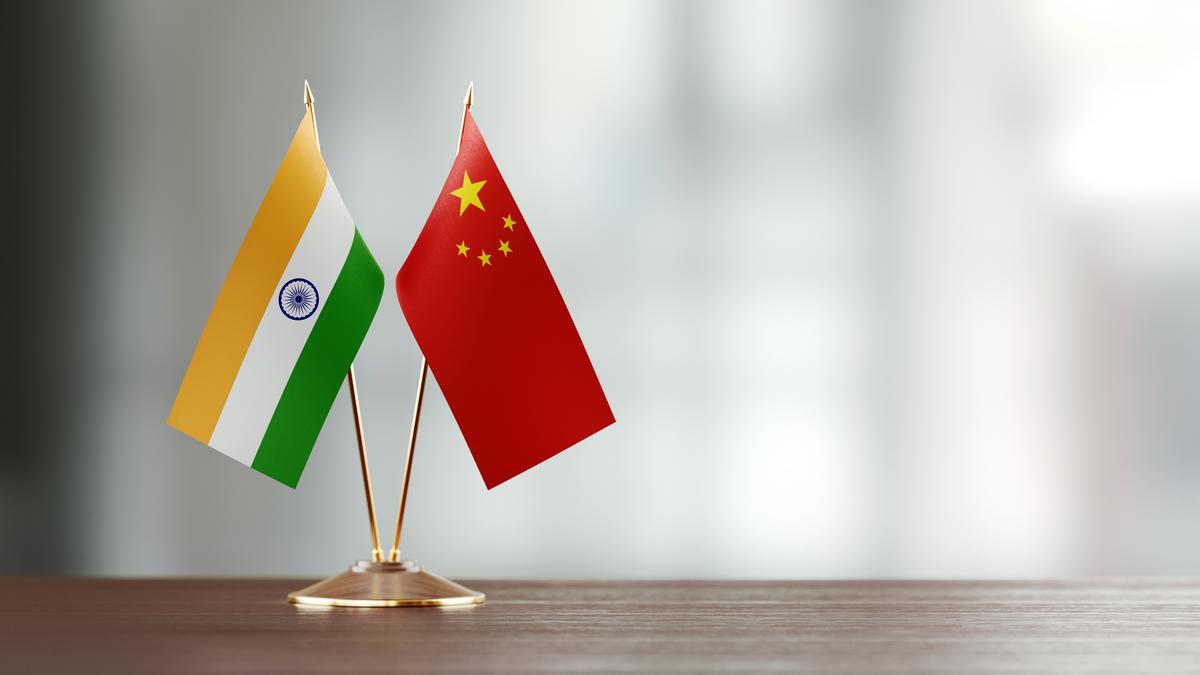
Earlier this month, Prime Minister Narendra Modi concluded his much-anticipated visit to China. Mr. Modi attended the Shanghai Cooperation Organisation (SCO) summit and also held talks with Chinese President Xi Jinping on the sidelines of the summit. The two leaders decided to restart bilateral trade and air connectivity, and underlined the importance of peace and tranquility along the border. These decisions were significant as they were made five years after the deadly border clashes between the two neighbours in the Galwan Valley in Ladakh; and months after India launched Operation Sindoor against Pakistan (at the time, China supported the Pakistani military forces). Both leaders reaffirmed that the two countries were “development partners and not rivals, and their differences should not turn to disputes,” the Ministry of External Affairs said in a statement after the meeting. Should India overlook boundary issues while normalising ties with China? Vivek Katju and Antara Ghosal Singh discuss the question in a conversation moderated by Kallol Bhattacherjee. Excerpts:
Is it possible for India to normalise ties with China without resolving the boundary issue?


Antara Ghosal Singh: My understanding is that it is not an either-or situation. The overall positive turn in China-India ties is not really a sudden development or a knee-jerk reaction to the current turmoil in international politics or the recent downturn in India-U.S. ties. India-China relations have been showing signs of improvement since early last year. Both sides have been sending some positive signals towards each other. As I gather from Chinese sources, the 2024 Border Patrol Agreement was a key icebreaker. Since the Galwan clash of 2020, India has been consistently demanding that the Chinese Army withdraw to the pre-April 2020 positions and restore India’s patrol rights in the disputed areas. From that perspective, India sees the restoration of patrolling points, even in Demchok and Depsang, as a diplomatic victory. Many Indian strategists have acknowledged this fact. Importantly, the Chinese side feels that they have not really suffered any loss in this agreement because it is a border patrol agreement and has nothing to do with the demarcation of sovereignty. The agreement means that two years after achieving disengagement at four places through the creation of non-patrolled buffer zones, now two more places, as demanded by the Indian side, are being disengaged through cross-patrolled buffer zones. That is the Chinese understanding from what I read.

Do you see a situation where the normalisation of relations could be disrupted by, say, a Galwan-2 in the distant future?
There has been a shift in India’s appreciation of China. But we cannot overlook the enormous infrastructure development, especially in the military area of the Tibetan Plateau. Why is this being done? And what will that lead to? It will lead to India having to spend a fair amount of its own financial resources in ensuring that the LAC infrastructure is fortified and that the LAC is well garrisoned throughout the year. I think that is also a Chinese objective.
I don’t think it will be wrong for me to say that China shows no interest in really resolving the border issue. Yes, the special representatives are going to meet, but are they going to make any headway? What does the history of the last 30 years show? And why did Galwan happen? No one has been able to come up with an authoritative reason for why it happened.
Antara Ghosal Singh: If you look at Chinese sources, you will find many theories (behind what prompted China’s action in Galwan). The most popular one is the dilution of Article 370 (of Jammu and Kashmir; China protested against the move). Another argument is the competition between China and India in terms of manufacturing.It was during COVID-19 that the first round of the China-U.S. trade war took place and there was this feeling on the Chinese side that India was collaborating with the U.S. to take away China’s position in the global supply chains. That caused a lot of panic within Chinese strategic circles. Ambassador Katju also mentioned that India is often looked down upon by China; that is true. For a long time, China has chosen to believe that India is a retreating image in its rear view mirror. But it was during that time in 2020 when they started to realise that things can change and that India, a country with 1.4 billion people, can be a competitor. There is this weird ‘India is a threat’ theory. If you look at Chinese discussions on various platforms, you can see how they are concerned about India’s economic growth and India’s demographic dividend, particularly at a time when China is facing a population crisis. There is also a prevailing mood in China that it should not let Chinese industries invest in India; that it should impose various export controls; and that it should not let India develop and be a competitor to China. So, there is a change in perception within China as well, on the India issue. All these insecurities played a role in what happened in 2020.
Can the two tracks of the normalisation of India-China relations, and China’s plans for South Asia, as seen in the recent Kunming trilateral featuring Pakistan, China and Bangladesh, be in harmony with each other?
Antara Ghosal Singh: They have their cards against us and we have our cards against them. But despite all our differences, I have always argued that good workable ties between China and India are good for both sides. We are aware of China’s manufacturing prowess and how dependent India and the world is on Chinese manufacturing. The Economic Survey 2024-25 highlighted China’s overwhelming manufacturing dominance in various sectors, including electric vehicles and critical minerals. It also stated how China’s overall manufacturing output, which is nearly 45% of the global total, is at a level never seen before since the U.S.’s or the U.K.’s at their industrial peak.
Vivek Katju, former diplomat; Antara Ghosal Singh, Fellow, Observer Research Foundation