Last Saturday, the Board of Control for Cricket in India (BCCI) officially communicated to the International Cricket Council (ICC) its decision to not send a team for the 2025 ICC Champions Trophy to be held in Pakistan from February 19 to March 9. Global cricket is returning to Pakistan for the first time in nearly three decades, and the nation had hoped that India would make the trip across the border. But despite being assured of foolproof security and given a choice of venues, as well as the slight goodwill generated from External Affairs Minister S. Jaishankar’s journey to Islamabad last month for the Shanghai Cooperation Organisation’s Council of Heads of Government meeting, India has decided not to travel. The BCCI prefers a hybrid model under which India will play all its matches outside Pakistan, an idea that the host is firmly against. Should India continue to boycott cricket in Pakistan? Sharda Ugra and Sunil Yajaman discuss the question in a conversation moderated by N. Sudarshan. Edited excerpts:
Should India have travelled to Pakistan for the Champions Trophy, especially given that Pakistan visited India for the World Cup in 2023?


Sunil Yajaman: Probably they [Indian team] should have tried [to go to Pakistan], especially since Pakistan travelled to India. Somewhere we have to keep some ties going and sport has to be above politics. But if it is a security issue, I would not comment on that. India is ready to play Pakistan elsewhere, right? At a neutral venue? Pakistan also came here. So it is definitely not about not wanting to have sporting ties.

Pakistan did not host any international cricket for 10 years after the terrorist attack on the Sri Lankan team in 2009. But since then, Australia, England, Sri Lanka, New Zealand have all visited Pakistan. Is India justified in seeking an exemption?
It would be unfair to compare India’s relationship with Pakistan with the ties other countries have with the country. But somewhere, we could have tried. There was a lot of scepticism ahead of the Davis Cup too. But ultimately, it went off well.
Sharda Ugra: Concerns about security are fair if the BCCI had dealt with all the other issues in a calm and logical manner. But I am afraid we are beyond that stage of talking. What is missing in this space is actually the Indian cricket board’s ability to deal with the Pakistan cricket board in the spirit of fraternity and wanting the best for cricket. You can’t help it if politics catches up, but it is a sense of fellow feeling that is absent. It is a position that India cannot bring itself to take for reasons beyond cricket.
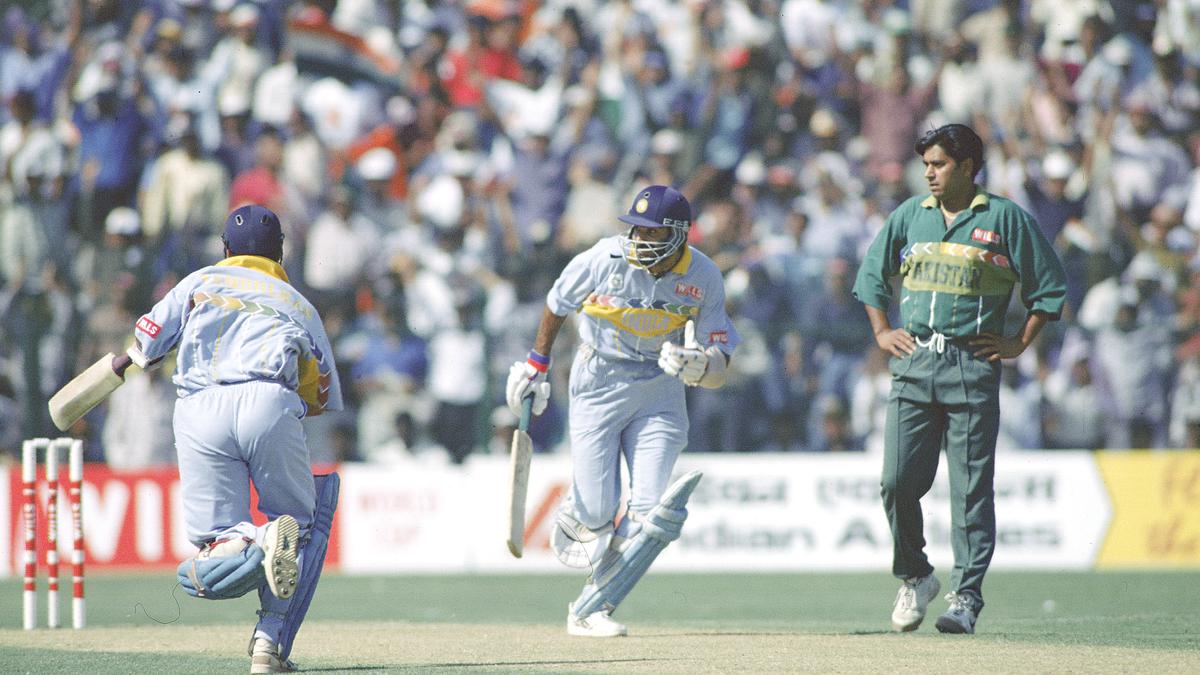
India co-hosted the 1996 World Cup with Pakistan and Sri Lanka and the final was played in Lahore…
India travelled to Pakistan for the Davis Cup (tennis), and Pakistan came to India for the SAFF Cup (football) last year. Is it fair for different sports to have different rules?
Sharda Ugra: Cricket has become emotional currency in both countries. In India, it is amplified — how we present the sport, talk about it, look at it on TV, and also how it is commentated on. Why will they [cricket establishment] dial down on that if it fetches TRPs and ad revenue?
It is hypocritical to see other teams travelling across the border. But look at the environment that has been built around ‘India versus Pakistan’. It has been made impossible to treat cricket as a sport.
Is it possible to not let geopolitical tensions percolate into the sporting arena? And when they do, to what extent can you limit it?
About this hybrid model that is being spoken about… I feel it is a great idea. Obviously, Pakistan is agitated, but nobody is saying ‘let’s find a way to play’. At one point, we had Saurav Ganguly and Ramiz Raja, two Test captains, heading their cricket boards, but we didn’t hear of any attempt to at least find a neutral ground and play. That is sad.
Mr. Yajaman, how was your experience travelling to Pakistan for the Davis Cup?
Do you feel the athletes, despite the camaraderie, are no longer stakeholders in this grand saga?
Moving forward, it would be good for the two countries [to restart ties] in music, sports, and arts. But I would re-emphasise that if the government feels there is a security threat, then it is different. But it will be great to continue sporting ties. Will India not travelling to Pakistan help that?
In a fantastic co-incidence, the Indian men’s team has met Pakistan in every Champions Trophy, World T20, and ODI World Cup from 2013. The tie is a major money-spinner for ICC. In a scenario where the global custodian of the sport has a genuine financial interest in an India-Pakistan fixture, can it be expected to act impartially?
All the other teams, be it tennis or blind cricket, are going [to Pakistan]. I accept that for cricketers to travel is different: they are bigger international stars and the stakes are higher. So, possibly, there is security fear. But the sentiment should be the same towards all sports.
Sharda Ugra, Sports journalist with more than three decades of experience across newsrooms at The Hindu, MidDay, India Today, and Espncricinfo; Sunil Yajaman, Joint Secretary, Karnataka State Lawn Tennis Association, and former manager of the Indian Davis Cup side that travelled to Pakistan in February