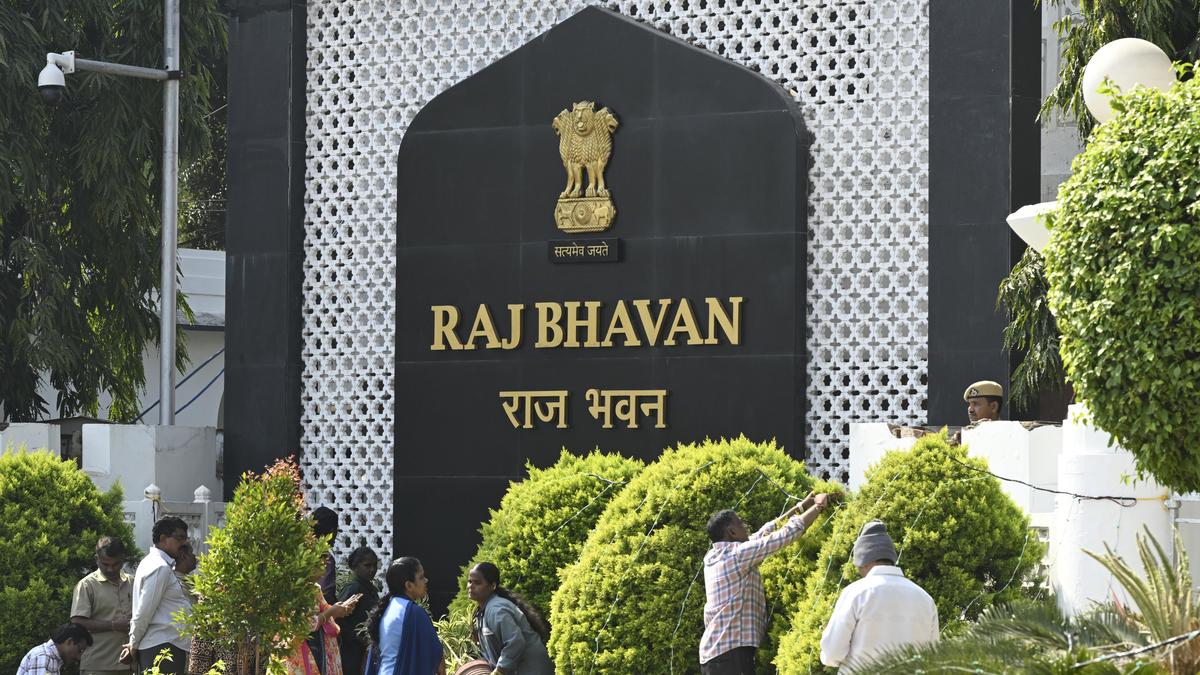
In April 2025, the Supreme Court of India delivered a judgment that finally put an end to the sordid saga of unelected Governors stymying Bills passed by elected State legislatures by indefinitely delaying assent. In State of Tamil Nadu vs Governor of Tamil Nadu, the Court imposed definitive timelines for the Governors to act, and said violating the timelines could attract judicial intervention, whereby courts could deem the Governor’s unexplained inaction as assent.
For Opposition-ruled States beleaguered by the obstructionist tendencies of Raj Bhavan, this democracy-affirming verdict that guaranteed legislative supremacy in the law-making process was a rare victory. It promised to end the bouts of policy paralysis caused by misusing gubernatorial powers that left State priorities in a procedural limbo.
However, before the States could meaningfully put the April verdict to use, the Court has laid the ground for a course reversal. Answering a Presidential Reference, in Special Reference No. 1 of 2025, the Court has sought to dismantle the constitutional discipline that the earlier verdict promised. It held that judicially imposed timelines on the Governor had no textual basis in the Constitution; that deemed assent was anathema to the constitutional scheme; and the discretionary powers of the Governors and the President have an elasticity that, apparently, could accommodate delays in assenting to Bills.
The (now former) Chief Justice of India, Justice B.R. Gavai, who led the Constitution Bench that delivered the opinion, said in an interview that the advisory opinion does not overrule a judgment. However, there is no denying the fact that an advisory opinion from a Constitution Bench that has sought to “clarify” the position of law on a highly contested political matter will carry great persuasive heft.
A one-sided dialogue
In responding to the Presidential Reference, the Court has presented Article 200, which deals with the Governors’ power to give assent to a Bill, and its provisos, as a repository of procedures that trigger a constitutional dialogue between constitutional functionaries. What the Bench has failed to recognise is that a dialogue requires proper and timely response from both sides to be effective.
The fundamental accusation against the Governors was that they misused their powers and turned this “dialogue” into an obstructionist tactic to frustrate governments in Opposition-ruled States. The judgment in State of Tamil Nadu remedied exactly this problem. By setting clear timelines for the Governor to act when presented with a Bill, the Court ensured that these unelected representatives of the Union government did not convert their powers under Article 200 into a tool to dominate the legislatures.
Once the dialogue was initiated, the judgment made prolonged silence on the part of the Governor or repeated attempts to sabotage the Bills constitutionally unviable. If Raj Bhavan resorted to such tactics and violated the set timelines, a constitutional court had the option to declare that the Bill was deemed to have been assented.
Editorial | Supreme Court should have upheld timelines for Governors and President
While batting for constitutional dialogue in Special Reference No. 1, the Court allows kid-glove treatment for motivated silence. The limited judicial relief that prolonged inaction entails is only a direction to the Governor to make a decision. At the same time, the reference court reverses crucial limitations that the judgment in State of Tamil Nadu imposed, both on what Governors could do in the first instance when a Bill is presented for their consideration, and in the second instance when the State legislatures send the Bill back after reconsideration. In the former, well-reasoned timelines were deemed unacceptable. In the latter case, the Court has effectively legitimated a constitutional black hole into which the Governors could send Bills for a silent death.
An undermining of clarity
Under the first proviso to Article 200, the Governor can send a Bill back with a message to the State legislature for its reconsideration. The plain text of the proviso makes it abundantly clear that if the State Assembly returns the Bill to the Governor with or without amendments, the only option available for the Governor at this stage is to assent.
This position is undermined in Special Reference in which the option of referring the Bill to the President is afforded to the Governor under all circumstances after the Assembly returns the Bill and not just exceptionally as laid down in State of Tamil Nadu. In other words, the binding nature of the reiteration of a returned Bill in the matter of assent has been negated by the judgment, contrary to the explicit text of the Constitution. The removal of an explicit safeguard in the constitutional scheme militates against the apparent originalism behind the Court’s overall reasoning that the Governor’s immunity under Article 361 acts as a bar against legal scrutiny.
The principle that what cannot be done directly cannot be done indirectly has been given the go-by. On the one hand, the Governor’s prolonged inaction on Bills is frowned upon by the Court and is termed constitutionally impermissible, but on the other, the Court facilitates the frustration of the legislative process by allowing unfettered discretion in referring any Bill to the President and even permitting it in the second instance in the event of the legislature re-enacting the Bill.
The Reference gave a rare opportunity to the Court to bring the Governors’ unilateral reference of Bills to the President (a point raised by several States before the Sarkaria Commission on Centre-State relations) under judicial scrutiny, but it has ended up conferring unfettered discretion on Governors to refer even reconsidered and re-enacted Bills to the President of India, regardless of the circumstances.
False equivalence
The Court invokes the idea of ‘checks and balance’ to justify its expansive interpretation. The referral of reconsidered Bills to the President is allowed because of the fear that the Assembly may introduce amendments that could create repugnancy with central laws or violate the Constitution by some other means. However, this ignores the basic tenet that the validity of laws can always be tested in courts of law, while denial of assent is left without redress.
While ‘checks and balances’ are part of the constitutional scheme, it is not a universal dogma that can be invoked to frustrate the functioning of any one branch. It is somewhat strange to posit the Governor’s duty to ‘protect and defend the Constitution’ as a countervailing power against the legislature potentially breaching constitutional principles. For one thing, the power of granting assent is a procedural aspect of law-making and cannot be elevated to the level of a preliminary judicial review by Raj Bhavan. Any such conception of the assenting power will render it more a ‘check’ than a ‘balance’.
In the ultimate analysis, the verdict, be it legally binding or inexorably persuasive, is an instance of constitutional retrogression; a retreat from a principled restraint on gubernatorial power and an unwanted fillip to the Union’s domination over the States.
Sruthisagar Yamunan is a doctoral candidate in comparative constitutional law at the Central European University, Vienna; K. Venkataramanan is a former journalist
Published – December 16, 2025 12:16 am IST