

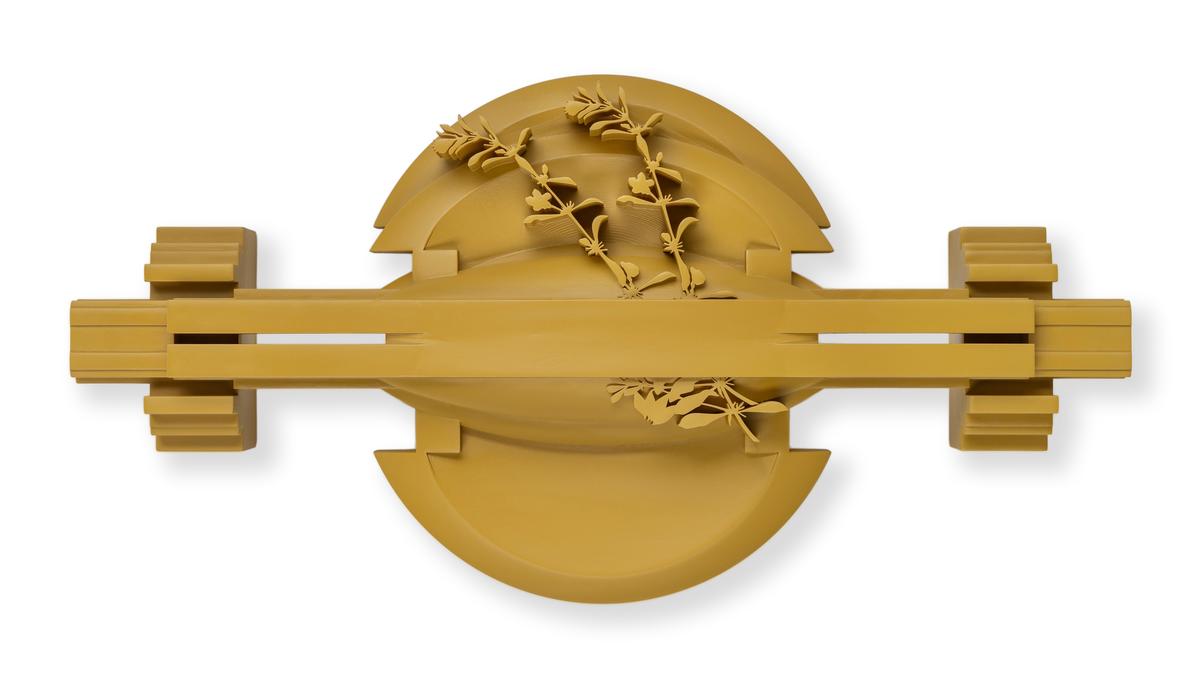
When Victoria Gardens (now Rani Baug) was constructed as a botanical garden in the 1860s, in then Bombay, it was a significant colonial project. The aim: to import plants from Asia, Africa and the Americas for cataloguing. “Its role [was to serve] as a laboratory for the Empire, and a Victorian English garden structure was imposed on the Indian landscape to reflect a Eurocentric view,” says Amba Sayal-Bennett.
But colonial botany also involved rigorous processes of extraction, transfer and erasure — in this case extraction of plants and labour, transfer of specimens across the globe, and erasure of local knowledge. For the London-based British-Indian artist’s first solo show in India, titled Dispersive Acts at TARQ, she created a series of sculptures and drawings “thinking about this botanical garden as a colonial archive, a witness, and a site of resistance”.
Amba Sayal-Bennett
The show is part of a larger body of work exhibited across Mumbai, London and New York that is informed by her research into imperial gardens and colonial botany. At the same time as Dispersive Acts, in London, Sayal-Bennett is part of a group show, Between Hands and Metal, at the Palmer Gallery, and an exhibition called Seeded Futures, Arboreal Drifts at Diana in New York. She was interested in the various threads that connected “this body of work across the three cities”.
A microcosm of the empire
Rani Baug, Sayal-Bennett says, has architectural elements that connect it to Kew Gardens in London, and “the Palmer space has historical links to the India Rubber Company”. In New York, she explores “the movement of stolen rubber seeds” from South America to India, via Kew Gardens.

Seed Coat, 2024 (SLA, Resin)
“Rubber’s usefulness led to its transfer and proliferation,” says Sayal-Bennett. “By 1873, its price had outstripped that of silver, and supplies were at a premium. A report commissioned by the India office recommended that Britain generate and maintain its own stocks by taking the high-yielding species Hevea Brasiliensis from South America to grow as a crop in plantations in India. Commissioned by the British government, in 1876, [British explorer] Henry Wickham stole 70,000 rubber seeds from Brazil, which were brought back to Kew Gardens before their deployment to the colonies, including India. In these contexts, I have been thinking about how colonisation and cultivation are entangled through the imposition of certain crops or plants.” The botanical garden in Rani Baug, she believes, can be seen as a kind of microcosm of the empire with plants from around the world, and in the case of rubber production, the imposition of a monoculture, erasing local plants and landscapes.
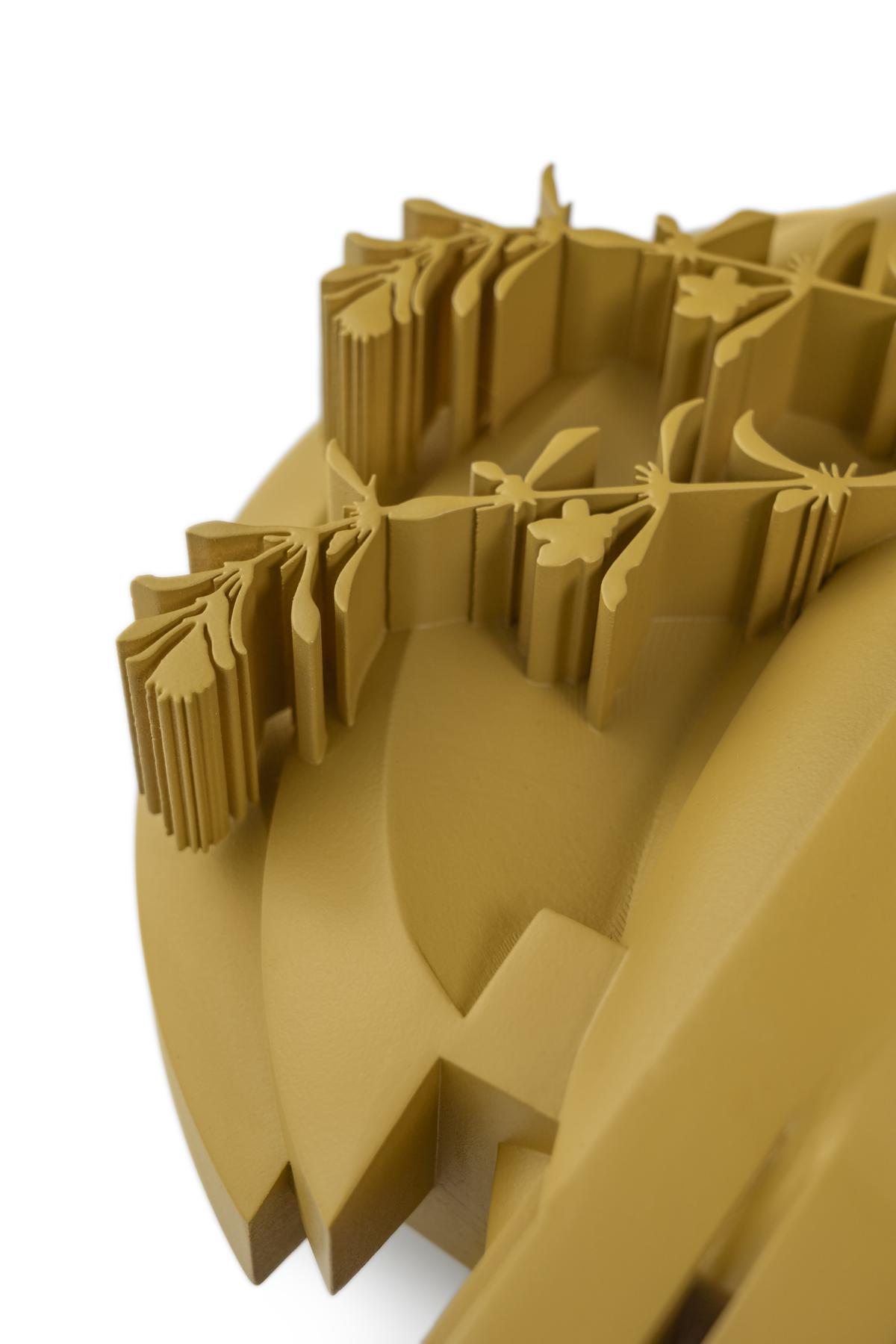
A close-up of Axil
While researching the project, Sayal-Bennett came across writings by Judy Willcocks and Kieran Mahon on botanical drawings, which highlighted how illustrations were a key component in monetising plants. “In these drawings, plants were often shown in isolation from any wider habitat on a blank background, encouraging the European scientific community to observe them for potential economic exploitation rather than as part of a symbiotic ecosystem,” she says, adding, “The rubber seeds taken from South America to India did not take root. The environment rendered the seeds useless. Here, the Indian climate and soil formed an insurgent infrastructure, a non-human agency that refused to comply, refused to be used, refused to support this imposed crop.”
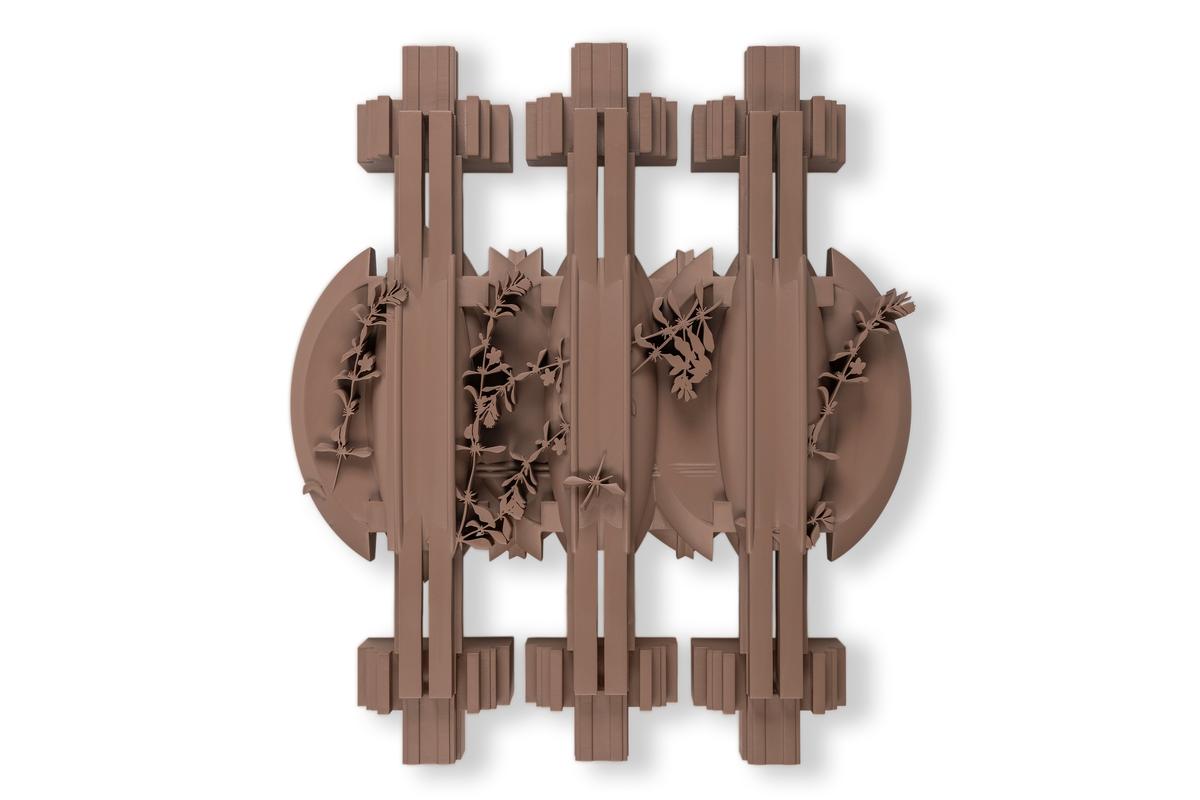
Tiller, 2024 (SLA, Resin)
Leaning into her diasporic roots
The theme of “displacement and its inherited memories and traumas” — as reflected in the practices of colonial botany, where plants are extracted from their indigenous context and relocated to new environments — has yet another component. That of Sayal-Bennett’s late grandmother who was displaced from Punjab to the U.K. during the Partition. The artist shares that her identity as a British-Indian and being part of the South Asian diaspora in London has sensitised her to the genealogies of dispersion. “I always like hearing the associations people have to this work, with many feelings both familiar yet difficult to place,” she says. “There’s always a simultaneous condition of connection and estrangement that is distinctly inherent to a diasporic experience.”
Art Deco and resistance
At TARQ, art deco-style elements find a place across several of Sayal-Bennett’s works. “Mumbai is a city with the second largest collection of art deco buildings in the world. I was interested in how this style can be seen as a statement of independence; a style chosen by Indian architects that was distinct from colonial influences, symbolising a move towards a self-determined future,” she states.
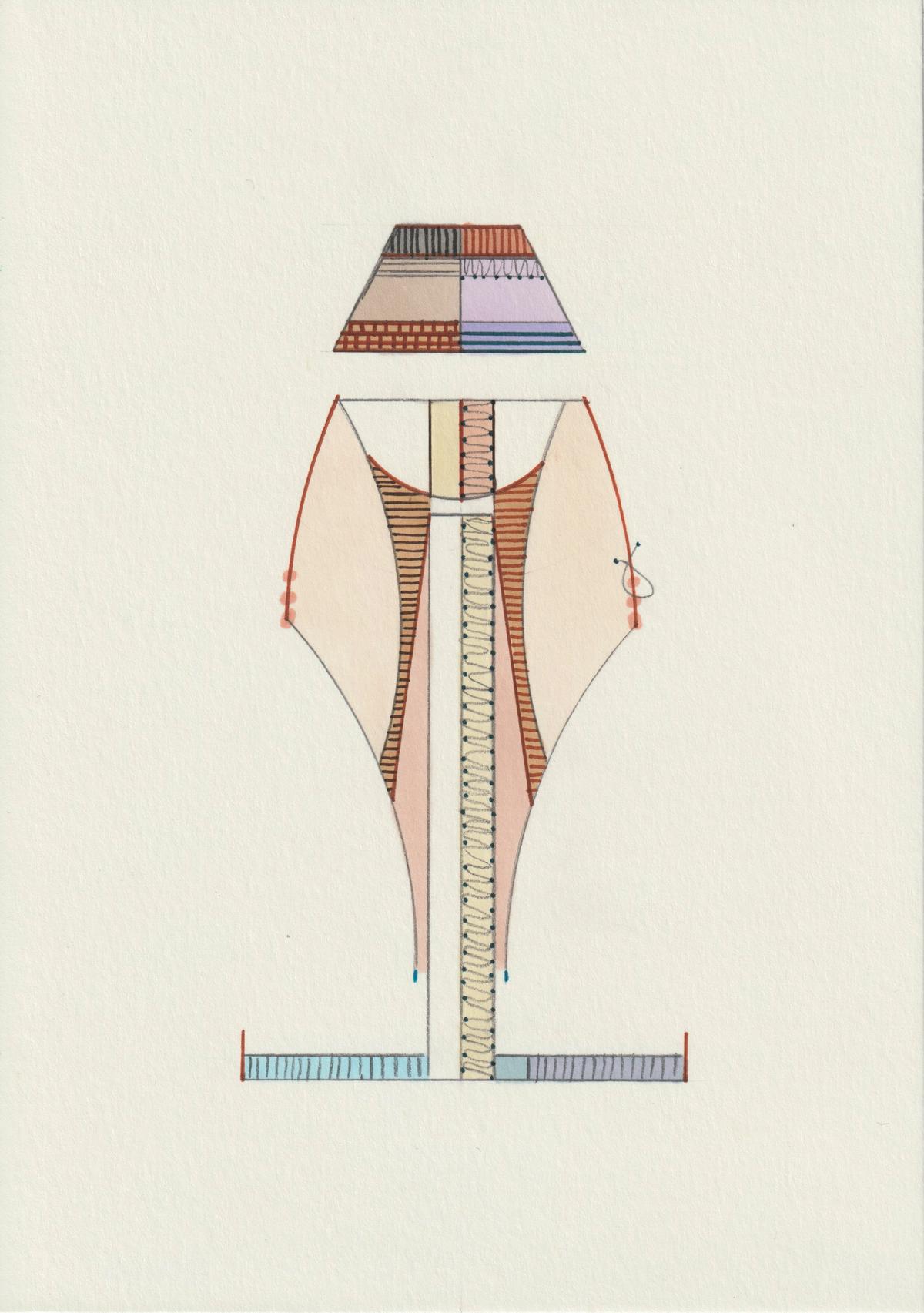
Morph, 2024 (ink, pro-marker and graphite on paper)
A work titled Ziggurat, for instance, reimagines the triumphal arch at Rani Baug’s entrance — installed in 1868 to signal a gateway to an arboreal paradise — in an art deco style. It also features a porcupine flower from the Royal Albert Memorial Museum’s collection, another element that is visible across different works. “The drawing is by an unknown Indian artist and was commissioned by the East India company somewhere between the late 18th and mid-19th century. Keen to exploit and export valuable natural commodities, the company set out to record the flora and fauna of India,” she notes. “Indian artists were commissioned to create detailed illustrations, but their names were rarely recorded. These artists developed their own style of painting, mixing Indian and European traditions, which came to be known as the Company School style. I have been drawn to this hybrid style, which involved a departure from the lines of conventional European practice.”
Till September 21 at TARQ, Mumbai.
The writer and creative consultant is based in Mumbai.
Published – September 12, 2024 12:22 pm IST

