
It is possible to build a temporary reality sans noise.
| Photo Credit: Freepik
Our reality is a yes, yippie one for noise. We are always swimming in it. Sound waves pervade our atmosphere and a certain portion of those sound waves are what we refer to as noise (Sounds change into its alter ego ‘noise’ when we, subjectively, don’t want them there or think they are too disruptively chaotic, silly). But, it is possible to build a temporary reality sans noise. We owe this new reality to the science of noise cancellation.
They cancelled it!
Sound engineers are always looking to make sound more ambitious. It didn’t take them too long to master the art of cancelling noise. In 1934, German inventor Paul Lueg discovered that we could control unwanted sounds. That is, if a sound wave is unwanted, it could be muted by the introduction of an opposing sound wave of the same frequency which cancels that wave.


Sound engineers are always looking to make sound more ambitious.
| Photo Credit:
Unsplash Images
Soon it would gain popularity. Noise cancellation is also referred to as Active Noise Cancellation (ANC). You might have often seen the acronym in headphone ads. By the 1950s, the active noise cancellation method was properly researched and getting implemented. Shortly thereafter, ANC became the state of the art, crucially commercialised by headset companies.
Key components
There are three major components that make noise cancellation work. They are:
1. Microphones
These do the job of detecting target sounds from the atmosphere.
2. Processor (processing system)
Once the sounds are captured, the processor will analyse the sound. Frequency, magnitude, etc. are calculated and another sound is generated in the opposite phase (inverse wave form).
3. Speakers
They send out this “anti-sound” which will then interact with the original sound (noise).

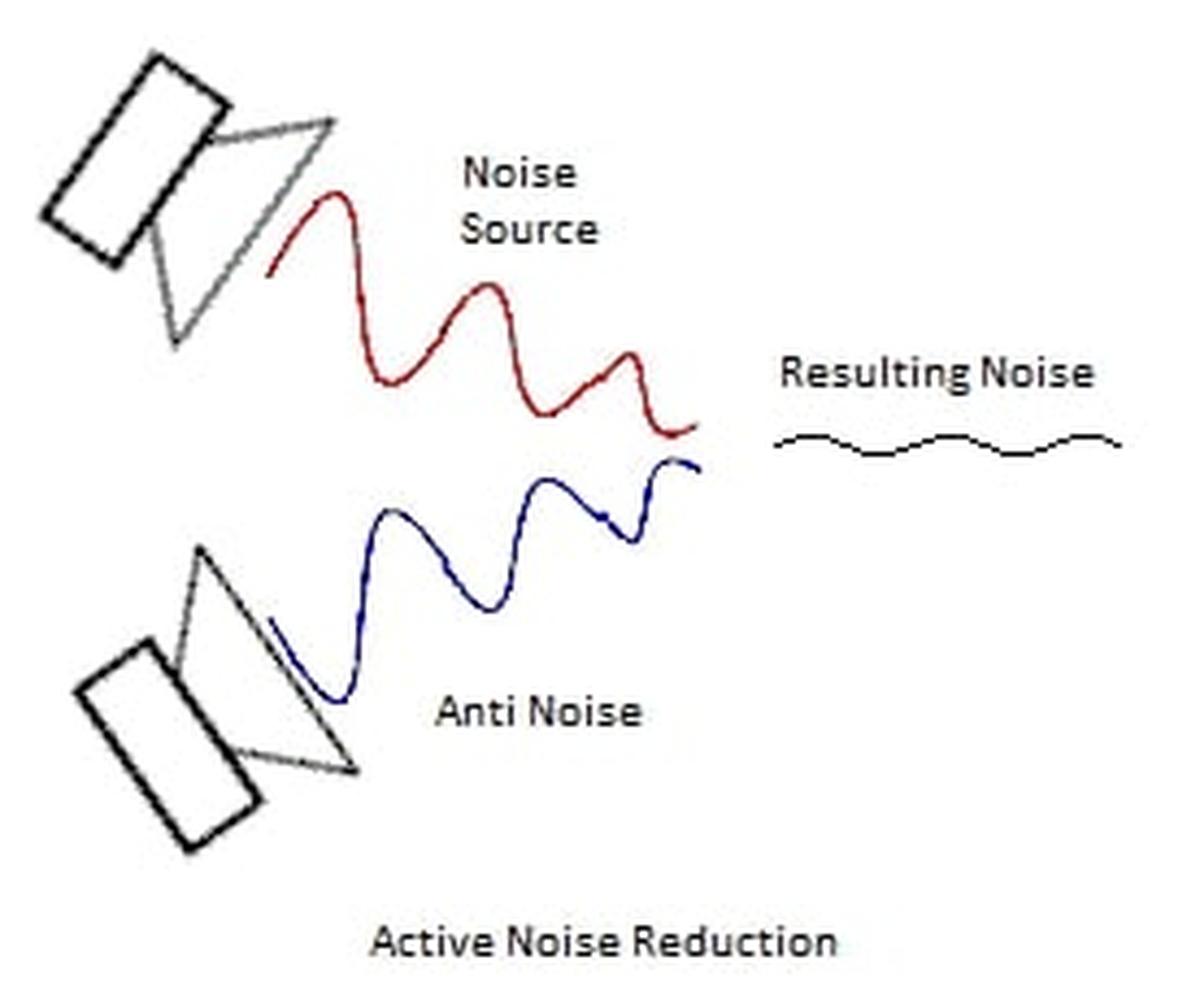
Active noise reduction.
| Photo Credit:
Wikimedia Commons
Destructive Interference
This is a paradox. Destructive Intereference is the driving force behind the noise cancellation science. When sound waves interfere with one another, they create areas of interference patterns, namely destructive and constructive.
Interference
is a fundamental property of all waves. For interference to happen, you need at least two waves.
Destructive interference is when sound waves interact and the resultant volume is decreased. Hence a paradox.
Take a look at the two sine waves shown below. What do you notice?

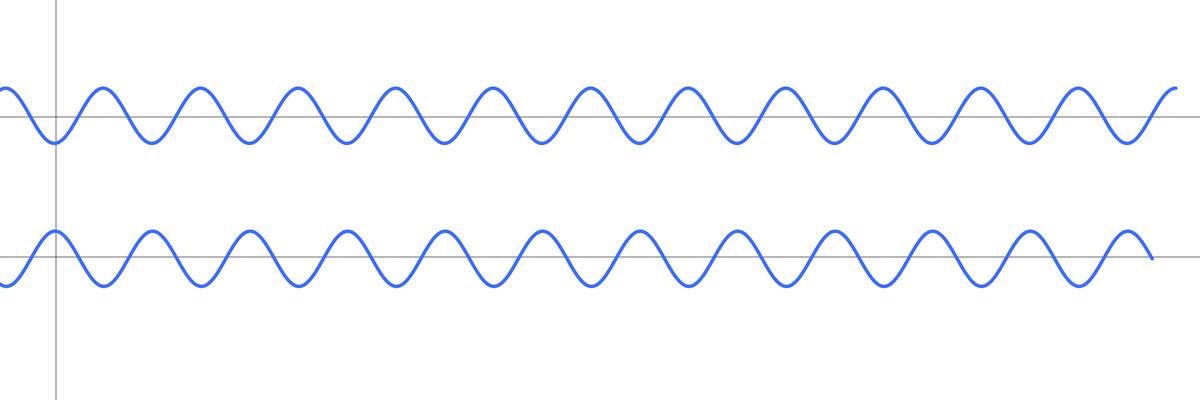
Two sine waves.
| Photo Credit:
Wikimedia Commons
They are waves of the same frequency but the crest of one wave is in opposition to the trough of the other wave. Now imagine these two together, overlapping each other. Then we get a situation where one wave is up while the other is down hence cancelling each other out. This circles us back to noise cancellation.
ANC vs PNC
In headphones, ANC and PNC work together to bring you the best experience while listening to audio through it. We know what ANC is now but what is PNC?
PNC is Passive Noise Cancellation. Unlike active noise cancellation where a new soundwave is generated to cancel out the noise, PNCs physically block noise and prevent it from reaching our ears. That classic black ear cushion fitted into the headphone for best comfort? A great example of PNC!
Published – December 03, 2025 10:00 am IST