The current period might well be viewed, or termed, as India’s moment of reckoning. For one, India today — and despite its highly regarded diplomatic skills — increasingly appears more like an ‘outlier’ than a major player in world affairs. It has been virtually sitting on the sidelines when it comes to issues involving peace and order in different regions of the globe, especially in West Asia and Europe. It is also a virtual onlooker as far as the emerging situation in the Indo-Pacific is concerned. Seldom indeed has India faced a situation of this kind.
If this was not bad enough, the entire South Asian region in which India is situated, appears to be in turmoil at present. Afghanistan and Nepal are among the countries on India’s periphery that appear to be most affected, but from the Maldives to Myanmar and further afield, India can hardly count on many friends and allies. This is a frightening scenario given that each day produces a range of new threats, including cyber.
Hostility from west to east
Currently, India has to contend with two openly hostile powers on its western and eastern flanks — Pakistan and Bangladesh, respectively. In the case of Pakistan, the threat level has been going up steadily, with a growing cacophony of voices being heard in that country to teach India a proper lesson. What is aggravating the situation further is the approval of the 27th Constitutional Amendment Bill by Pakistan’s Joint Parliamentary Committee of the Senate and National Assembly, which has altered the precarious balance between civil and military authority in that country.
Also, a recent amendment has introduced the concept of a new ‘Chief of Defence Forces’, elevating Field Marshal Asim Munir as the nation’s military supremo, and the commander-in-chief of all three services, having sole control over Pakistan’s nuclear assets. The amendment has invested Field Marshal Munir with absolute authority to deal with enemies (such as India), removing the fig leaf of parliamentary restraint and posing a real threat to India on its western flank. Military dictatorships in Pakistan, as elsewhere, have traditionally proved to be extremely hostile to a democratic India, and the rise and rise of Field Marshal Asim Munir, with unfettered authority, represents a significant and direct threat to a democratic India.
That such concerns are well merited, and that military dictators tend to be short sighted, is well known. Concentration of power encourages strategic adventurism. This, in turn, increases the chances of miscalculation in crises. Also, and in keeping with the general trend among military regimes, there is likely to be a tendency to turn local conflicts into spheres of proxy competition and inter-state confrontation. Hence, prospects of a lasting peace with Pakistan are unlikely. On the other hand, the risk of conflict has enhanced significantly. Thus, it would be wise for India not to ignore the possibility of yet another conflict with Pakistan in the near future and be prepared for all eventualities. This may as yet be in the realm of speculation, but the danger must not be ignored.
India’s Pakistan problem is compounded by the fact that the interim government in Bangladesh to India’s east, is proving unfriendly, if not openly hostile, to it. To add to India’s discomfiture, Bangladesh is currently displaying a willingness to establish warmer relations with Pakistan. In a first, a Pakistan navy ship visited Bangladesh after almost a half-a-century and this is expected to help Pakistan re-establish its presence in the Bay of Bengal. This has serious security implications for India.
Hence, a mixture of ideological posturing and military governance on India’s western and eastern flanks has raised diplomatic temperatures across the region. It could have serious and adverse consequences, if not properly handled. Extreme vigilance and careful manoeuvring is called for.
The surfacing of ‘urban terror’
Compounding India’s problems at this time is the return of ‘urban terror’ after a gap of several years, though in a different mould, and by a whole new set of indigenous actors. It is only fair to think that in the highly disparate world that we live in, and in the circumstances prevailing today, terror is merely a hand’s length away from everyday existence. Yet, till recently, urban terrorism on a significant scale had taken a back seat after the 2008 terror attacks in Mumbai sponsored by Pakistan-based Lashkar-e-Taiba and Jaish-e-Mohammed in collusion with elements of the Pakistan military establishment.
During the past two decades, sporadic terror attacks had been reported in certain urban pockets, but the latest module of urban terror — extending from Jammu and Kashmir to Faridabad and Delhi, and involving medical practitioners and doctors (most of whom had connections to the Al-Falah university, Faridabad, Haryana) reveals a new chapter in India’s tryst with terrorism.
The latest terror module, comprising almost only medical practitioners, draws inspiration from, and harps back to the destruction of the Babri Masjid in Ayodhya (in 1992). It fundamentally differs from the terror attacks witnessed in Mumbai (and certain other pockets) during 1992-1993 in the wake of the Babri Masjid demolition, which were mainly carried out by ‘lumpen’ elements.
That more than three decades after the destruction of the Babri Masjid, terror still finds supporters and that too among the educated elite. That is it more so among groups, such as doctors, is highly disturbing. It reveals that religious terrorism is not only alive but still active.
Also, its newest disciples represent some of the best and brightest elements of a community. This is a quantitative and qualitative leap as far as the annals of terror are concerned.
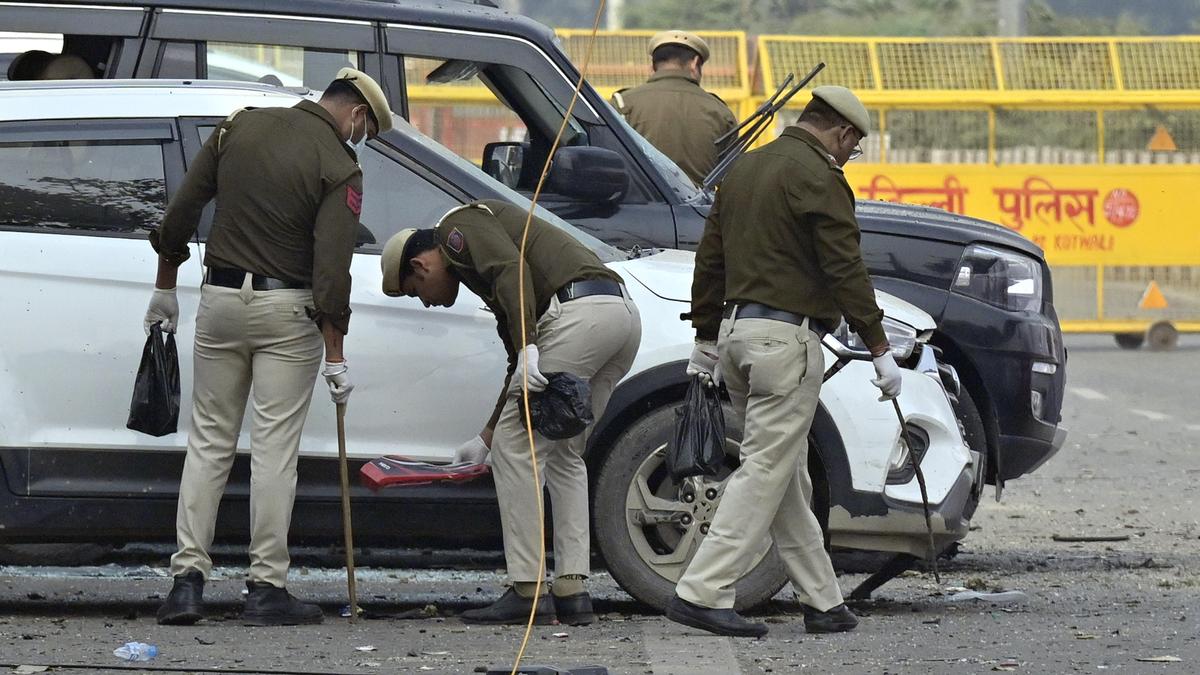
Details of the terror module, which extends from Srinagar to Faridabad to Delhi, have been widely aired. But what should cause more serious and deep concern is that they could accumulate nearly 3,000 kilograms of explosive material and also safely hide it in two houses. Further, it is alarming that a car laden with explosives could escape the police dragnet around India’s capital city, Delhi, and trigger an explosion in the vicinity of Red Fort in the heart of Delhi. This reveals either extremely careful planning at one level, or total ineptness on the part of the authorities, on another. Worse still, while the 1993 terror explosions were carried out by ‘lumpen elements’ and the 2008 Mumbai attacks were directly sponsored by Pakistan, the latest incidents were of an entirely different character.
These were organised by a group of medical professionals, some of whom were perhaps not even born when the destruction of the Babri Masjid took place, revealing a major fault line in India’s multi-cultural, multi-religious society. Far more than the details of the terror module that are being revealed through painstaking investigation, it is this aspect, and the aspect of revenge, which has been the catalyst for some of the best and brightest in a community, which should be seen as a blot on India’s civilisational journey and progress.
The moot point is whether the latest incident represents mere disenchantment and anger against the nation state, or something more fundamental. It has been India’s belief, and as claimed by the Union Home Minister in Parliament, that no local had joined a terrorist group in Jammu and Kashmir in recent times.
This myth has been exploded. Investigations have revealed that this is an entirely local terrorist module, which had been using encrypted channels for indoctrination, coordination, fund movements and logistics. Another aspect is that funds were being raised by professional and academic networks under the guise of social/charitable causes. There are other reports that the groups were in touch with elements in Pakistan. The links of the group also seem to extend beyond Pakistan to the United Arab Emirates, Saudi Arabia and Türkiye.
The need for vigil
Given the new perilous external dimension to India’s security, a hostile Pakistan and Bangladesh on its western and eastern borders, and the fact that much of West and South Asia are in turmoil, India needs to be careful that the situation does not lead to the fostering of religious fascism on a more extended scale. Given India’s tolerance and acceptance of disparate religious beliefs, this may seem unlikely. But eternal vigilance (or diligence) is the price that needs to be paid to ensure that the situation does not deteriorate further, necessitating cause for alarm.
M.K. Narayanan is a former Director, Intelligence Bureau, a former National Security Adviser, and a former Governor of West Bengal