

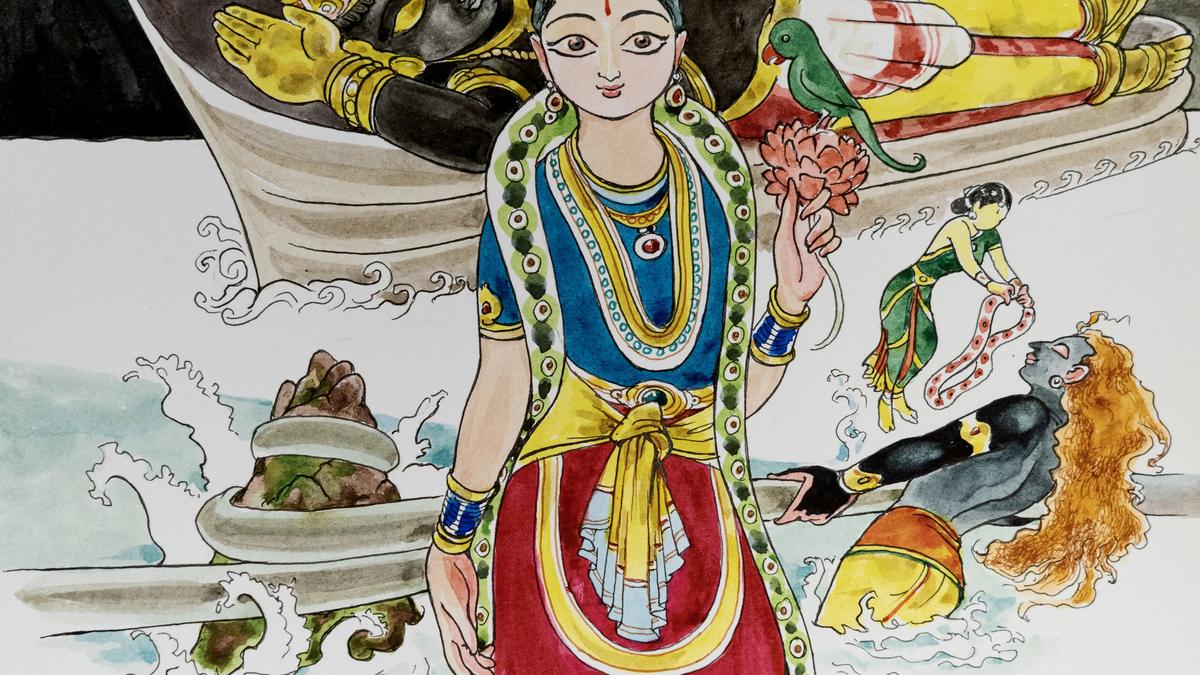
“She watched and waited as you emerged into this world”. These were grandmother Saraswathi’s words to me, as I was preparing for my arangetram. I was an excited nine-year-old who loved to dance and was learning choreography for the first pasuram from the Tiruppavai, Andal’s iconic garland of verses adoring her favourite deity — Krishna.
My special dance debut was at my maternal uncle’s wedding reception in Madras. In the 1960’s, full length classical music and dance performances were programmed at weddings. It was the trend for girls to not only learn Bharatanatyam but also a Tambalam (plate dance), Kurathi (gypsy/indigenous community) dance, Snake dance (made famous by Kumari Kamala) and to end with a Tiruppavai verse.
I was most excited about my transformation as the young and dreamy poet. I loved the side top knot (kondai) and the Tulasi garland around my neck. How was I to know that She would invade my heart, body and mind in the years to come.
My grandmother felt I danced the Andal portion the best. “I think She was watching and smiling,” she said, as she stroked my hair. I urged her to tell me the Andal story all over again. I grew up listening to the Tiruppavai being rendered at home, and was especially taken in by the 29th pasuram, in which Andal vows to be reborn again and again only to serve Krishna. It was as if her entire body was humming with prayer and song. How could someone so young dream, sing and write with such amazing clarity?
Andal is the only women saint-poet to have a temple of her own, which is at Srivilliputhur.
| Photo Credit:
S.R. Raghunathan
Years later, during her final days, my grandmother told me: “Your destiny is to dance and sing about Narayana, like Andal. The narrative of marriage is not meant for you!” While I memorised the entire 30 Tiruppavai pasurams, I did not begin to dissect the words until much later. I understood the self belief, complete surrender, supreme confidence and fierce joy that comes with deep love.
Andal’s poems are like a riddle. On the outside, it is all sweet and unrestrained devotion but reveals a tender, bruised and vulnerable voice. This brilliant Tamil poet of 7th century CE was among the earliest in the pantheon of mystic female dreamers and the only one to have her own temple. She was a living tradition, who burst boundaries of identity and geography.
But who was Andal in my mind? How did she look? What did her voice sound like? Did she have a long braid? Why the top knot? What was her routine after the month of Margazhi? What did she like to do best? Vague shapes swirled around inside my head. My mother had the precious Chitra Tiruppavai books in which each of the 30 verses were illustrated, but the back cover held my attention. It carried the photograph of dancer Vyjayantimala, dressed in white portraying Andal. Finally, I could put a face and a body to my many questions.
It was Vyjayantimala and her choreography of all the 30 verses as a dance production that made it all come together for me. ‘Sanga Tamizh Maalai’, a historic stage presentation at the Madras Music Academy, was a seminal moment.
My sister Pritha and I sat in the first row in the balcony. I leaned forward as the curtain rose, and watched in rapt attention. Towards the very end, Vyjayantimala moved towards the back and in a flash, young Kodhai transformed into Goddess Andal.
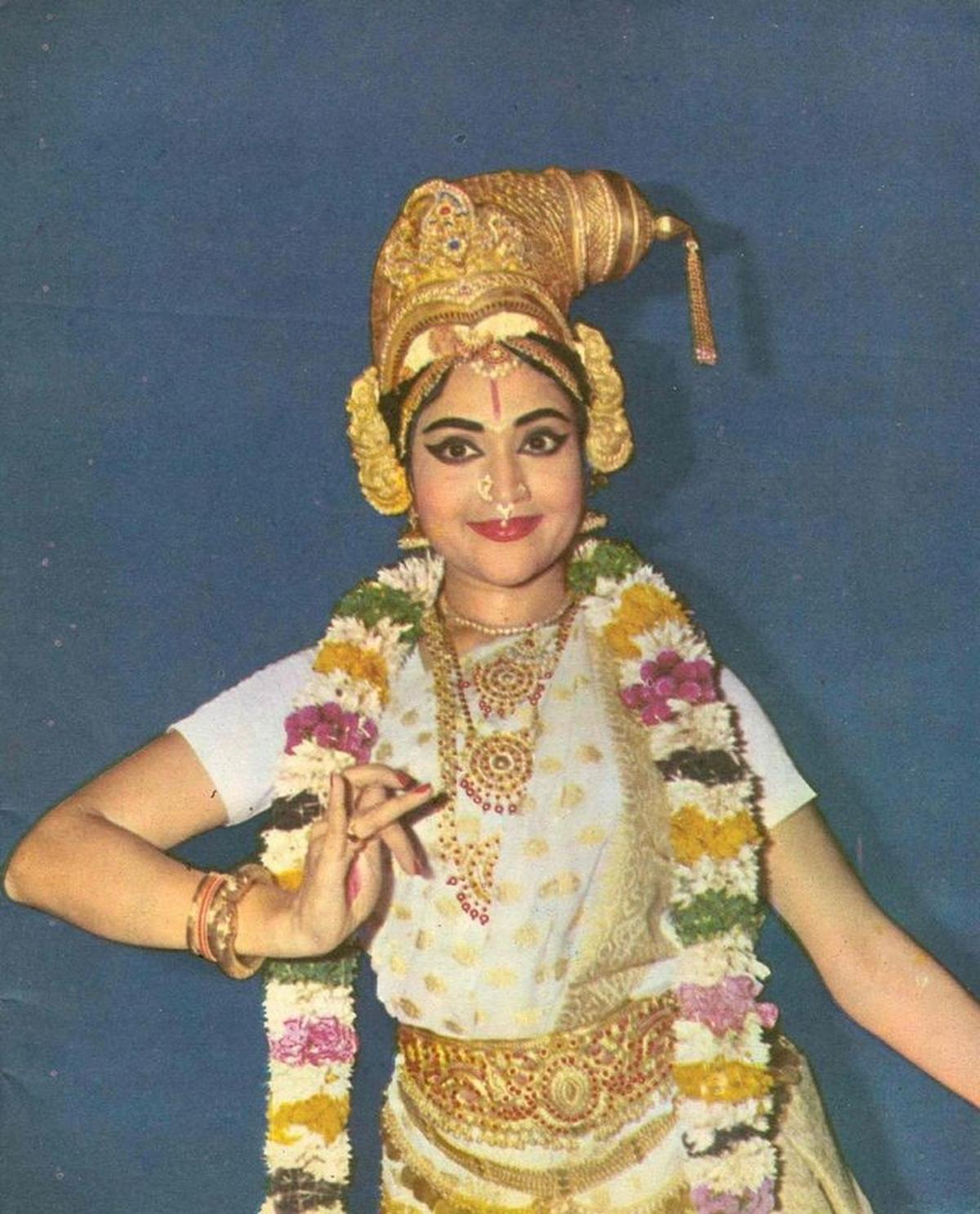
Vyjayantimala with her choreography of all the 30 verses as a dance production ‘Sanga Tamizh Maalai’ has inspired generations of dancers
| Photo Credit:
Special Arrangement
The very next day, I pestered my mother to ask my Carnatic music guru Vidwan Madurai N Krishnan to tell me how the 30 songs were set to music. He shared the fascinating tale of how he would patiently notate the songs, along with other senior students of the great Ariyakudi Ramanuja Iyengar, for five long years. When the recordings of the Tiruppavai were eventually released in the voice of M L Vasanthakumari, the songs were played every day from 5 a.m. in many temples in Tamil Nadu, Karnataka and Andhra Pradesh in the 1960s and 1970s.
Andal was an impossible ideal for any young girl to emulate. After all, before she was 13, she’d written the Tiruppavai.
It was not until I was in my late teens that I came to know about the existence of the second book of poems Naachiyar Tirumozhi. I chance upon it when my mother was looking for some special pasurams composed by Vaishnavaite saints for one of my dances. She was reading the opening verses where Andal challenges Cupid. Here was not a pining victim of Manmada’s love arrows. Her voice challenged, coaxed, cajoled, taunted, pleaded and even threatened. My mother thought it was too bold for a 19-year-old in the 1970s to dance those verses, but they stuck in my head.
When I started to explore the 143 verses of the Naachiyar Tirumozhi, it was like entering a dark tunnel filled with riddles and hidden streams that murmured in contrast. A more mature person was speaking. “How do my Krishna’s lips taste?” She asks the conch. Such direct passion was contrasted with words of a helpless young girl playing with sand castles. The verses hurtle toward Nature, and then the anguish of a young woman — who poured her heart into a long love letter to Krishna, only to be met with silence — pierces through. As I read the final verses, ‘I will pluck my breasts and fling it at Him who is so cold and heartless,’ I wept quietly.
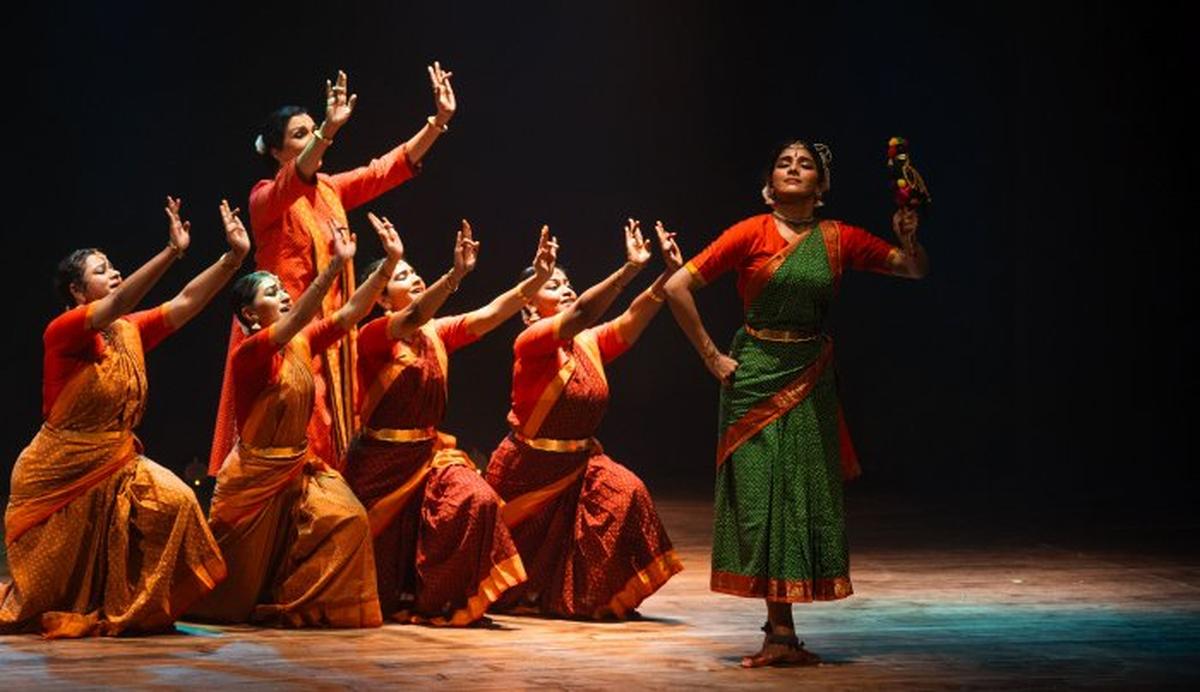
From Anita Ratnam’s ‘Naachiyar Next’
| Photo Credit:
Courtesy: Narthaki
How could I capture these shifting moods in dance, I wondered. In the years leading to 2000, Andal was not in vogue any more on the dance circuit. But I felt Her voice in my dreams, urging me to tell her story now that my own life had found me single again. It began with a solo in 1998, then a small group presentation ‘Naachiyar’ in 2000. Another followed in 2011 with my sister (’Andal-Andal’). Each expression was a step towards understanding this brilliant mind.
In my newest ensemble work, Naachiyar Next, I have travelled the furthest — probing her thoughts and life and trying to connect the dots that stop abruptly in the text. Centuries after Andal’s time, the Vijayanagara king Krishna Devaraya provided a beautiful conclusion to the story, when Vishnu Narayana takes Andal into His being as bride and favourite consort.
Each step felt like I was being guided. Every choreographic challenge was answered after a restless night. The choice of verses, the order of the scenes — it seemed as if I was just a channel for Her story to be told in a bold and new way. The vague mist that I first saw as a nine-year-old had become a murmuring stream and a strong flowing river inside me.
I always carry a pocket version of the Tiruppavai with me. There is a volume by my bedside. I often listen to M.L. Vasanthakumari, who made the 30 songs unforgettable. The young girl who dissolved into Vishnu in Srirangam was barely 20 years old, but my Andal has grown with me. She is a woman, grey at the temples, walking with a slow but regal gait. Crowds part, trees sway, elephants trumpet and the birds sing when she appears. My Andal is my shadow, my guide and companion.
Published – December 24, 2025 02:32 pm IST

