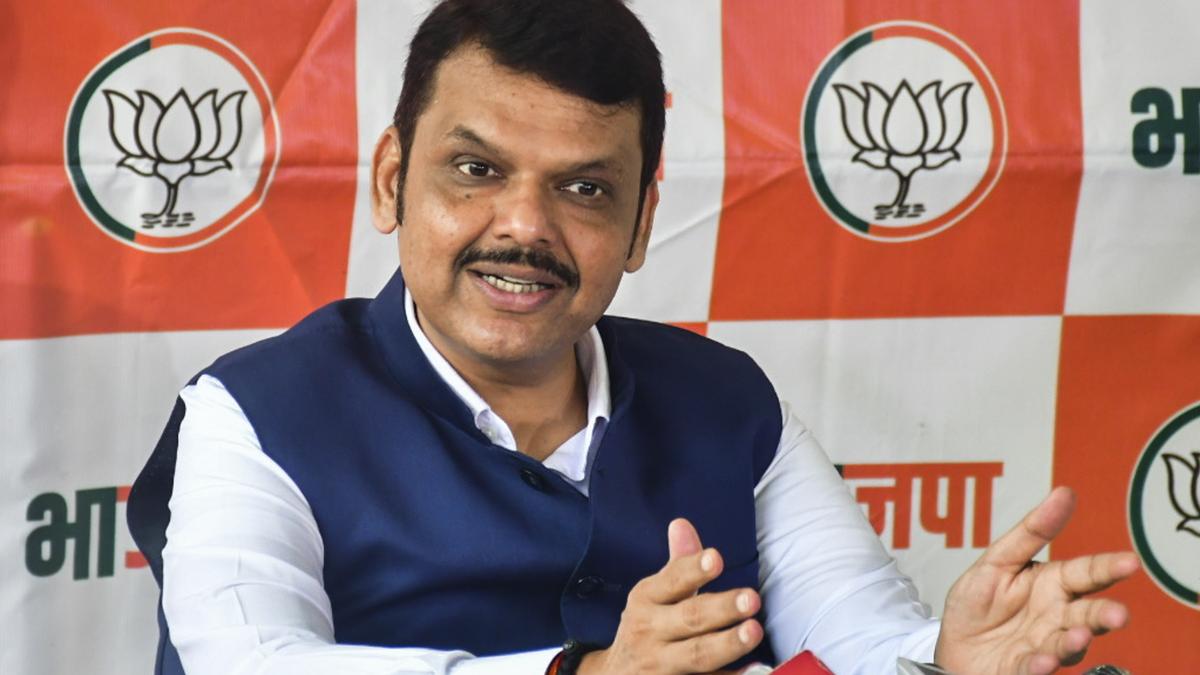
On July 11, the Bharatiya Janata Party (BJP)-led Maha Yuti government tabled the Maharashtra Special Public Security Bill, 2024, in the Assembly. While presenting the Bill, Deputy Chief Minister Devendra Fadnavis said that it is aimed at curbing the menace of Naxalism in urban areas. He said that Naxalism is not limited to rural areas and is increasing in urban areas through frontal organisations. The unlawful activities of such organisations need to be controlled through effective legal means, he added. The provisions of the proposed Bill, which allows the State to declare any organisation as ‘unlawful’ with offences categorised as cognisable and non-bailable, has raised concerns. Is the Maharashtra Special Public Security Bill draconian? Yashovardhan Azad and Brinda Adige discuss the question in a conversation moderated by Vijaita Singh. Edited excerpts:
What is your opinion about this Bill?


Editorial | Questionable intent: On the Maharashtra Special Public Security Bill, 2024
Brinda Adige: What does the Maharashtra government mean by ‘urban Naxalism’? Naxalism is a communist insurgency. Extremists resort to violence using weapons, so there is trafficking in arms and ammunition. (There are laws to combat that.) The Bill talks about criminalising unlawful activity by individuals. But does it define what is unlawful? It only talks of dissent against the government, which could be any question that anyone raises holding the government and the bureaucracy accountable. The Bill also gives unilateral power to the police. The government is basically trying to control the people so that there are no questions asked of it.

Does the Bill have the potential to be misused against the most vulnerable sections of society? Let us say someone participates in a protest and that protest is later termed an unlawful activity by the police. What will be the remedy available for that person?
Can the Bill also be used against political opponents?
Who is an ‘urban Naxal’? Is it anyone who expresses dissent or disagrees with the government or with the police?
Also read | ‘Urban Naxal’ bill is bogey to smother opposition before Maharashtra polls, say Congress, CPI(M)
The Bill was tabled on the penultimate day of the Assembly. Maharashtra goes to the polls in two months. The Bill will not be a reality until the Maha Yuti government is re-elected. So, what do you think could be the motive for introducing this Bill in the last days of the government and when it knows well that the Bill cannot be implemented right away?
Brinda Adige: I think the present government is trying to scare people by saying if there has been any kind of dissent against the establishment, then we are going to crack down on it if we win the elections. We (the people) have seen this happen with a lot of activists. They (government) have used words like ‘toolkits’ to describe how people come together. They have even planted evidence in people’s computers and phones and presented that in court saying, these people were involved in this and this is the evidence that we have. So right now, it is merely to scare people.
The people elect governments, elect politicians, to work for us. We cannot allow them to become our masters with such feudal laws. This Bill is unconstitutional and is clearly against the people of this land. I hope that the people of Maharashtra understand this. When politicians have money stashed in their house as well as arms and ammunition, is that not a threat? The Bill just finds an excuse for the government to say they have found an ‘urban Naxal’. Also, how will they decide who is an ‘urban Naxal’ and who is a ‘rural Naxal’? Is it per police jurisdiction?
In the Bhima Koregaon case, suspects have been in jail for years now and the trial is yet to commence. Where does police accountability lie in all this?
Do you think a judicial oversight is required when such legislation is passed?
Mr. Fadnavis, while tabling the Bill in the Assembly, said similar laws exist in other left-wing extremism-affected States, such as Chhattisgarh and Telangana. Have these laws helped these States in curbing such activities?
Yashovardhan Azad is a retired Indian Police Service officer who has served in the Intelligence Bureau; Brinda Adige is a human rights activist and founder of Global Concerns India