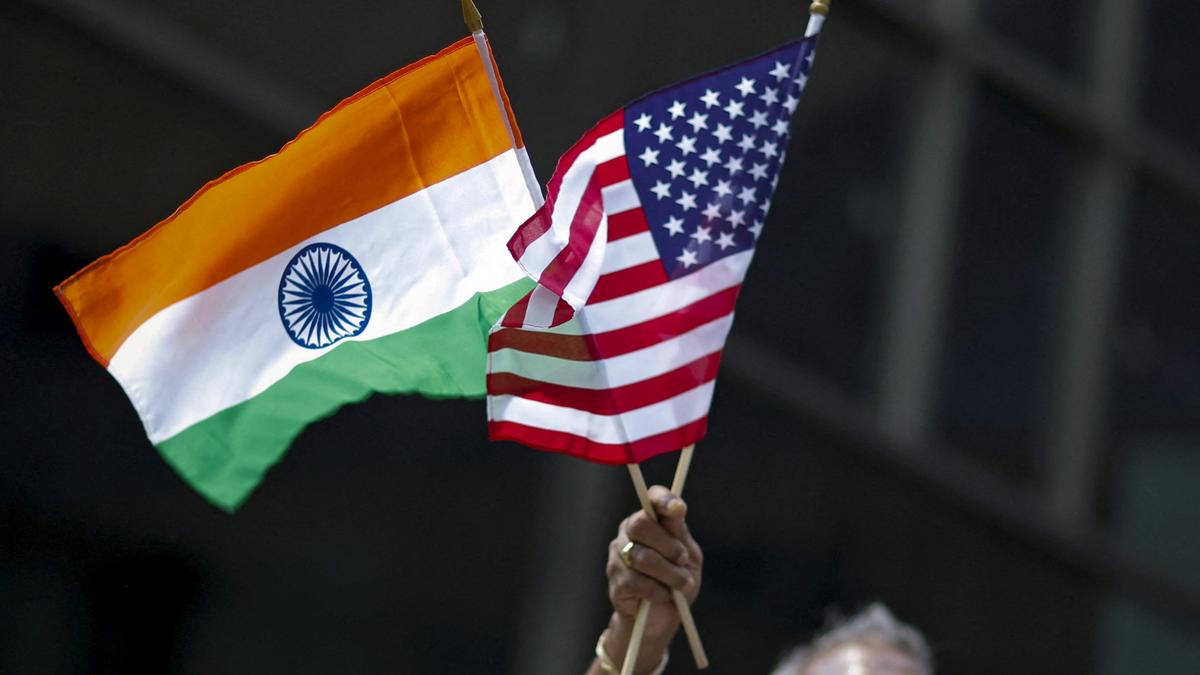
At an event in December, External Affairs Minister S. Jaishankar said there are a lot of challenges in providing dual citizenship to Indians settled abroad. He pointed out that the Overseas Citizenship of India drive is a step towards meeting the demand and added that the debate on dual citizenship is “still alive”. Is India open to the idea of dual citizenship? Amitabh Mattoo and Vivek Katju discuss the question in a conversation moderated by Kallol Bhattacherjee.
Do you think dual citizenship for diasporic Indians could become a reality?


Minister Jaishankar’s remarks have opened up an issue that has unresolved contours. Professor Mattoo, what are your thoughts about granting dual citizenship rights to people of Indian origin living abroad?
We are not ready to have dual citizenship in this country after just 75 years. I am not xenophobic, I am a person who has grown up with an idea of global citizenship in a larger sense. But in terms of which political dispensation will govern India, I am not willing to share that right with anyone who has but 100% political loyalty to India. Personally, I had the option of acquiring Australian citizenship, and the only reason I did not take it was that it would mean relinquishing Indian citizenship.
The incoming Trump presidency has several Indian-origin people, as well as first-generation Indian immigrants, who will hold public office. Do you think that for certain communities and certain kinds of workers who are employable globally, the idea of citizenship requires some degree of flexibility?
You mentioned that in the U.S., there are people of Indian origin who are holding, who have, and who will be holding the office. I think six persons of Indian origin have been elected to the House of Representatives this time. Let us not forget that they are American citizens. The Indian systems and law demand that the moment you acquire the nationality of another country, you relinquish India’s nationality, which means that you do not have political rights anymore.
I believe it is the democratic right of every Indian to choose the citizenship of another country and relinquish Indian citizenship. But they cannot say I will acquire the citizenship of another country, participate in its political process, and still hold on to political rights in India. Now I know that some other countries allow that, but I must confess I have very orthodox views on this. The international system is a system of states.
Amitabh Mattoo: I completely endorse Mr. Katju’s remarks. We cannot, for the sake of populism or to attract foreign investment, create what the Marxists used to call a “comprador” class — a class of people who will act as foreign agents in India. You give them the right to vote and to elect members of Parliament and Legislative Assemblies, that is a sure way of recolonising India.
But if you open this Pandora’s box by allowing even a single citizen of another country to have dual citizenship in India, it would be deeply dangerous and subversive. There are situations where people who have decided to make India their home have relinquished earlier citizenship and become citizens of India. Mirra Alfassa, known as The Mother, whose work inspired many and who founded the Aurobindo Ashram in Puducherry, became an Indian citizen despite earlier campaigning for dual citizenship. Similarly, Mother Teresa became an Indian citizen, and economist Jean Drèze, I believe, relinquished his Belgian citizenship and became an Indian citizen. In the U.S., which might seem more flexible, the fact is that you cannot become a President unless you are born in the territory of the U.S. Even Elon Musk, despite all his championing of Donald Trump, can never aspire to be President because he was born in South Africa. So, some laws are much more rigid.
Is the issue being propped by populism?
As in the case of Microsoft, Satya Nadella has promised investment in artificial intelligence. That is all for the good of the nation. However, the question really is whether this diaspora could become a Frankenstein monster. While its role may appear benign and a source of great good, you may suddenly empower it to the point where it decides who is going to be your next leader. That is where I think there has to be a lakshman rekha. You need to maintain a clear line between the useful role played by the diaspora and its crossing the boundaries. I am not willing to let any Satya Nadella or Vivek Ramaswamy or any person of Indian origin who may just acquire Indian citizenship for instrumental reasons while retaining their American or other citizenship decide my political future. I am an Indian citizen, and I vote for my future along with other Indian citizens who do not have any other loyalties to any other country.
Vivek Katju is former diplomat and Amitabh Mattoo is Dean of the School of International Studies at the Jawaharlal Nehru University