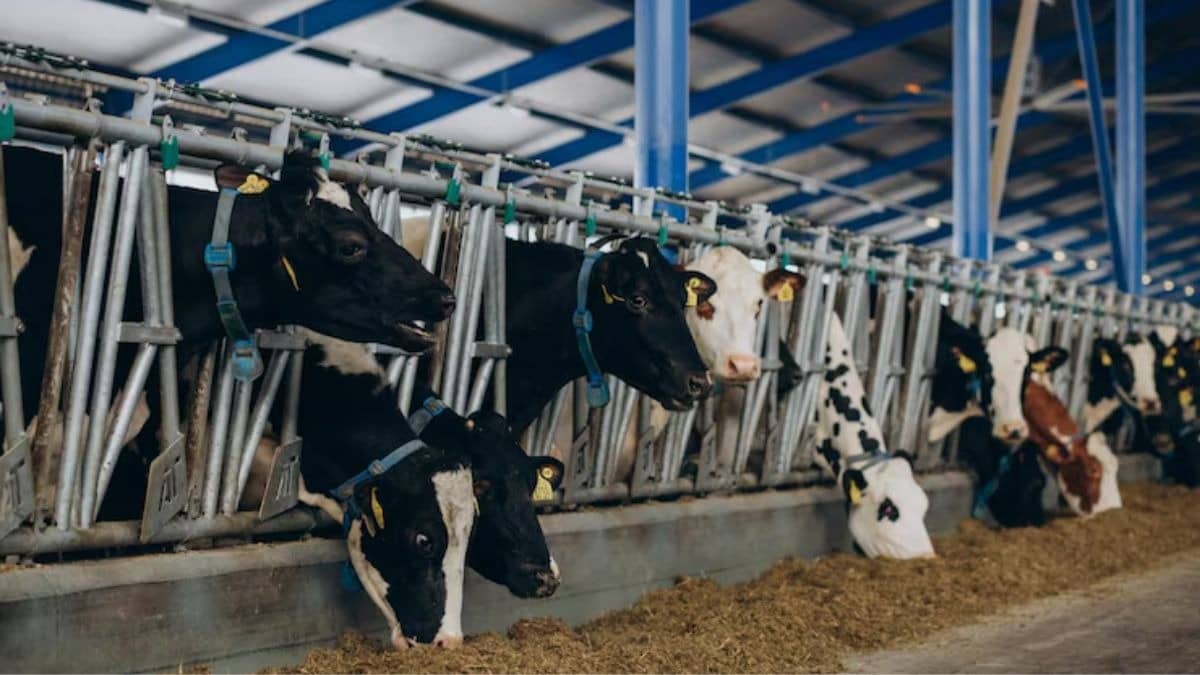
Indian dairy sector faces tight supply as demand strengthens ahead of 2026 | Image:
Freepik
India’s dairy sector is entering a phase of tighter supply and margin recalibration after navigating sharp cycles of disruption, surplus, and recovery over the past three years, according to insights from an expert session hosted by Systematix Institutional Equities.
The post-COVID period of 2022-23 proved challenging for the industry, marked by an unreasonable fall in milk prices that failed to cover farmers’ production costs.
According to the Systematix report, this led to reduced cattle induction and a sharp drop in milk output.
From mid-2023, however, renewed farmer engagement by leading cooperatives and private players, including sustainable fodder programs, helped restore confidence and revive supply.
These efforts resulted in a sharp rebound during the October 2024-March 2025 flush season, when milk production surged by nearly 25 per cent, creating a temporary surplus.
Dairy companies responded by expanding value-added product mixes, strengthening cold-chain infrastructure, and increasing advertising and promotions to absorb excess supply, it noted.
Large players also intensified backend investments and last-mile distribution to manage inventories.
The surplus, however, was short-lived.
In 2025, early and unseasonal rains disrupted the usual summer demand-supply pattern, while geopolitical disturbances, including the India-Pakistan conflict, affected key northern milk belts, including Punjab, Haryana, and Jammu and Kashmir.
At the same time, robust festive demand further eroded inventories, leaving the industry with a limited surplus heading into late 2025, according to the expert session.
As a result, milk procurement costs have firmed up across regions, even as product prices have largely remained stable following the recent GST cut.
Some regional price hikes of Rs 1-1.5 per litre were reported in states such as Bihar and Andhra Pradesh.
Industry participants expect procurement cost corrections around April 2026, coinciding with the Ramzan period.
Demand has been supported by reduced prices and increased grammage post-GST cut, particularly in small stock-keeping units, though this has pressured margins due to channel disruption and supply-chain costs.
According to Systematix, companies are now evaluating selective price hikes or rolling back higher volumes to restore profitability.
A notable structural trend is the accelerating shift toward value-added products such as curd, paneer, ghee, and ice cream. Ice cream demand, once concentrated in peak summer months, is now spreading across a wider seasonal window. Dairy products are increasingly purchased on impulse, as consumers shift from carbonated beverages to milk-based alternatives.
Distribution dynamics are also evolving rapidly. Quick-commerce and e-commerce platforms are gaining prominence, while general trade is losing share, it observed. Modern trade, despite offering visibility, continues to deliver lower margins, forcing dairy players to make careful decisions.