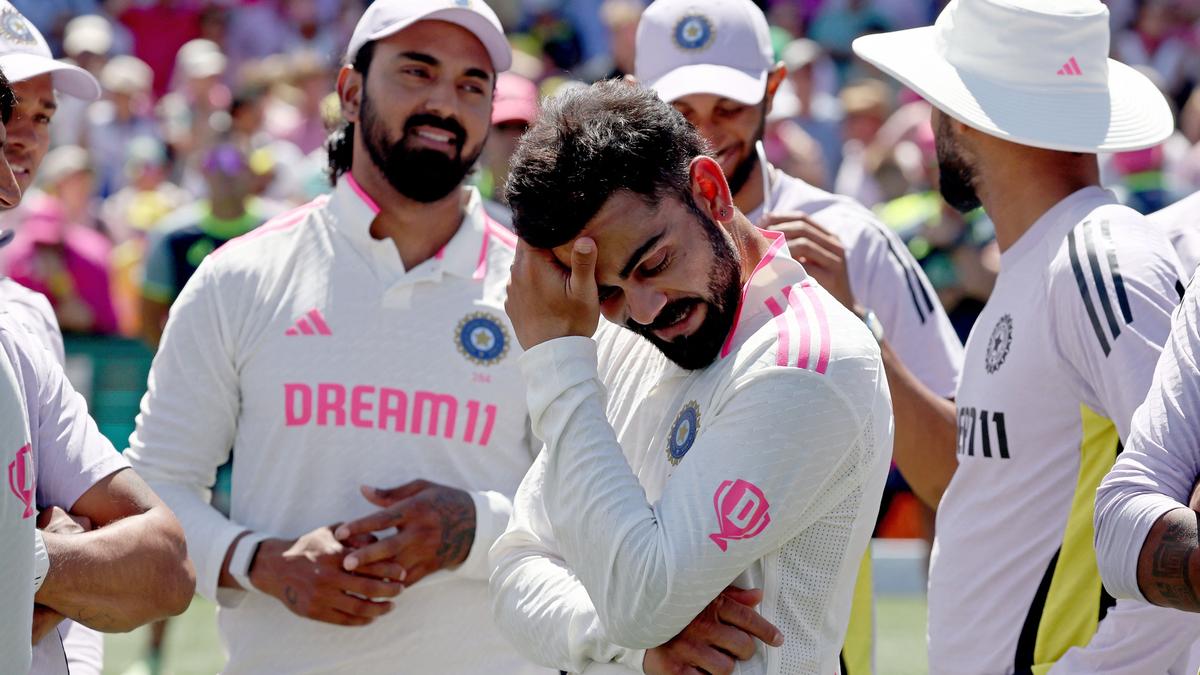
India’s 1-3 loss in the Border-Gavaskar Trophy marked the end of its decade-long dominance in the series against Australia. This was not an exception; India’s performance in Test cricket has been dismal for a while now. Over the last four months, the team has lost six out of eight Tests, including a shocking 0-3 defeat against New Zealand at home. Has T20 cricket deskilled Indian batting? Wasim Jaffer and Jaydev Unadkat discuss the question in a conversation moderated by Amol Karhadkar. Edited excerpts:
Let’s cut to the chase. Has T20 cricket deskilled Test cricket?


Jaydev Unadkat: I agree. You can’t really blame youngsters coming into the game because they look at financial security. T20 cricket has helped a lot of players and families that way. On the field, I won’t say T20 has helped or has made the job easier. When we started playing, it was always red-ball cricket, which was looked up to in terms of starting a season. No one really noticed a lot of performances in white-ball cricket. The IPL has changed the game for youngsters. I was talking to Cheteshwar (Pujara) recently about how we are seeing players who have started their cricket just watching IPL. Even until 2015-16, it was a mix of T20 and red-ball cricket. Red-ball cricket is hard work. For a bowler to bowl 18-20 overs a day, sometimes without reward, is hard work. Even batters have got to grind through phases, play out sessions, play some good spells. Those were the skills that used to be seen in extraordinary players, not just hitting boundaries. It is changing, but I don’t want players to forget that sometimes bowling an eight- or a nine-over spell — despite what your physio or strength and conditioning team has told you for managing workload — is the need of the hour. You have got to do that for your team and for playing at the highest level.

With IPL having become the epicentre of world cricket and not just Indian cricket, is it too much for old-timers to expect good-old batting to be on display in the coming years?
A coach will now encourage a child to attack first and then teach him to defend later. It was the other way around when I was growing up. If you teach a young kid to defend first, he will lose interest because he wants to play all those fancy shots because that’s what he has seen on TV. If you try and stop him from doing it right from the word go, he will stop playing cricket.
Today’s batters give up easily mentally. They have got fantastic shots. Australia’s Sam Konstas, for example. Playing like that in one’s first Test match… we would have not even dreamt of playing like that. But today’s generation is like that. They can go out and play outrageous shots and get 20-30. They just need to understand how to dig deep. Once they understand that, the sky is the limit because they can change a game within a session or two. To make them understand this is a big challenge for the captain, coach, or mentor.
Jaydev Unadkat: The counter-attacking game has produced a lot more results and generated greater crowds, even for Test cricket, which is important. Sometimes, as players, we don’t understand the importance of the game needing crowds because that’s where you generate revenue.
As a captain, if I see the shift from T20 cricket to Ranji Trophy, the first couple of net sessions, the batters just put the bat to everything. They have got to leave some balls outside off stump as well. They have the ability but maybe not the hunger to fight it out.
You touched upon generating support from the fans, but will it last? If Test cricket played merely as an extension to T20 cricket, why will anyone follow it over five days?
Jaydev Unadkat: At Gabba, you needed a Pujara and you needed a Rishabh Pant. It’s the balance and it starts from the top. If you have the mindset of rewarding those who can grind it out and those who can play those shots, that’s where we can find the balance. I can give you an example about bowlers. We (Saurashtra) have a couple of young fast bowlers who have come in, but all they think about when they want to take a wicket is whether to bowl a bouncer or a slower ball or a yorker. When I ask them about their wicket-taking plan, they never say sticking to the off-stump line or playing with a batter’s patience.
One of the challenges young batters face is managing an array of scoring strokes. How do you make them understand to manage the shots?
Jaydev Unadkat: Everything comes down to balancing it out. They have to figure out the strongest four on a particular day and stick to it. The captain’s and coaches’ role has also changed in that way.
Wasim Jaffer: Today’s batters are not scared to get out. I find that very strange. If they see a ball which is above their eyeline and even if the fielders are at long off, long on, deep cover, and deep midwicket, they will still play the high-risk shot. It is difficult for them to realise that if they play such a high-risk game, they could lose the wicket and if they keep doing that for two-three innings, they are playing for their spot. They need to play that ‘low risk, high reward’ game to be successful.
What’s the way forward?
Wasim Jaffer: I am against under-19 boys getting huge (IPL) contracts. The BCCI needs to put a cap of probably ₹50 lakh or something. A youngster getting crores of rupees if he doesn’t have a good mentor… it’s going to do more harm than good for him. And players getting selected for their potential rather than performance nowadays… [That needs to change too].
Wasim Jaffer has scored the highest number of runs in Ranji Trophy history and is currently head coach of Punjab in domestic cricket; Jaydev Unadkat has made 22 appearances for India including eight one-day internationals and four Tests