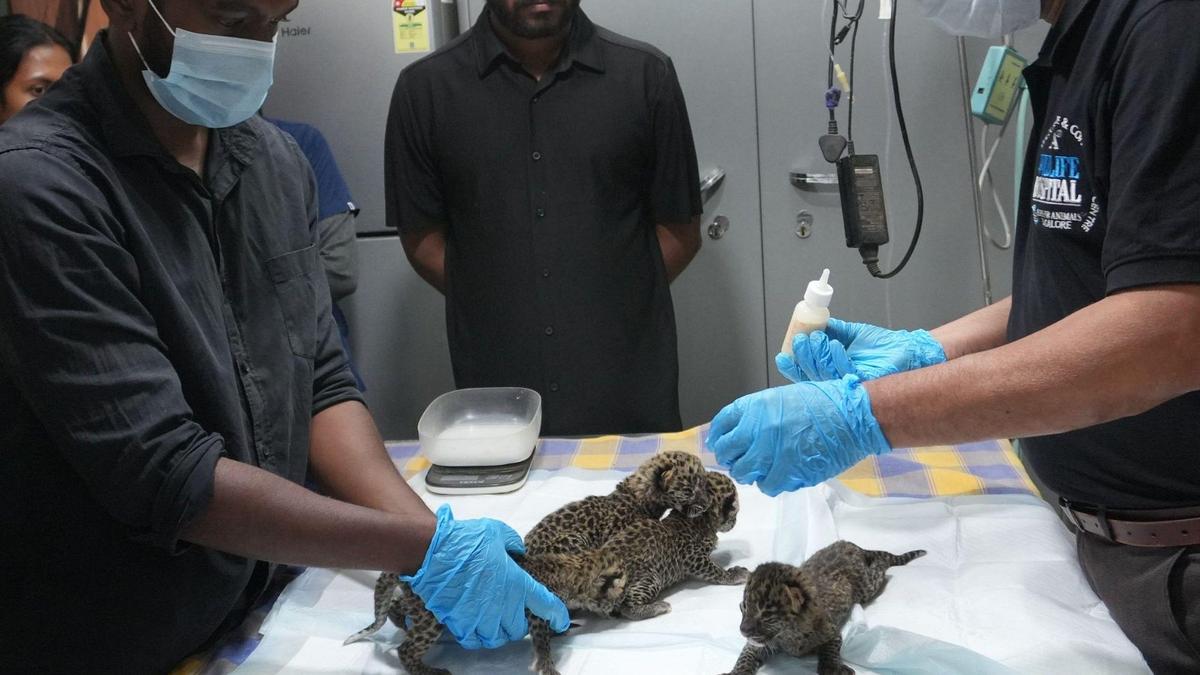
The PfA Wildlife Hospital says the cubs were stabilised and supported with an age-appropriate nutritional formula after missing several nursing cycles.
| Photo Credit: SPECIAL ARRANGEMENT

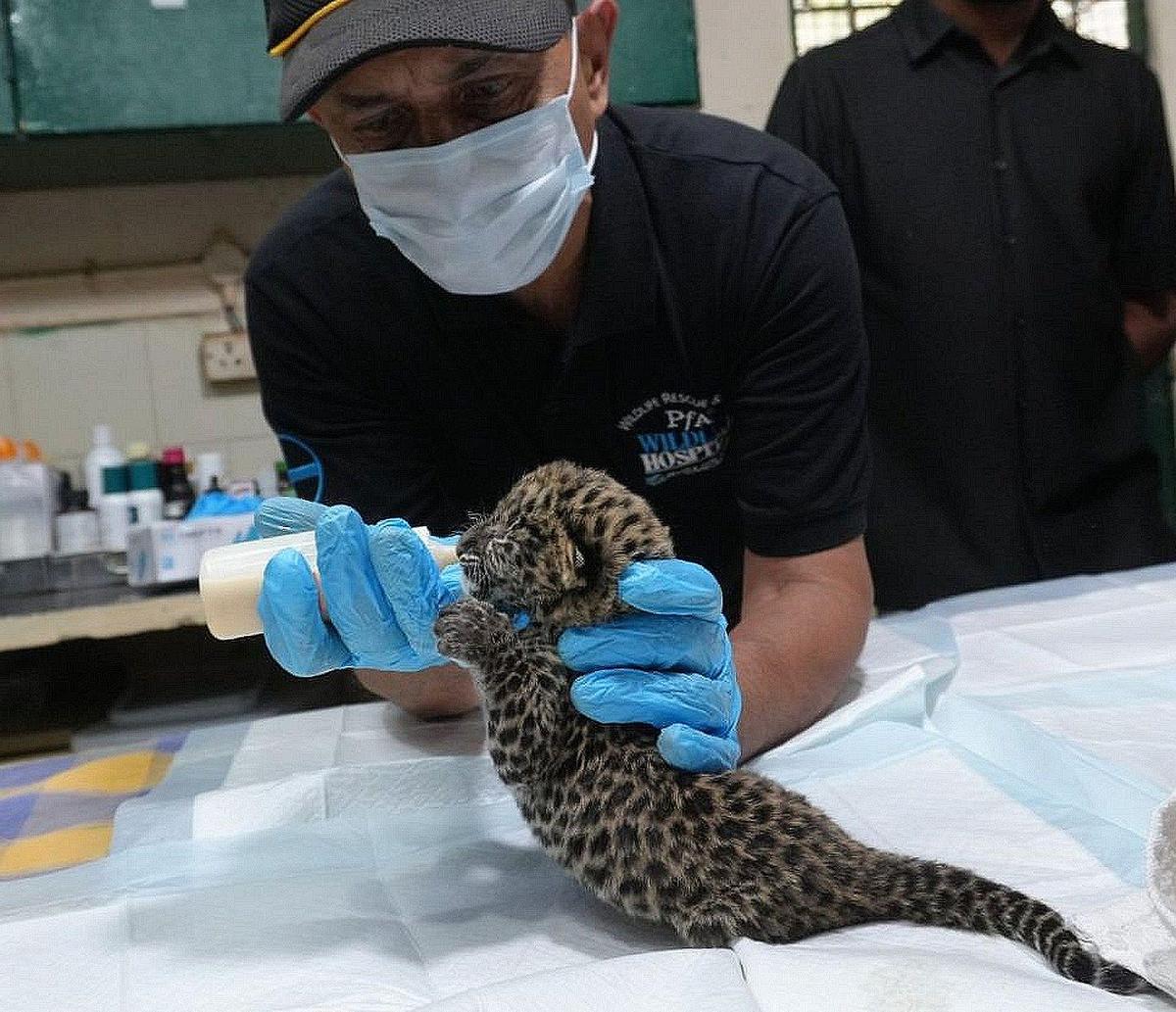
One of the four rescued leopard cubs being fed at the PfA Wildlife Hospital in Bengaluru on Tuesday.
| Photo Credit:
SPECIAL ARRANGEMENT
The PfA Wildlife Hospital, Bengaluru, on Tuesday rescued four abandoned leopard cubs near Big Banyan Tree, Tavarekere.
The hospital, in a release, said that the cubs were found abandoned becasue of human activity.
“Upon receiving the call, the authorities immediately activated its Quick Rescue Reaction Team, reaching the spot within 30 minutes. The area was inspected thoroughly for signs of the mother’s return before the cubs were transferred for medical care,” it said.
The cubs, three females and one male, which are approximately five to seven days old were found dehydrated and were transported to the hospital where ultrasonography confirmed no internal injuries.
It added that the cubs were stabilised and supported with an age-appropriate nutritional formula after missing several nursing cycles.
“The Leopard mothers rarely choose to abandon their cubs. They are often compelled to leave due to increasing human presence. Our responsibility is to intervene only when required, and then step back to let nature reconnect. Tonight, we are making efforts to give the mother the best chance to return to her cubs,” said Col. Navaz Shariff, Chief Wildlife Veterinarian, PfA Wildlife Hospital.
The rescue operation was initiated after Ravi, Deputy Range Forest Officer of the Forest Department, alerted the hospital about the vulnerable cubs.
The hospital is preparing to return the cubs to the original site for a monitored reunification attempt. To help the mother locate them, the PfA said that recorded vocalisations of the cubs will be played intermittently and urine scent collected from the cubs will be placed strategically to aid identification.
It added that teams would maintain distance to minimise human presence and stress.
“These cubs deserve the chance to grow in the wild, where they belong. We are committed to helping make that possible,” Dr. Shariff said.
Published – December 30, 2025 10:26 pm IST