Raised in a predominantly female household, Sikkim-based filmmaker Tribeny Rai believes her film, Shape of Momo, reflects the compartmentalised experiences of men and women in an unequal world.
“When I was growing up, I was always reminded that I was not as good as my male cousins or other male members in the family, and I was shaped by these events,” says Tribeny, who grew up with three sisters.
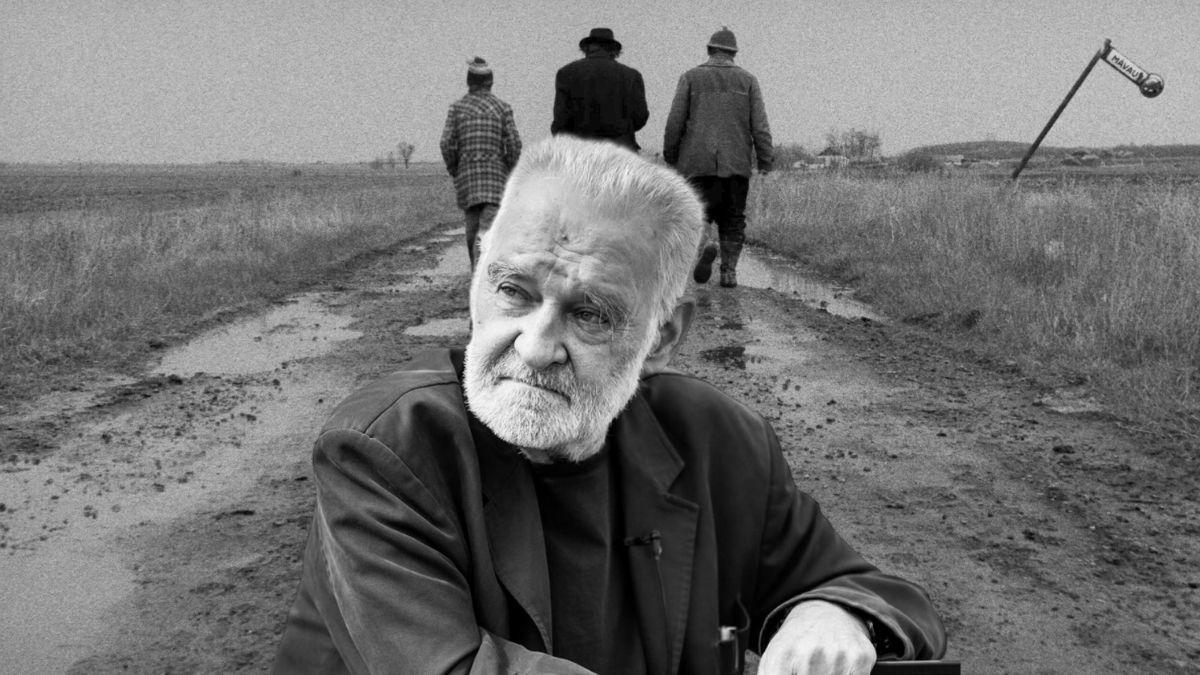
Tribeny Rai
| Photo Credit:
Special Arrangement
The Nepalese film was recently screened at the 11th Jaffna International Film Festival in the Debut Films category. It is also nominated for the 2026 Ingmar Bergman International Debut Award at the Göteborg Film Festival in Sweden to be held later in January. The film premiered at the Busan International Film Festival in South Korea in November 2025, earning the Taipei Film Commission Award and the Songwon Vision Award.
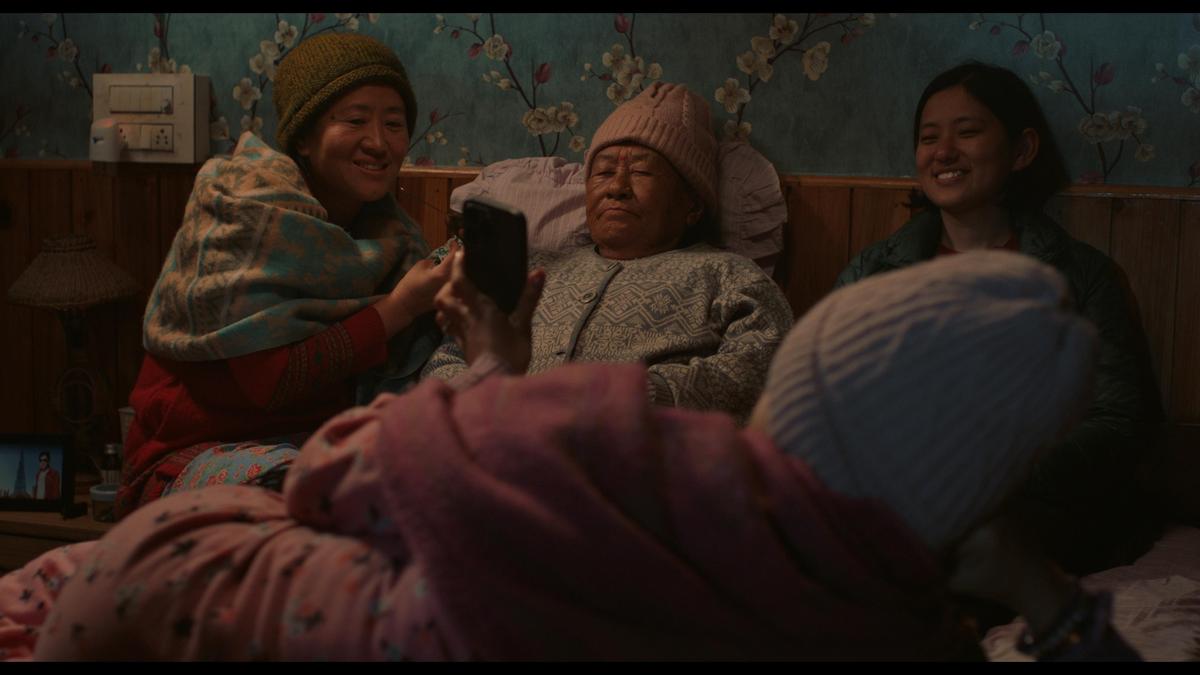
The film is a commentary on stereotypical gender roles and the toll it takes on women who resist such expectations. The protagonist Bishnu, played by Gaumaya Gurung, returns to her village in Sikkim after leaving her job as a copywriter in Delhi. She lives with her mother and grandmother, who are used to leading a life without men in the family, but depend on men to get things done around the house.

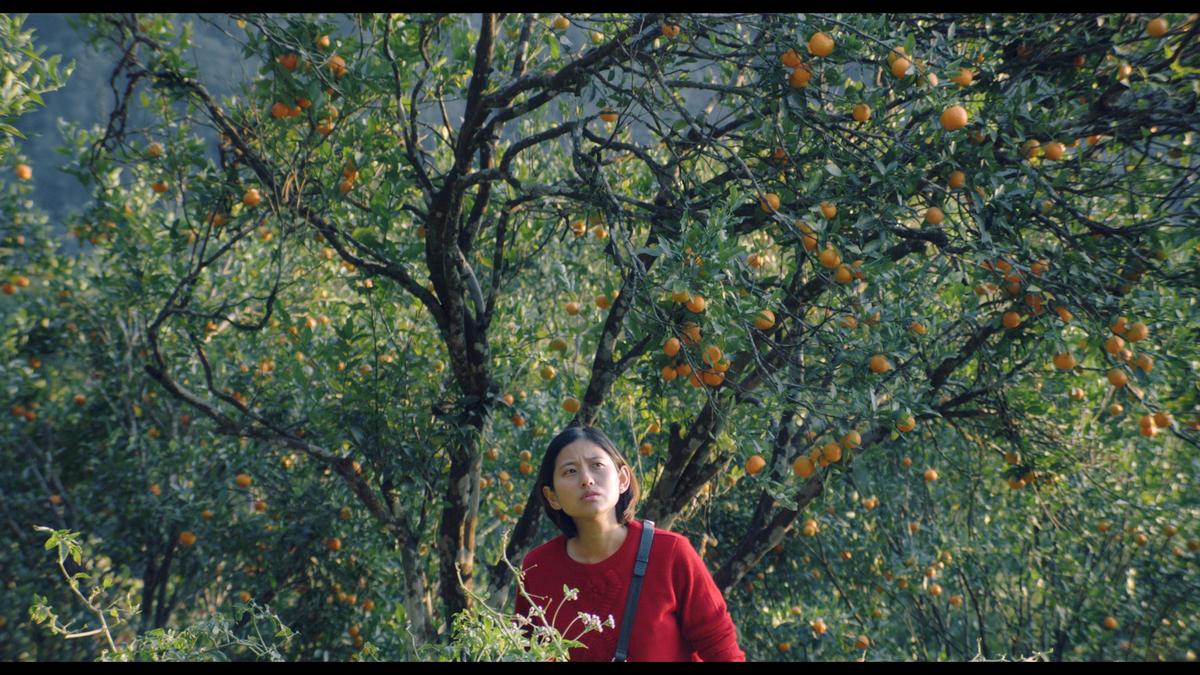
Gaumaya Gurung as Bishnu
| Photo Credit:
Special Arrangement
Bishnu rebels against this dependence, which has led to indifference to the men’s actions in their lives. This resentment is further deepened with the entry of Bishnu’s sister Junu, who is pregnant and a victim of assigned gender roles. The film progresses as Bishnu tussles with a rural patriarchal society.
The film begins with a dedication to Tribeny’s father. “My father passed away 13 years ago from cancer. I have seen my parents suffer in society and within the extended family since they didn’t have a son. I have seen them discriminated against by their relatives. However, my father never made me feel less, because of his experiences around other people. I think he would be proud of this film. He was not one of the men in the film. So, it only made sense to dedicate the film to him,” says Tribeny, over a Zoom call from Sikkim.
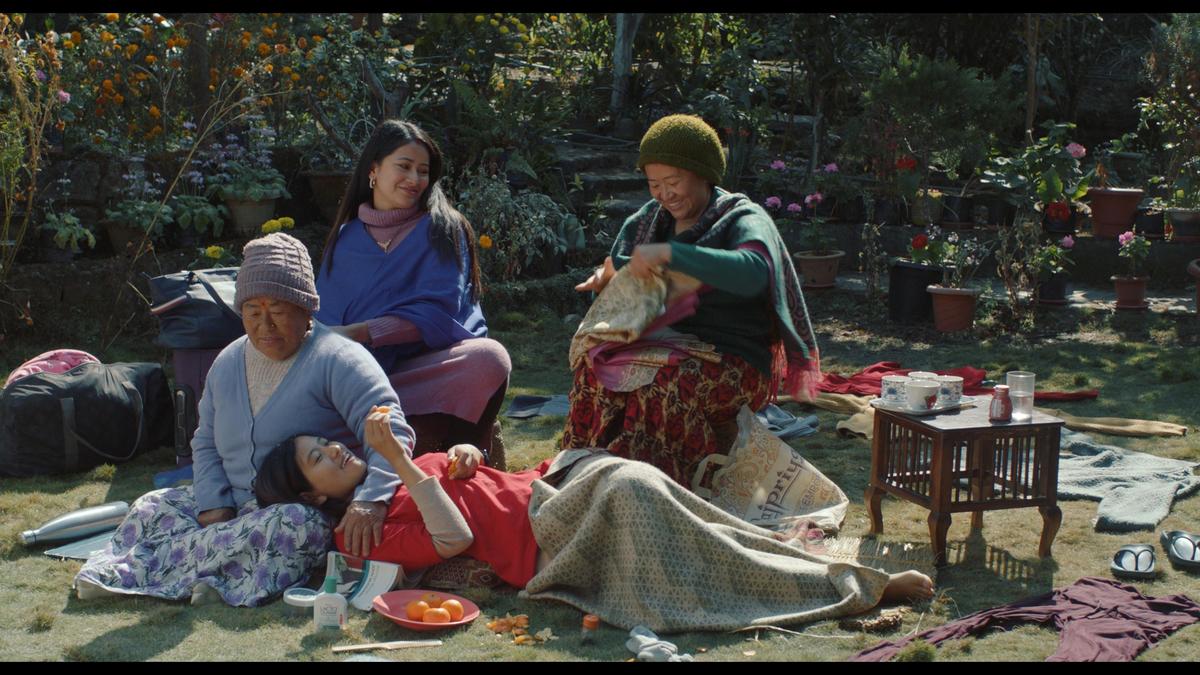
A still from Shape of Momo
| Photo Credit:
Special Arrangement
Through this film, Tribeny explores the dichotomy between patriarchy in rural and urban settings and female agency in the two locales. “When you try to tell a personal story, you cannot leave the social aspects out of it. Women’s agency is so fragile that the same agency which protects her in the city, like being able to go to the police when something happens, backfires when she tries to use it in the village, as she is challenged by one of the characters.”
Shape of Momo weaves the idea of feminism through motifs and metaphors. Frames featuring portraits of Nepali feminist writer Parijat and a poster referencing Virginia Woolf’s essay A Room of One’s Own underscore the film’s feminist message.
Also Read I Filmmaker Deepak Rauniyar on Nepal’s Gen Z ‘revolution’ and why his cinema is political
“I revisited Virginia Woolf’s essay while writing the script. As a filmmaker in Sikkim, many people are unfamiliar with the need for a creative workspace, so they assume you have nothing to do. They ask me to take my mother to weddings, funerals, and if someone in the family falls ill, I am the first one they call. Those were the times when I wished I had a room of my own, the means to live independently, or pursue writing in a professional setup.”
The shape of a momo acts as a perceived identifier for an ideal woman in the movie.
The presence of a pet cat named Azadi serves as a metaphor. “We had a whole scene where it is revealed why the cat is named Azadi, but removed it as it was not working. It is amazing to see how, as the film travels, people find many interpretations, and most of the time it is about how the cat represents agency and independence of women.”
Making of Momo
The director considers her short film Yathawat, her diploma film at the Satyajit Ray Film & Television Institute (SRFTI), as a precursor to Shape of Momo. The 22-minute-long film tells the story of three sisters and their mother trying to secure a government job following their father’s death.
“When I was in film school, I mostly made experimental films. I showed it to my mother, who did not understand it. So, I made a conscious choice to craft a narrative film because I love my mother, and if she doesn’t understand the films I make, what is the point? By then, my father had passed away; so it was pretty much a house full of women, with my mother alone navigating society.”
The script took time since, initially, as Tribeny was writing on her own. But then she discovered her co-writer Kislay’s film Aise Hi, about an old woman who starts travelling after her husband’s death. Impressed by his craft, Tribeny brought him on board for the project.
“It is very difficult to produce an indie film, but even more difficult to produce one in Nepalese. I think there’s only one Nepalese film on Netflix. I had saved up some money from a few gigs for Doordarshan, and my mother had recently retired from her government job, so we got a sum from her. Then, later, Kislay founded a production house with a group of friends, and they contributed as well.”

The cast and crew consist of students from SRFTI and Film and Television Institute of India, Pune, says the filmmaker.
“I had decided that when I made my first film, I was definitely going to cast people who look like me so that it will resonate with the younger generation who will will have something to look up to, which I did not have. I also wanted to open our world to people who are not aware of it.”
Apart from Göteborg Film Festival, the film is set to travel to a few other European festivals. “I certainly want to release the film in Sikkim, North Bengal, Shillong, Dehradun, Guwahati etc, where there is a Nepali-speaking population, as I think it is important for my community to watch this film.”
Published – January 05, 2026 11:32 am IST