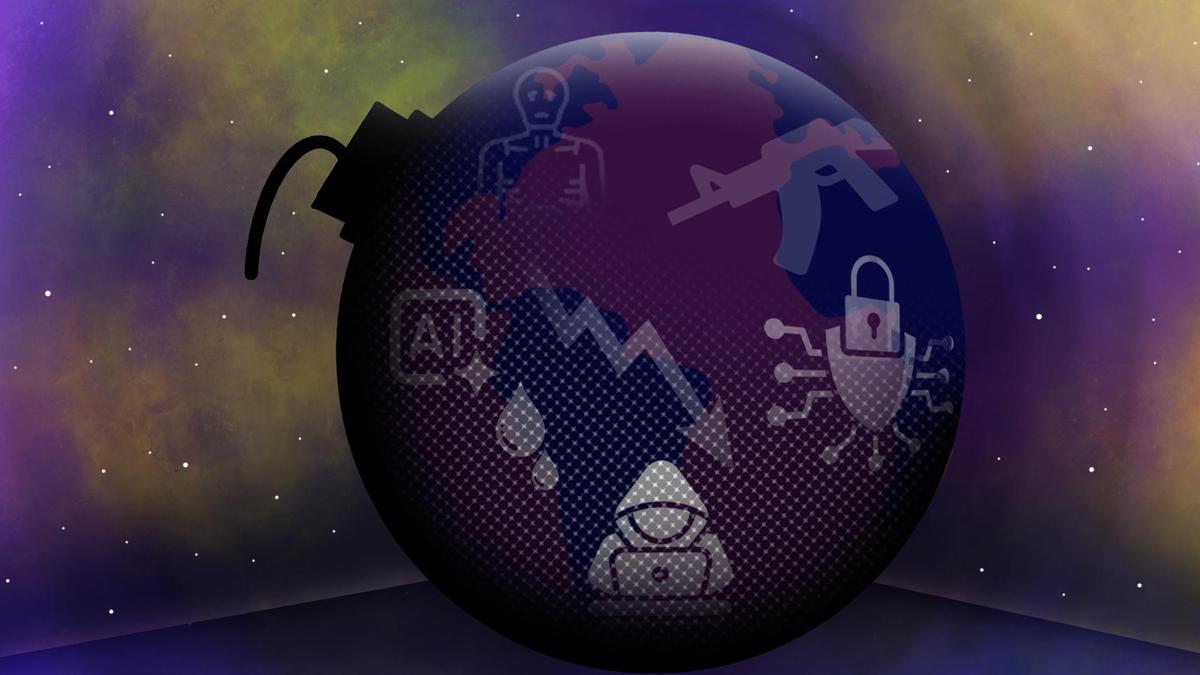
In an age marked by rapid technological progress and instant global communication, the world paradoxically appears more fragile than ever. The dream of peaceful coexistence — once considered humanity’s natural aspiration — now stands overshadowed by conflict, fear, and a disturbing decline in empathy. From rising intolerance to the spread of destructive technologies, the question looms large: will we ever return to a peaceful world? And most important, have we lost our concern for human lives?
Never before have people been so interconnected. Yet beneath this digital closeness lies an emotional distance. Tragedies unfold before our eyes every day — wars, bombings, mass shootings, displacement, and suffering. This constant exposure has created a strange paradox: we see more, but we feel less. Compassion fatigue is real, and many find themselves desensitised by the overwhelming frequency of human tragedy. But beyond emotional numbness lies another growing crisis: the silent suffering of millions caught in poverty and hunger due to prolonged conflicts.
Entire communities across most continents are trapped in cycles of violence that destroy crops, disrupt supply chains, wipe out livelihoods, and force families into starvation. Children go to bed hungry, parents struggle to find clean water, and humanitarian aid becomes a lifeline that is often blocked, delayed, or politicised. Hunger — once a purely economic issue — has increasingly become a weapon of war.
Darkest shadow
Among the many threats to global harmony, terrorism remains one of the most brutal and disruptive forces. Its impact goes far beyond immediate destruction. Terrorism thrives on fear. Unlike traditional warfare, it targets the most vulnerable — ordinary citizens going about their daily lives. Train stations, schools, markets, temples, airports — no place is immune. The randomness of these attacks creates a climate where safety feels like a distant luxury. The psychological impact is immense. Survivors battle trauma, families grapple with grief, and entire communities live under a cloud of anxiety. Children raised in conflict-hit regions grow up scarred, their innocence stolen by violence they do not understand.
The social consequences are equally damaging. Terrorism intentionally fractures societies, creating suspicion between communities and widening religious and ethnic divides. Economically, nations bleed. Tourism collapses, industries suffer, and governments divert enormous funds to security. Hard-earned freedoms — movement, privacy, expression — come under pressure as states tighten surveillance. In many parts of the world, terrorism forces millions from their homes, creating refugee crises that strain already fragile global resources. Displacement fuels poverty and hunger, turning once-thriving towns and villages into zones of scarcity.
Nuclear and biological warfare
If terrorism tears communities apart, nuclear and biological weapons threaten humanity at its core. A single nuclear explosion can flatten cities, destroy ecosystems, and leave a legacy of radiation that lasts for centuries. Even the possibility of nuclear confrontation keeps global tensions alive. Biological weapons are even more sinister. Invisible, contagious, and uncontrollable, they can spread across continents before they are detected.
The COVID-19 pandemic showed how vulnerable the world is to microscopic threats; a deliberate biological attack could be unimaginably catastrophic. These weapons do not just kill — they destabilise societies, cripple economies, and push vulnerable populations deeper into hunger and poverty as supply chains collapse and governments struggle to cope.
Technology has entered the battlefield in ways once confined to science fiction. AI-guided smart weapons and autonomous drones can strike with precision, often without warning. While these devices claim to reduce “human error”, they also remove human conscience from the decision-making process. Warfare becomes easier to wage, less personal, and dangerously unrestrained. Cyberattacks can shut down hospitals, power grids, banking systems, and essential services without firing a single bullet, paralysing societies and often cutting off access to food, water, and life-saving medical care.
Despite these dark realities, it would be unfair to conclude that humanity has lost its soul. In every crisis, acts of extraordinary courage and kindness emerge. Volunteers rush to disaster zones, strangers shelter refugees and Doctors work tirelessly in war-torn regions. Human compassion is not gone — it is simply overshadowed by the noise of violence. And yet, the world must acknowledge a harsh truth: the suffering of the poor, the hungry, and the displaced rarely receives the urgency it deserves. Their struggles are often reduced to statistics rather than treated as human tragedies.
Peace is not a distant dream; it is a collective responsibility. A safer world demands global cooperation to control dangerous technologies; leadership that values life over power; investment in education that teaches empathy; policies that ensure food security and protect vulnerable communities; and societies that choose dialogue over division. Technology must be guided by ethics, not ambition. Nations must choose negotiation over aggression. Individuals must choose understanding over hate.
History shows that humanity often finds its greatest strength in times of darkness. The desire for harmony, though shaken, remains alive in millions of hearts. Peace is not something we return to; it is something we must build anew. As long as compassion, courage, and hope endure — even quietly — the possibility of a peaceful world will never disappear.
muraliraghavan2003@yahoo.com
Published – December 21, 2025 03:58 am IST