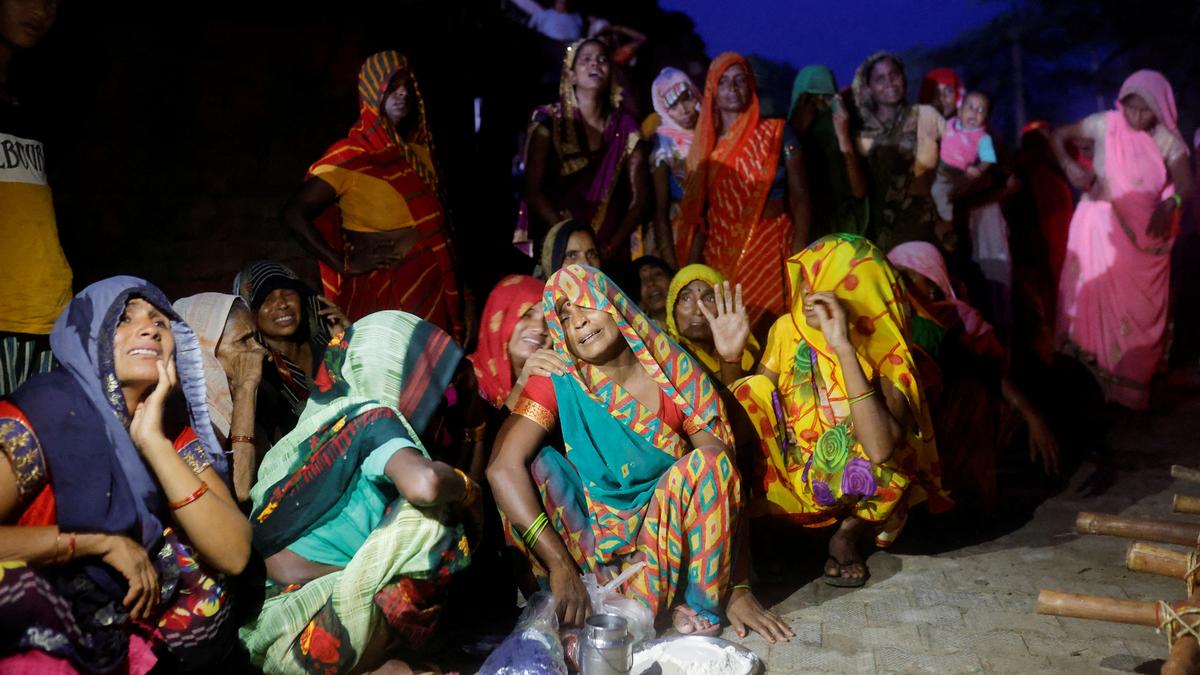
The recent stampede at a religious congregation in Hathras, Uttar Pradesh, resulting in more than 120 deaths, has reignited the debate on whether India has adequate legislation to address exploitative religious and superstitious practices. Experts have advocated for a national law akin to existing legislation in Maharashtra and Karnataka to effectively address superstition, black magic, witch-hunting, and other inhuman practices. Does India have enough laws to combat superstitious practices? Avinash Patil and Alok Prasanna Kumar discuss the question in a conversation moderated by Aaratrika Bhaumik.
Is there a need for a national anti-superstition law or are the existing State laws and criminal law provisions adequate?


Alok Prasanna: If we were to take the example of the Karnataka law, a common criticism is its broad definitions of ‘evil practices’. This ambiguity can make it difficult to distinguish religious beliefs from superstitions. For instance, is making donations to one’s church or temple exploitative and thus an evil practice? State governments are often more attuned to the needs and traditions of the local population. Given India’s diversity, a national law might impose sweeping generalisations that could inadvertently empower already dominant communities. Thus, State-specific laws are preferable because they can better accommodate local practices and realities.

A common criticism against the State laws is that they employ expansive and vague definitions, allowing enforcing authorities subjective and potentially discriminatory powers. Do you share these concerns?
Explained |What are the laws against black magic and superstition in India?
Avinash Patil: Following the enactment of a national legislation, individual States can introduce specific amendments addressing local concerns to enhance the law’s effectiveness. These amendments can also include additional clauses to refine and narrow down definitions.
Mr. Patil, based on your experience, what are the challenges in implementing these laws at the grassroots level?
Mr. Kumar, many oppose such laws due to their potential conflict with the fundamental right to profess one’s religion under Article 25 of the Constitution. How can we strike a balance between protecting the public interest and ensuring that these laws withstand constitutional scrutiny?
Is it important for these laws to prioritise restorative measures instead of just being punitive in nature? For instance, studies have shown that victims of witch-hunting in States such as Jharkhand, Chhattisgarh, and Maharashtra frequently endure social ostracisation, which severely limits their access to essential resources and services.
Alok Prasanna: Even though the Constitution has come into existence, we still have a very colonial state. Authorities are adept at arresting and prosecuting individuals when instructed, but they often struggle when tasked with providing restorative justice. Ideally, implementing such mechanisms would require a fundamental rethinking of how the Indian state operates. It is also important to ensure that these laws are not weaponised against the Adivasi communities. At the core of many issues related to witch-hunting are property disputes. There is a prevalent fear that women inheriting property may contravene community norms, so a conspiracy is hatched to attack them.
Are laws enough to curb superstitions? What more can be done especially since cultural sensibilities tend to pose a significant hurdle in framing or implementing such laws?
Avinash Patil: Many people believe that such superstitious beliefs are for their own good, which enables godmen to deceive them. There is a widespread tendency to seek solace in spirituality at the cost of rationality. It is crucial to move beyond this mindset and embrace scientific temperament in our daily lives. We have forgotten to question, which reflects a failure of our education system and state institutions. It is high time that state authorities abide by their constitutional duty to promote rational thinking and scientific practices.
Avinash Patil is the President of the Maharashtra Andhashraddha Nirmulan Samiti (MANS); Alok Prasanna Kumar is the Co-Founder and Lead of Vidhi Karnataka.