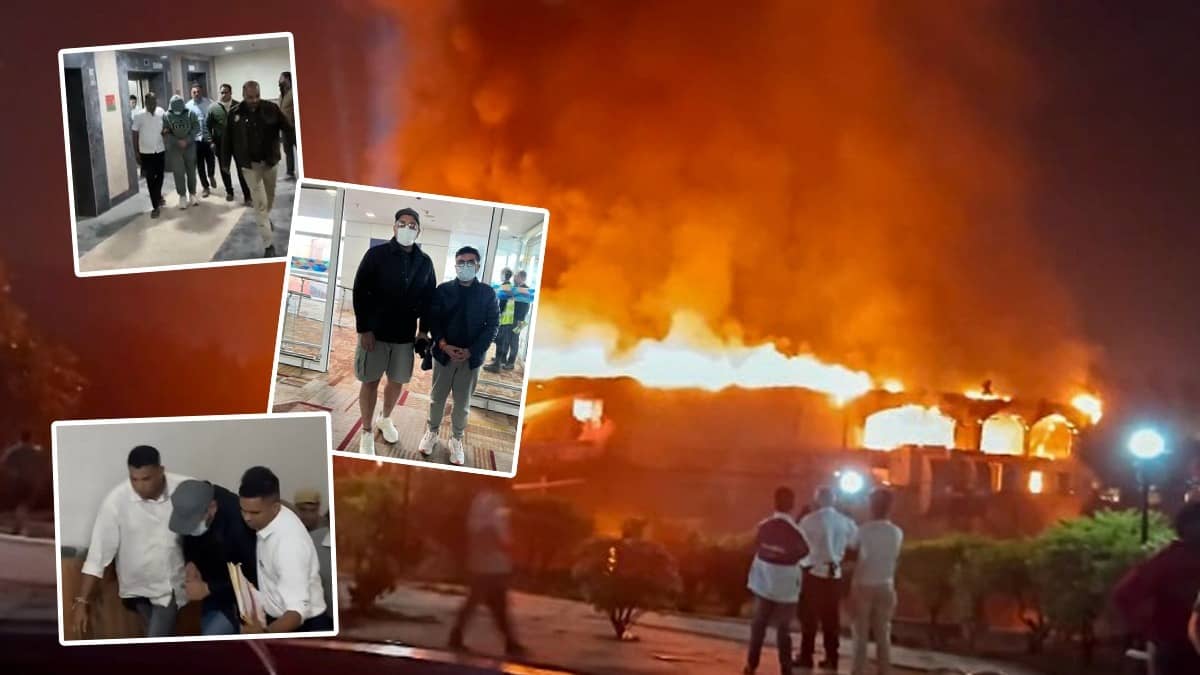
Birch Nightclub tragedy claimed 25 lives | Image:
Social Media, Republic
I refuse to call the Birch nightclub tragedy an accident. What happened at the illegal Birch nightclub at Romeo Lane, Arpora – where 25 innocent people lost their lives – was not an act of fate. It was the direct consequence of institutional failure across multiple departments, each of which had the legal authority, moral responsibility, and statutory duty to prevent exactly such a disaster.
This was not just a nightclub fire. This was death by dereliction of duty.
Failure begins at grassroots
The first failure begins at the grassroots – the Panchayat. Local self-governance exists precisely to act as the first line of oversight against illegal construction and unauthorised commercial activity. The Birch nightclub did not emerge overnight. Its operations, expansions, and violations were visible, known, and ongoing. The Panchayat could not have been unaware. Silence here was not ignorance – it was abdication.
Then comes the role of the Goa Coastal Zone Management Authority (GCZMA) – the statutory body meant to protect Goa’s fragile coastal ecology and enforce CRZ norms. Birch operated in blatant violation of coastal regulations. Yet, enforcement was absent. Notices, if issued, were ineffective. Action, if contemplated, never materialised.
Media reports quoting findings from the Magisterial Inquiry Report – which the government has still not made public – have already pointed fingers at the failure of multiple departments, including GCZMA. The public is being asked to trust a process whose conclusions are being selectively leaked but not officially disclosed. That itself raises serious questions.
Silence surrounding the role of IAS officer
More troubling is the silence surrounding the role of the IAS officer who chaired GCZMA at the time. When regulatory bodies fail so comprehensively, responsibility cannot stop at clerical staff or junior officers. Leadership matters. Decisions matter. Inaction at the top has consequences at the bottom—and in this case, those consequences were fatal.
Equally damning is the failure of the Goa Fire and Emergency Services department. Fire safety norms are not optional guidelines; they are life-saving mandates. Occupancy limits, emergency exits, fire suppression systems, and safety clearances exist because enclosed public spaces are inherently dangerous without them. Media reports suggest that fire safety compliance at Birch was grossly inadequate. If so, how did it continue to operate? Who certified it? Who looked away?
Then there is the Goa Police, whose role cannot be brushed aside. Law enforcement is not merely reactive; it is preventive. The police are empowered to act against illegal establishments, overcrowding, noise violations, and public safety hazards. Birch was not invisible. Its operations were well known. The failure to act points either to shocking negligence or something far worse.
Systemic collapse
Taken together, these are not isolated lapses. This is systemic collapse.
Media reports based on the Magisterial Inquiry clearly indicate that multiple departments failed in their duties. Yet the Goa government has chosen not to place the report in the public domain. Why? What is being protected – public interest or official reputations?
Transparency is not a favour. It is a democratic obligation. When 25 people die due to an illegal operation enabled by state inaction, the public has an absolute right to know who failed them.
The predictable post-tragedy choreography is already underway – arrest the nightclub owners, suspend a few officers, promise action, and hope time dulls outrage. That script will not deliver justice. It never does.
Accountability cannot end with private individuals alone. Illegal establishments survive because public officials allow them to. When regulators ignore violations, when enforcement agencies fail to act, and when leadership remains silent, the state itself becomes complicit.
This is not emotional rhetoric. It is settled legal principle. Culpable homicide by omission is recognised in law. When authorities have knowledge of danger, the power to prevent it, and yet choose inaction, they share responsibility for the outcome.
Had the Panchayat acted, Birch could have been shut down. Had GCZMA enforced the law, Birch would not have existed. Had the Fire Department done its duty, the risks would have been mitigated.
Had the Police acted decisively, the public would have been protected. Twenty-five people would be alive today.
200 nightclubs have mushroomed
Goa has normalised illegality to the point where it is no longer an exception but a business model. In the last five years alone, nearly 200 nightclubs have mushroomed across the state – many operating without lawful permissions, safety clearances, or regulatory oversight – and Birch is the bloody price of that normalisation.
Coastal laws are bent to suit commercial interests, not environmental or public safety concerns. Fire and building safety norms are diluted into paperwork rituals, enforced selectively or not at all.
Regulatory institutions no longer function as guardians of the public interest; they function as shields for one another. When violations are exposed, the instinct is not to correct them, but to protect the system, deflect blame, and contain damage. In this upside-down order, citizens are expendable, while institutions close ranks – and when that happens, tragedies like Birch stop being shocking and start becoming inevitable.
The families of the victims deserve more than compensation. They deserve truth. They deserve accountability. They deserve the Magisterial Inquiry Report – unaltered, unpublished no longer, and fully transparent.
There must be an independent, comprehensive investigation into every department named, including the role of senior officials and IAS officers. Suspensions and transfers are not justice. Prosecution is.
If those responsible within the system are spared today, the next tragedy is already waiting. And if the state chooses secrecy over truth, it will only confirm what the people already suspect – that in Goa, corruption does not just bend the law. It kills.