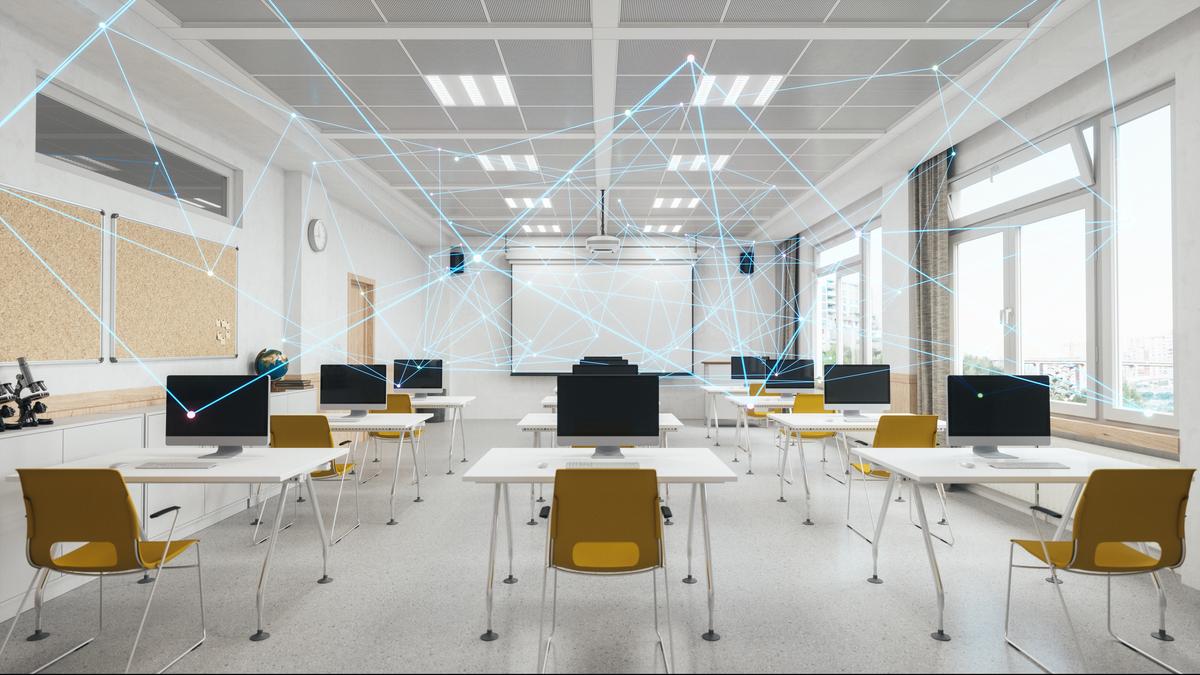
Despite its transformative potential, AI is designed to augment, not replace, the human element in education’
| Photo Credit: Getty Images/iStockphoto
India is gearing up to turn its education system on its head by introducing Artificial Intelligence (AI) to students as early as class three from the academic year in 2026-27. This is no small feat. The Ministry of Education, in synchrony with the National Education Policy 2020, is crafting a comprehensive framework to weave AI learning through the entire K-12 tapestry (kindergarten to class 12). The goal is to arm the future workforce with cutting-edge tech skills to thrive in a techno-driven economy.
Teacher training and pilot projects
But throwing AI into classrooms is not just plug-and-play. The real challenge lies in upskilling a mammoth teaching force of over one crore educators in India. The government is rolling out pilot initiatives allowing teachers to harness AI tools to design lesson plans and teaching resources. Over 10,000 teachers have already been trained since 2019 with help from technology giants Intel, IBM, and government institutes such as the National Institute of Electronics and Information Technology. The goal is to equip educators who can impart AI concepts confidently and practically. But how ready are India’s teachers to morph into AI guides? What are the obstacles in this massive transition? How ready teachers are will dictate how successful the AI revolution becomes.
AI is not just about introducing new content. It promises a colossal shift away from “one-size-fits-all” education to personalisation. AI-powered platforms analyse student behaviour, learning speed, and comprehension to tailor lessons that meet individual needs. If a student struggles with algebra, the AI tutor offers extra practice and alternative explanations. If a student is good in biology, he can get ready for more advanced challenges, with AI. Such adaptive learning not only boosts engagement but also dismantles barriers for diverse student populations, including those with disabilities or regional language needs.
Despite its transformative potential, AI is designed to augment, not replace, the human element in education. The focus is on enhancing human judgment, creativity and critical thinking through smart tools. AI automates repetitive tasks such as grading and attendance, freeing teachers to spend more time on meaningful engagement with students. It acts as a powerful assistant in personalised lesson planning and real-time feedback, amplifying the effectiveness of educators. So, while AI is shaking up the classroom, there is still no substitute for a passionate teacher who drives learning with empathy and insight.
Opportunity amid disruption
As AI reshapes education, it also signals seismic workforce changes. According to a recent NITI Aayog report, while AI could displace up to two million jobs in India’s tech sector over the next five years, it is also projected to create four million new jobs by 2030, jobs that demand new skills and adaptability. This is a dual-edged sword that calls for the urgent preparation of today’s learners.
By embedding AI in early education, India aims to create a workforce that is ready for a digital economy, and not left behind by rapid automation. But are students and educators prepared to embrace this whirlwind of change? The question is not just about job loss or creation but about shaping a resilient workforce that can ride the AI wave.
Generative AI technology, which creates new content based on patterns in data, is already gaining traction in Indian education. More than half of India’s higher education institutes are incorporating generative AI to enhance teaching and learning. From AI chatbots that answer student queries 24X7 to platforms that create interactive quizzes and personalised study materials, generative AI is making education more engaging and tailored. This explosion of AI tools could narrow the learning gap significantly in India’s vast and diverse education landscape. It is a frontier full of promise but also challenges that are related to access, quality and ethics.
Driving inclusivity and accessibility
Perhaps the most heartening impact of AI in education is its role in fostering inclusivity. AI-powered adaptive learning and language processing tools break down barriers for non-native speakers and learners with disabilities. The customisation of educational content can create equitable learning environments. In countries that are multicultural and multilingual like India, this AI-driven push for inclusiveness could rewrite the rules of who gets to learn and how. Could AI be the great equaliser that education systems worldwide have long sought? The signs are promising, but deliberate design and policy are critical.
India’s bold initiative to weave AI into early education signals a massive transformation in how knowledge is imparted, how teachers teach, and how students engage with learning. The revolution comes with challenges: teacher training at scale, ensuring equitable access to AI tools, and preparing students for jobs that do not even exist.
Are Indian schools truly ready for this AI overhaul? Can the education system keep pace with rapid technological advancements without leaving disadvantaged communities behind? Only time will tell. But one thing is clear: the rules of education are being rewritten right before our eyes, and AI is the pen scripting this brave new world.
Sakshi Rewaria is Faculty of Law, Indian Institute of Management, Rohtak, Haryana
Published – October 31, 2025 12:16 am IST