

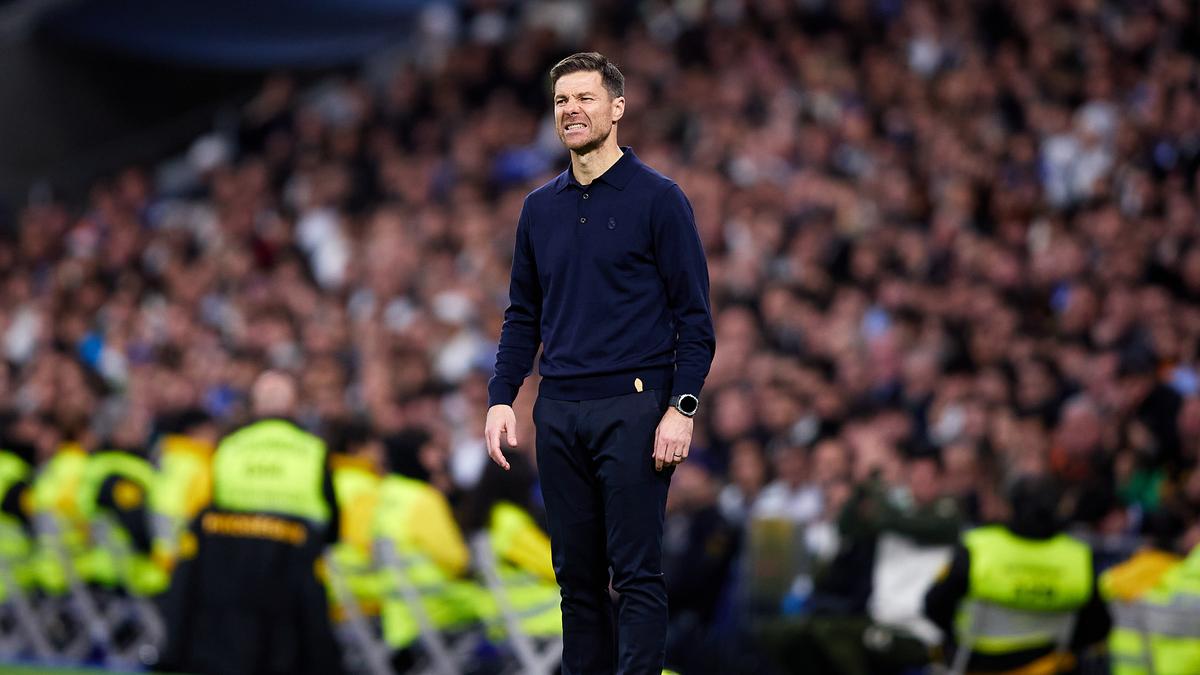
When Xabi Alonso was unveiled as the manager of Real Madrid in May last year, there was palpable excitement not just in the Spanish capital but also across the football world at large.
This, after all, was a former Bernabeu midfield general, loved by Madridistas for his trophy-laden playing years. As emotional arcs go, there are few more popular than a club legend’s return.
Building a reputation
Moreover, after retiring, Alonso — coached by Pep Guardiola, Jose Mourinho and Vicente del Bosque among others — had quickly earned the reputation of being an elite manager.
He guided Bayer Leverkusen to a historic German league and cup double in 2023-24 in his first full season after taking over. His team became the first to complete a Bundesliga campaign unbeaten, disrupting powerhouse Bayern Munich’s monopoly.
Alonso also demonstrated his prowess as an adroit tactician. Having to combat a Bayern side with more accomplished players and richer resources, he fashioned inventive solutions. His ideas were modern and progressive, bolstered by a rigorous structure.
In short, Alonso’s move to Madrid appealed to the partisan, the neutral and the ‘tactico’. But charged with reviving a Real side that ended last season without a major trophy, how would he fare? Amid the excitement, there were also reservations. Coaching Real Madrid involves navigating high-stakes boardroom politics, superstar egos and fickle fan sentiment. Carlo Ancelotti managed it with great success, winning 15 trophies in two spells, but even he faced criticism in 2024-25. His methods were thought to have outlived their utility.
Alonso’s stint began promisingly. Although his side was knocked out of the semifinals of the Club World Cup in the summer, he showed tactical flexibility, utilising both a four-man and three-man defence, whereas his predecessor Ancelotti was criticised for not being adaptive enough. By contrast Alonso was keen to adjust things during matches, including where his players were positioned and how they pressed.
He spoke of playing an “ambitious” game with “emotion and energy”, and when the season began, the results were encouraging. Madrid won 13 of the first 14 games, including a Clasico conquest of bitter rival Barcelona. After four consecutive defeats to Barcelona across competitions last season, Madrid entered the match desperately in need of a statement win to validate Alonso’s project and it duly snapped its losing streak.
Keeping up appearances? Unfortunately for Alonso, Real Madrid president Florentino Perez has a history of firing managers without affording them the time to settle.
| Photo Credit:
Getty Images
But things took a turn in November and December. After a win over Valencia, which established Madrid firmly on top of LaLiga, Alonso’s side failed to win four of the next seven games, allowing Barcelona to displace it. It also lost Champions League games against Liverpool and Manchester City, as the Basque coach began to feel the heat. Speculation was rife that Alonso would be shown the door, with reports questioning whether he would survive till Christmas.
Two successive wins in the league have ensured Alonso will stay in the hot seat when Madrid faces Real Betis on Sunday, its first match of the new year. But his situation remains perilous, with ESPN reporting recently that Madrid was considering its options. The club, under president Florentino Perez, is known to be impatient when the results dry up: the number of coaches who have lasted between three months and just under a year is in double digits.
Growing frustration
If reports from the Spanish capital are to be believed, the upcoming week could prove pivotal for Alonso’s future. After the Betis fixture, Madrid travels to Saudi Arabia to face city rival Atletico in the semifinals of the Super Cup. Anything other than a win could put the cat among the pigeons. As recent whistles from the Bernabeu stands have shown, the frustration in Madrid is growing.
One of Alonso’s primary tasks when he took charge was to find the balance that Ancelotti failed to achieve last season following Kylian Mbappe’s arrival from PSG. He needed to put together a formula for Mbappe and Vinicius Jr. to work together without sacrificing too much out of possession, given their disinclination to repeatedly press and track back in defence.
Indeed, it was always going to be interesting to see whether Alonso could get his superstars to buy into his system. Madrid managers have tended to allow the individual to supersede the collective. The sheer quality of talent at the club has made this work. But in the modern game, where the spaces are more intensely contested, this isn’t a consistently reliable method, as Madrid found out last season. Ancelotti was at times exasperated with his forward line’s unwillingness to work hard enough for the sake of the team as a whole.
“What I am certain of is that we need and want everyone to defend — the 11 players on the pitch have to be involved defensively,” Alonso said before the season started, but it’s fair to say he hasn’t cracked it just yet. If anything, this requirement has contributed to some bad blood in the dressing room. While Mbappe’s scintillating form — 29 goals in all competitions — has carried the side, the Alonso-Vinicius relationship has not been straightforward.
Alonso has left Vinicius out of the starting line-up on occasion and subbed him off on others, most notably in the Clasico. The Brazilian’s outburst has contributed to gossip that the manager has lost the dressing room.
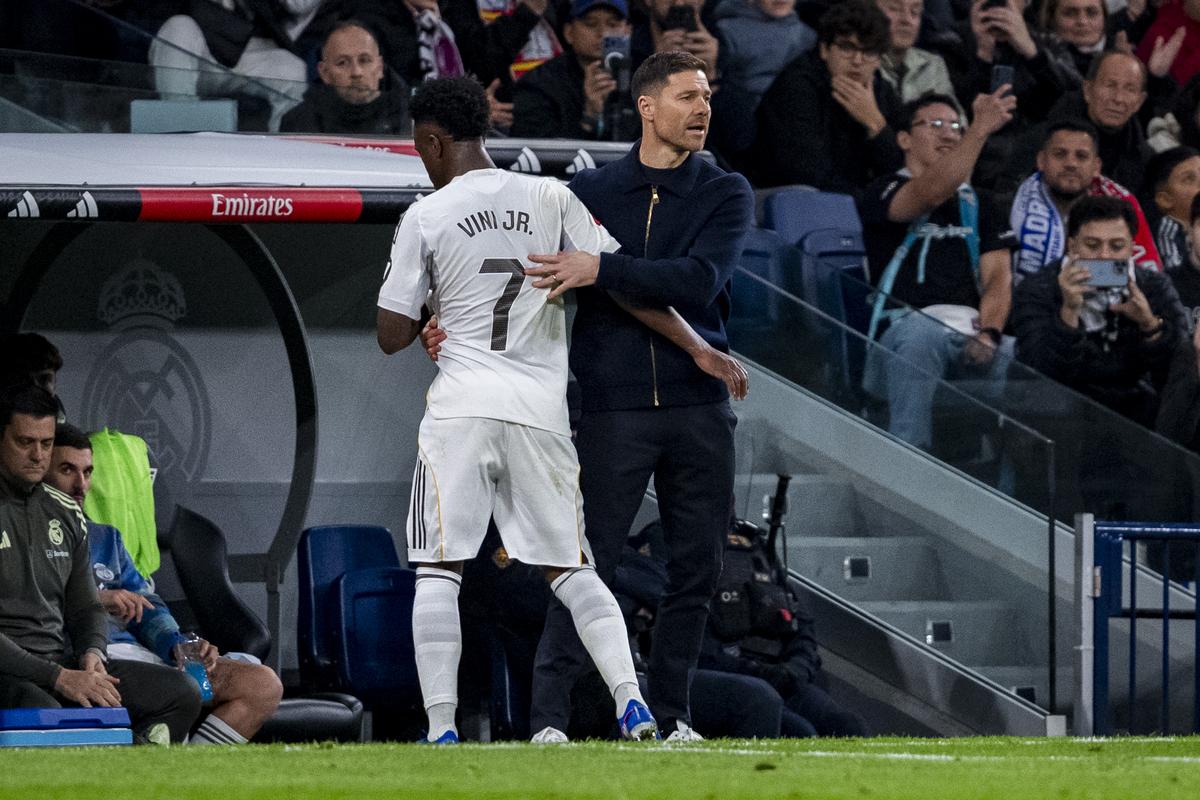
Not seeing eye to eye: Alonso’s rocky relationship with star forward Vinicius Jr. has contributed to speculation that the manager has lost the dressing room.
| Photo Credit:
Getty Images
Francesco Mauri, former assistant coach to Ancelotti, refuted this idea. “Xabi’s situation isn’t ideal, but I don’t think it has anything to do with his relationship with the players,” Mauri told Diario AS. “It isn’t easy to coach Madrid and change concepts. It’s intelligent not to be stubborn with an idea if it isn’t working. It’s about finding the system that makes you win, because if you win everything else becomes easier. It’s nonsense to say players try to get a coach sacked. It’s an exaggeration. Madrid is like that. Xabi is right now the best possible coach for Madrid.”
It must also be mentioned that Alonso has had to contend with an injury crisis, at times missing up to 11 first-team players — Mbappe’s knee injury couldn’t have come at a worse time.
Madrid’s unique pressure
Madrid legend Toni Kroos threw his weight behind Alonso, speaking on Brazilian great Romario’s YouTube channel. “Here even if you win matches, no one is really happy, there are few teams like that,” he said. “The coach has little time. You can’t think about how you want to play in a year or two, you need results. I am positive that Xabi is very good. He already knew this could happen. You have to give him time and stay calm, but this is difficult at Madrid.”
Alonso, for his part, knows he needs to stick to his process and trust that the results will come. “We need to improve in several areas: when we don’t have the ball and when we do have it, we need to give the game a different intention and rhythm, and combine control with verticality,” he said. “My mood doesn’t change from one day to the next. I’m also critical in a constructive way, but I put it in context with where we’ve come from and what’s coming in January.”
Published – January 02, 2026 11:14 pm IST

