

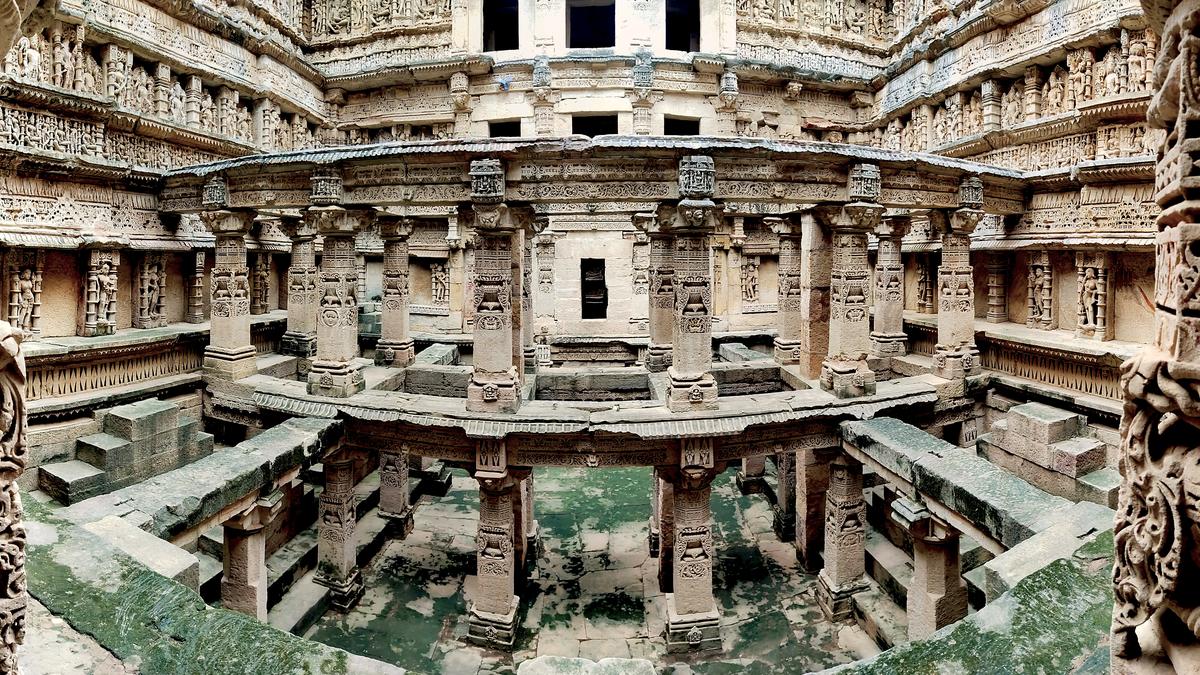
The Rani Ki Vav, an intricately designed step well in Gujarat, was built by Queen Udayamati in tribute to her husband Bhima-I of the Chalukya Dynasty in the 11th century.
| Photo Credit: Getty Images
Whenever there is a discussion of love, the name of Taj Mahal crops up. Recognised as one of the seven wonders of the world, the monument is known around the globe as a profound “symbol of love”.
In such conversations, men often quip: “Has any woman ever constructed a monument of this grandeur in memory of her husband?” Though this may seem like light-hearted banter, this remark spotlights the lack of visibility of the architectural contributions of women in India and around the world. In reality, the tradition of creating monuments in memory of husbands and celebrating their triumphs has prevailed since the 7th century and even before.
For instance, the Virupaksha temple in Pattadakal, Karnataka was constructed by Lokamahadevi to celebrate the victory of her husband Vikramaditya II over the Pallavas of Kanchi in the 7th century. This temple stands as a tribute to her husband’s victory and her devotion to the Hindu faith.
Another example is the Rani Ki Vav, an intricately designed step well built by Queen Udayamati in tribute to her husband Bhima-I of the Chalukya Dynasty in the 11th century. This step well has 500-plus principal sculptures, 1,000-plus micro sculptures, geometric designs, and 200-plus pillars depicting scenes from epic dramas and giving us visual poetry. The sculptors left no stone unturned in creating these marvels.
Add to the list the Humayun’s Tomb in Delhi, constructed by Biga Begum as a memorial to her husband in the 16th century. This served as an inspiration for the architecture of the Taj Mahal. This tomb incorporates Persian and Mughal architectural styles and is the first monument to be built using red sandstone on a large scale. Around the world, there are numerous examples of monumental tributes by women to their husbands and to contribute to the broader realm of art and culture.
Although the construction of these women-led projects predates that of the Taj Mahal, their rich architecture and the stories behind them remain obscure and largely unknown to the public in India. While a surprisingly limited number of people are aware of these monuments, only a small subset of that group knows the history behind them.
Why are the stories of such monuments brushed away and allowed to fade into history while the male-commissioned monuments and their stories get romanticised and are spread widely? Is it because women choose a low-key approach prioritising selflessness over recognition? Or is it patriarchy that has cloaked the glorious stories, efforts, and perhaps the names of the inspiring women who stood behind these monuments?
This selective celebration and recognition contribute to an imbalanced historical record where women’s contributions are physically present in architecture but largely absent from conventional narratives, affecting public perception and creating gender-biased interpretations of historical monuments. These imbalances should be addressed by raising awareness and creating more inclusive spaces for women’s contributions to architectural history.
sujithasivakumar18@gmail.com
Published – December 22, 2024 03:56 am IST

