

After shooting down India’s first ever individual Olympic gold medal, back in 2008 at Beijing, Abhinav Bindra continues to be associated closely with sports. He is the founder of the Abhinav Bindra Foundation, a non-profit organisation that strives to take Indian sport forward.
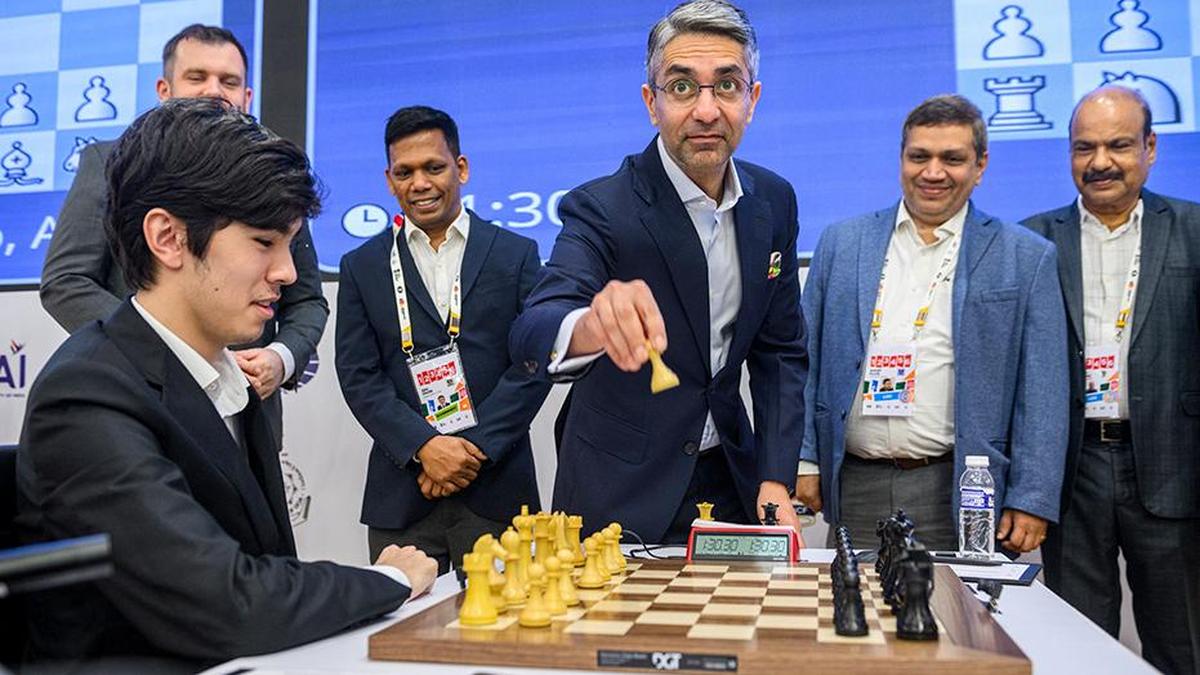
Bindra was in Arpora, Goa, recently to make the ceremonial opening move of the Chess World Cup final between Wei Yi and Javokhir Sindarov. Before that, he spoke to reporters on various topics in sport. Excerpts:
On shooting and chess
It is nice to be in Goa at a chess tournament and that too at the World Cup. I have never really been to a chess championship ever in person. I follow chess a little bit here and there but I follow the players more than the actual games.
I don’t play chess myself. I think I just don’t have the acumen to play it. But delighted to be here, nice to see an event of this significance being held in Goa, compliments to the All India Chess Federation for organising it, to the Goa government for welcoming all the players and hosting
Both chess and shooting require a great amount of mental strength. India has done really well consistently in both the games. Of course, chess has grown in a great way.
The fan following of chess has grown tremendously, I would like to compliment all these (online) platforms that have come up which have really taken the sport to the people. What I find very fascinating in chess is that people actually follow the game.
It is one of the rarest sports across the world in which people are actually tuning in to follow the game. Normally, you have fans that follow their favourite player or their favourite team.
My own sport, shooting, of course, has done well over the period of many years. I think it has grown tremendously. If you just look at the participation in sport and the constant new talent that keeps cropping up, the depth of talent that exists in the sport of shooting is pretty unique.
Shooting like chess can be lonely. But for me, my biggest constant companion in this journey was actually self-doubt. So I tried very hard to try and overcome it and to get the self-belief and confidence normally associated with athletes.
I worked with a lot of psychologists and trainers, and wasted a hell of a lot of money on them, but really never was able to get a breakthrough, with them at least.
But I did have a breakthrough, and my breakthrough came in two parts. When I first started accepting pressure, I started accepting the expectations around my journey. So there was a time and day when I said, okay, this is never going to go away. I will just have to learn how to coexist with it. So that shift in mindset of letting go and just simply co-existing with the pressure, coexisting with the expectation around it was very powerful because it just then became kind of background noise.
The second part was that instead of chasing the self-belief that I didn’t have, I started chasing self-respect. And that again was very powerful. How did I get self-respect? It was simply by showing up every day, by working hard every day and then trying to be better than what I was yesterday.
Abhinav Bindra.
| Photo Credit:
FILE PHOTO: SUDHAKARA JAIN
On India bidding for the 2036 Olympic Games
I think there is no doubt about it that the Olympic Games will come to India. It is only a matter of time. It is a good thing that we are bidding and we are going on that journey.
If we win, it will be fantastic, but even if we don’t, sport must win and sport must go forward. We are already seeing signs of that happening. For instance, the sports governance bill has come into play.
I believe that the next decade will also be a decade for sport in this country, and it will develop more. We are seeing that our youth population, which is such a large demographic, the consumption of sport, whether people are enjoying sports, just watching as spectators or actively participating in it, that number is rising. I would like to see more of that from our 1.4 billion people.
When children get more opportunities in schools just to experience sport, they will become healthier and to imbibe values through sport. When these opportunities increase, automatically the by-product will be that participation in elite sport will also increase.
The shortest way to success is hard work. So I would like to tell all athletes that you have to put your best foot forward, keep working hard.
The Olympic Games, for me, don’t come once every four years. They come every day. Every day you have to put in your best show to try and get better than what you were yesterday.
On India getting ready to be the host of the Olympics and not being a consistent medal winner at the Games
I think it is no secret that you have to work on both aspects parallelly. You already know that a lot of work has happened in the course of the last few years to really give elite athletes a lot of support. That is being done at a really good level. But of course, we would like to see more athletes win medals. Especially if you are hosting an Olympic Games in your own country, you would like to see your own athletes do well.
And there has to be work done. I think we have to use the Olympic bid and the Olympic Games as an opportunity for development. We don’t want the Olympic Games to be just two weeks of sporting extravaganza or the ten days or two weeks of the Paralympics as a sporting extravaganza.
We really should use the Games as a catalyst for change, for developing sport at different levels. Whether it be the school level, whether it be grass-root community sport, whether to make this country healthier, to make this country active, to really imbibe sport into the fabric of our society.
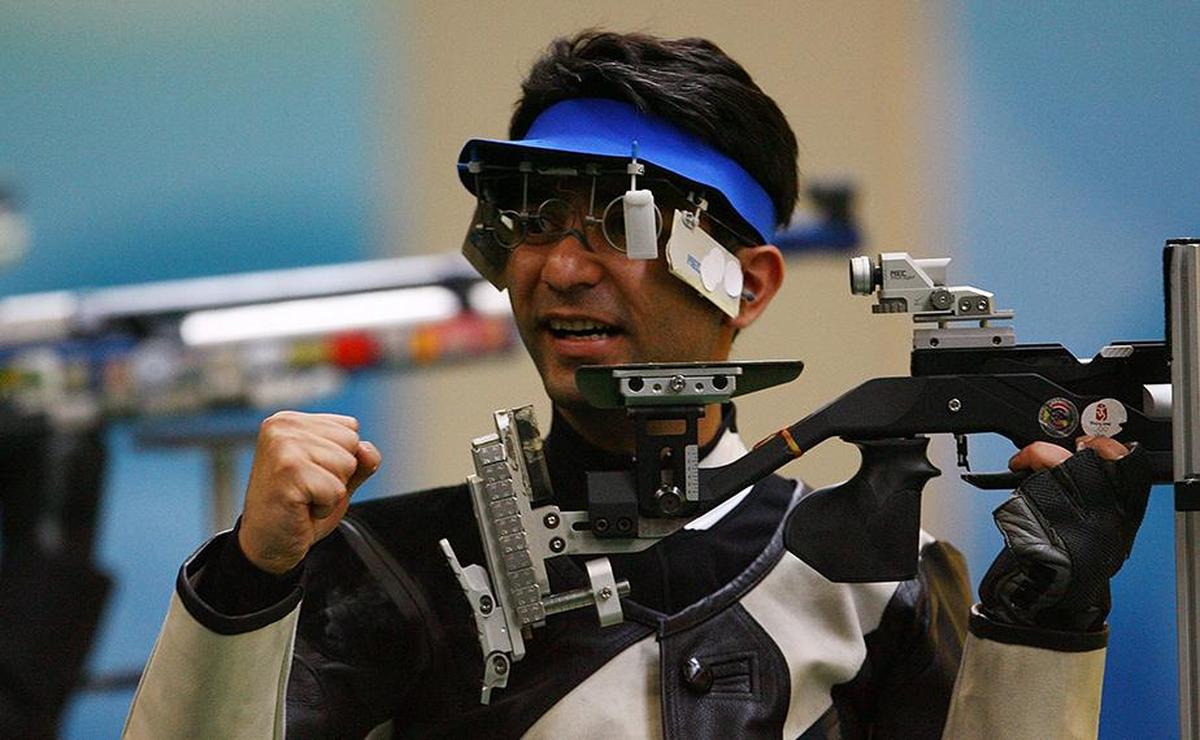
Abhinav Bindra won India’s first individual Olympic gold at the 2008 Beijing Games.
| Photo Credit:
FILE PHOTO: Getty Images
On keeping motivation after scaling the peak in one’s sport, like he did after winning the Olympic gold
It is very normal for athletes, after having massive success, to have a period of motivation loss or just a quiet period. It is just normal and it is just a cycle every athlete faces.
I think the most important thing is to just go back to your basics, to go back to your foundation, to go back to the drawing board and then to really know you have reached a mountain and you have climbed this peak. And human nature really is that we want to jump to the next peak. But you simply can’t jump to the next peak.
You have to climb that peak down and then step-by-step, plug the gaps that have cropped in and then work on the foundation and go back again. All of this requires an immense amount of energy. And sometimes, you know, after having achieved such high success, you are a little bit drained.
It is human to be drained, not just physically, mentally, emotionally. And it sometimes just takes a little while to really get your batteries completely recharged, and full so that you can start thinking really clearly on what your next goal is. And that really helps you get to it.
Because again, the unfortunate reality in sport for an athlete is that yesterday never counts. You are only as good as what you are on that particular day. You win and then the very next day the world is asking for more proof if you are good enough.
Good enough to what you were yesterday, good enough to what will you be up to the next challenger. But that is what we have to face and that is what every athlete has to undergo. But I think as long as you continue to find joy in what you’re doing and keep putting in the right effort day in and day out, I am sure the success will come back.
On parental support in individual sport
I think parents are always the unsung heroes of a sporting journey. That contribution they make is immense.
My parents supported me materially, to provide me the facilities I needed, because, at that point of time in India, in the mid-90s, when I started shooting, it was under a mango tree.
There were no shooting ranges. So it was a different era. But their biggest contribution was that my parents allowed me to make my mistakes.
From a very young age, I had to own my successes and I had to own my failures. And that was something very, very important.
One thing is common in every sport: when that final moment comes, when it is deciding whether you are going to be the best on top of the world or not, you are going to be alone. And you have to find that courage and that strength and that conviction to succeed from within yourself. And that can only happen when you go through this process. So my biggest contribution that my parents made was they gave me a lot of space to make my mistakes, to make my own decisions. And that was something very valuable.
And of course, they were always very positive as well. As an athlete, every athlete goes through ups and downs. I had many downs, mostly downs, than ups.

