

WASHINGTON — A leading House Republican is sharply questioning a top priority of Robert F. Kennedy Jr. and the Make America Healthy Again movement, arguing the proposal could raise grocery prices.
President Donald Trump’s administration announced Wednesday six more states would ban sodas and sweets from food benefits, answering a call Kennedy and Agriculture Secretary Brooke Rollins put out earlier in the year.
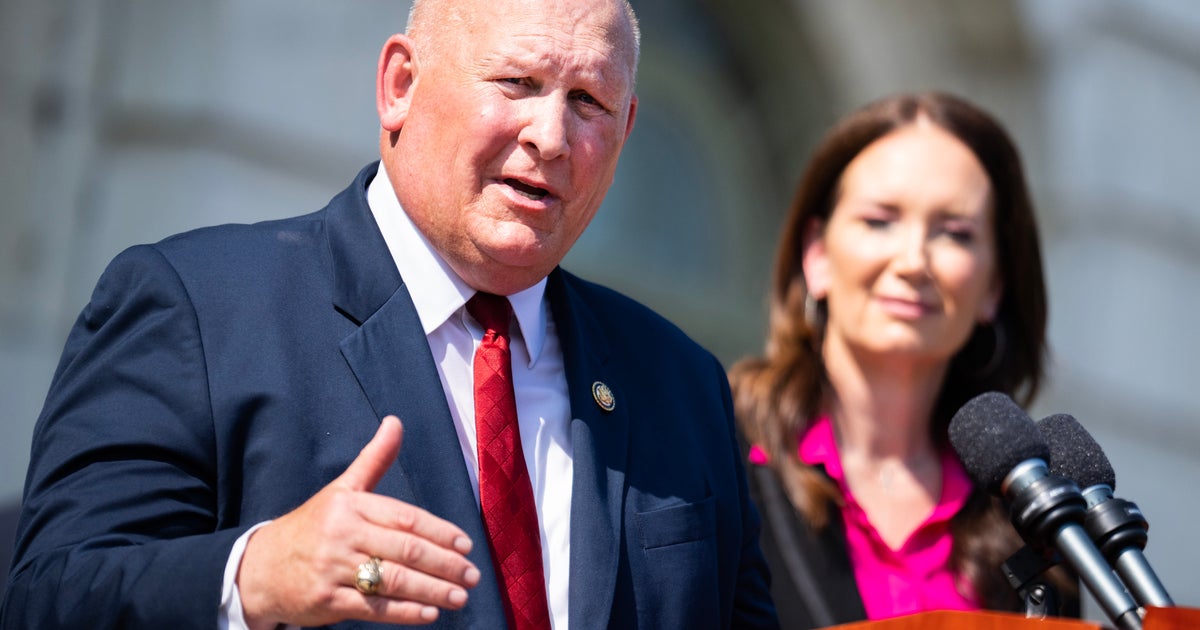
House Agriculture Committee Chair Glenn Thompson (R-Pa.) said the policy will increase grocery prices. Thompson’s committee oversees the Supplemental Nutrition Assistance Program, often referred to as SNAP or food stamps.
“I think it’s going to drive up the cost of food because of compliance, because all these states are going to have different standards, different labeling standards,” Thompson told HuffPost.
Higher prices, especially for groceries, have remained a top voter concern after President Donald Trump won a second term in the White House by promising to bring prices down immediately. Grocery prices have kept going up as overall inflation remains a full percentage point above the government’s target 2% rate.
While SNAP is managed by the Agriculture Department, Kennedy, the chair of the Health and Human Services Department, has championed the junk food ban.
“We cannot continue a system that forces taxpayers to fund programs that make people sick and then pay a second time to treat the illnesses those very programs help create,” Kennedy said Wednesday.
More than 42 million Americans in 22 million households receive SNAP benefits, which can be used for almost any food item in grocery stores. Republicans have clamored for years for restrictions on what the benefits can buy, but Thompson has long opposed the concept and thinks states are making a mistake.
“These governors, I think, are wading in in a way that I’m not sure they know what they’re getting themselves into,” Thompson said. “I think the market is really responding to consumer needs. There’s far less sweeteners being used in beverages and snack foods and different things like that. So, I think they’re going to make this so complex for retailers to be able to administer.”
The food industry has indeed warned that the complexity of the new food rules will impose significant burdens on food stores. The total upfront cost will total $1.6 billion as stores update their systems, with ongoing costs, such as for checking the eligibility of new products and slower checkout lines, amounting to $759 million a year.
“Ultimately, some of the higher costs must be passed onto consumers in the highly-competitive food retailing industry, so consumers stand to ultimately see higher food prices and reduced purchasing power,” concluded a September analysis commissioned by the Food Industry Association, the National Association of Convenience Stores, and the National Grocers Association.
The Food Research and Action Center, an antihunger advocacy group, warned in an issue brief this week that the new restrictions represent a “fundamental shift” in how the SNAP program administers access to food.
“By altering long-standing federal standards and introducing new layers of administrative complexity, these waivers risk destabilizing a system that depends on more than a quarter million retailers, many of them small businesses operating in underserved areas,” the group warned.
The states joining Kennedy’s initiative on Wednesday are Missouri, North Dakota, South Carolina, Virginia, Tennessee and Hawaii, which will become the second Democratic-led state to do so after Colorado. Some states are banning both sweets and sodas from SNAP; Hawaii will ban just soft drinks, which the state defines as “any nonalcoholic beverage that is made with carbonated water and is sweetened with more than 10 grams of sugar per serving.”
Federal nutrition assistance expanded with the encouragement of Kennedy’s father, Sen. Robert F. Kennedy (D-N.Y.), who saw starvation firsthand during his travel to Mississippi. Now, the younger Kennedy blames food stamps for contributing to all manner of modern health problems.
The state bans on benefits for certain foods will take effect next year as the USDA implements another set of cuts enacted by Congress this summer, including stricter benefit limits for nondisabled adults and cost-sharing requirements for states.

