

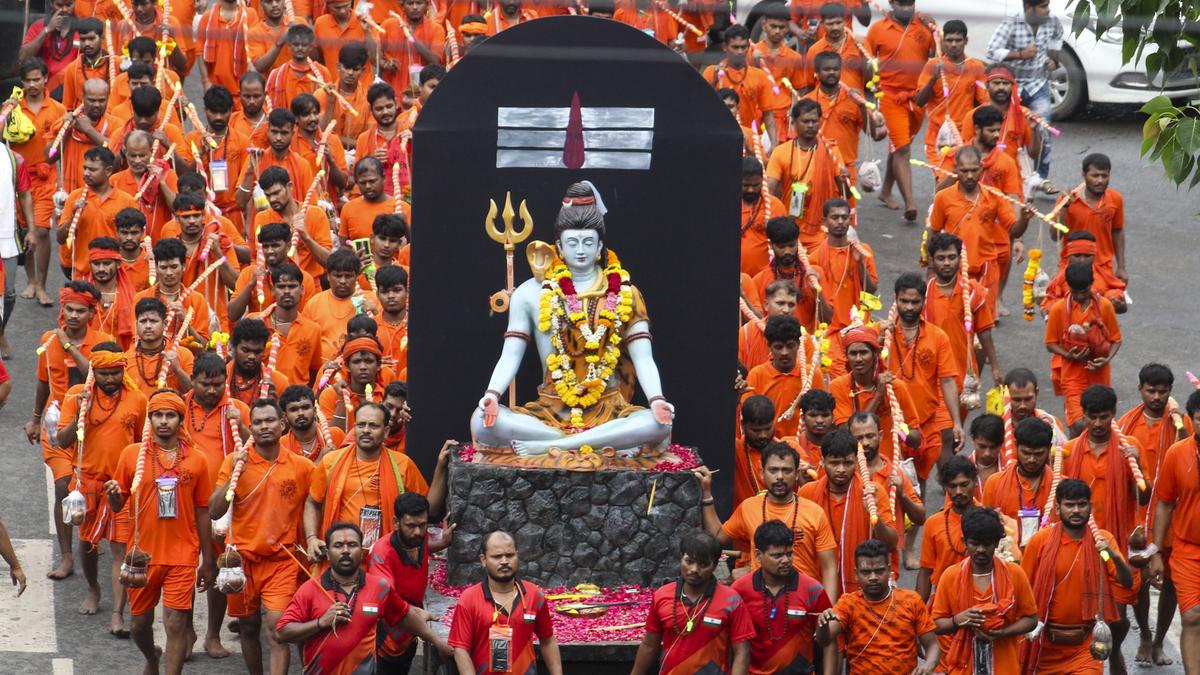
Kawariyas during the Kanwar Yatra in the holy month of Sawan, in Surat on August 5.
| Photo Credit: PTI
Kanwar Yatra is an annual pilgrimage. For many, this means embarking on arduous journeys to fetch water from certain sacred sites to fulfil their spiritual yearnings. The resolve exhibited by them to accomplish this evokes interest to understand their religiosity and social outlook. The recent survey conducted by Lokniti-Centre for the Study of Developing Societies among 1,029 pilgrims undertaking the Kanwar Yatra provide some insights in this regard.
Evidently, religion occupies a major place in the lives of these pilgrims. No wonder, almost all Kanwariyas view themselves as religious.
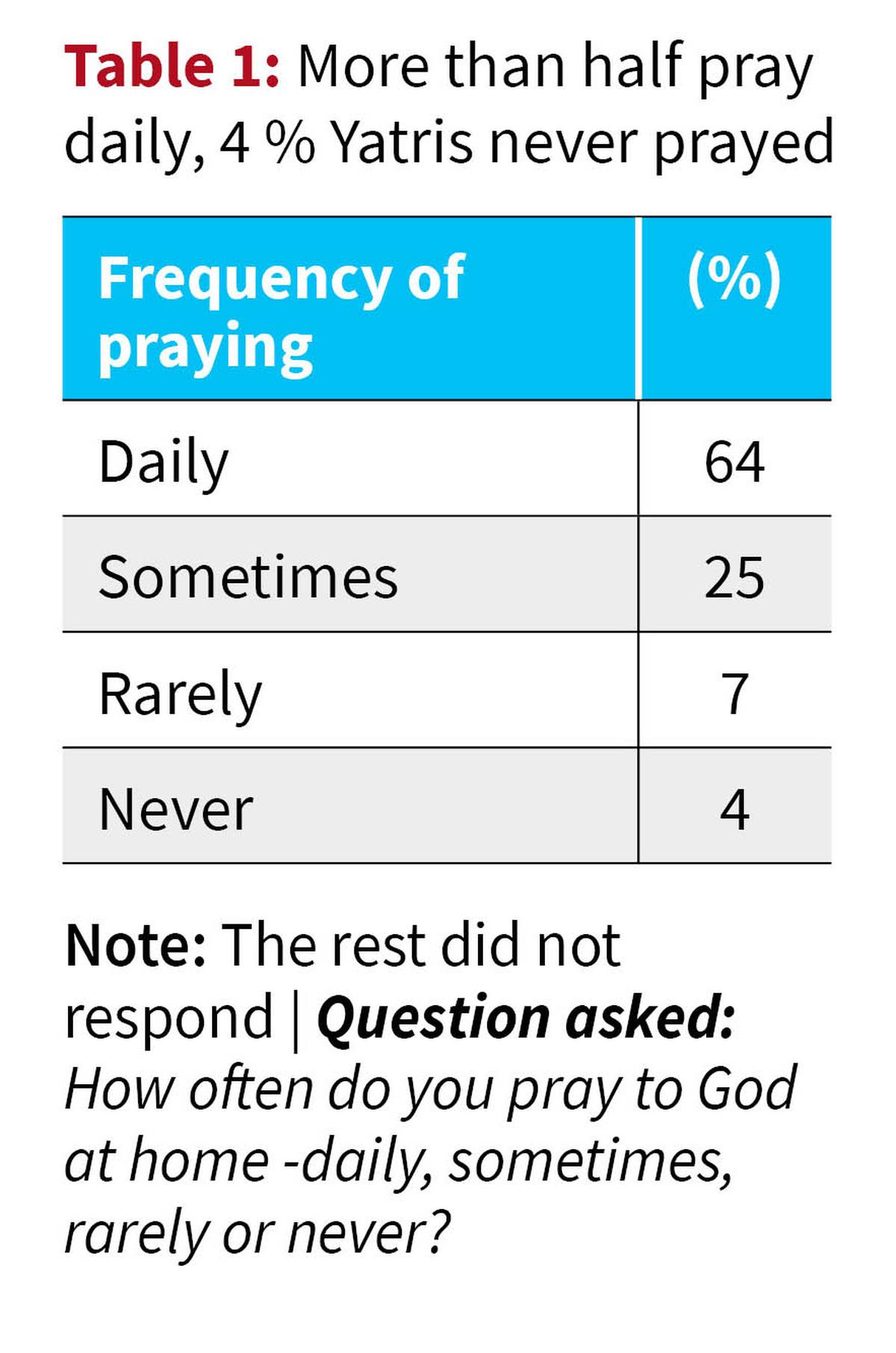
In this sense, it is natural that praying forms an integral part of their routine at home. Sixty four per cent of the pilgrims pray to God every day while another 25% do so sometimes (Table 1).
Majority of the Yatris (69%) believe in Lord Shiva (Table 2).
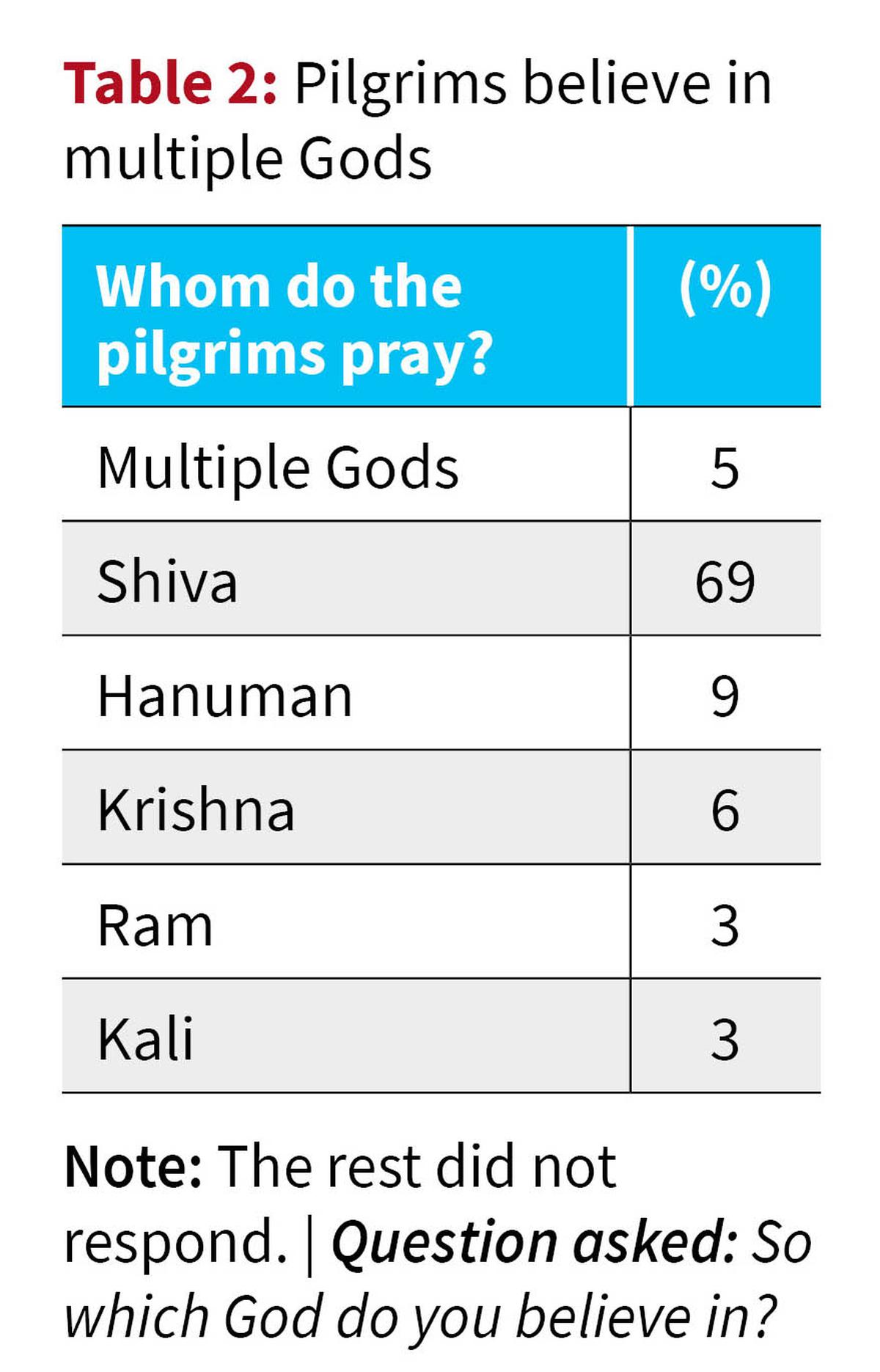
The higher proportion of such devotees is because the Kanwar Yatra is closely associated with temples associated with Shiva. Devotees of Lord Hanuman form 9% of the pilgrims while another 6% pray to Lord Krishna. Five per cent of pilgrims pray to all Gods.
Despite identifying themselves as religious, few pilgrims watch religious channels or read books on this theme. Among them, 8% watch such channels daily. Sixteen per cent do so sometimes while another 8% watch them rarely (Table 3).
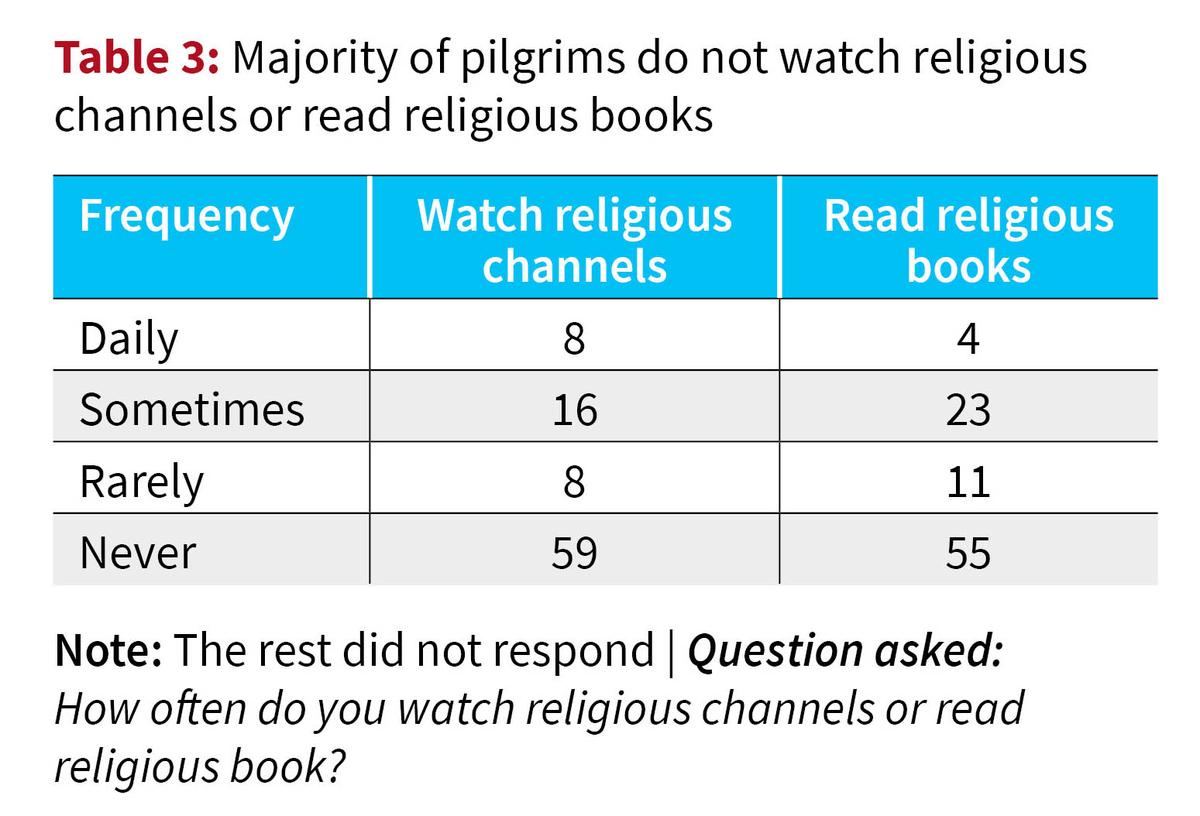
On the other hand, 4% read religious books daily. Another 23% do so sometimes and 11% rarely read them. Bhagwat Gita (28%), Ramayan (27%) and Hanuman Chalisa (20%) are the most read religious books among pilgrims.
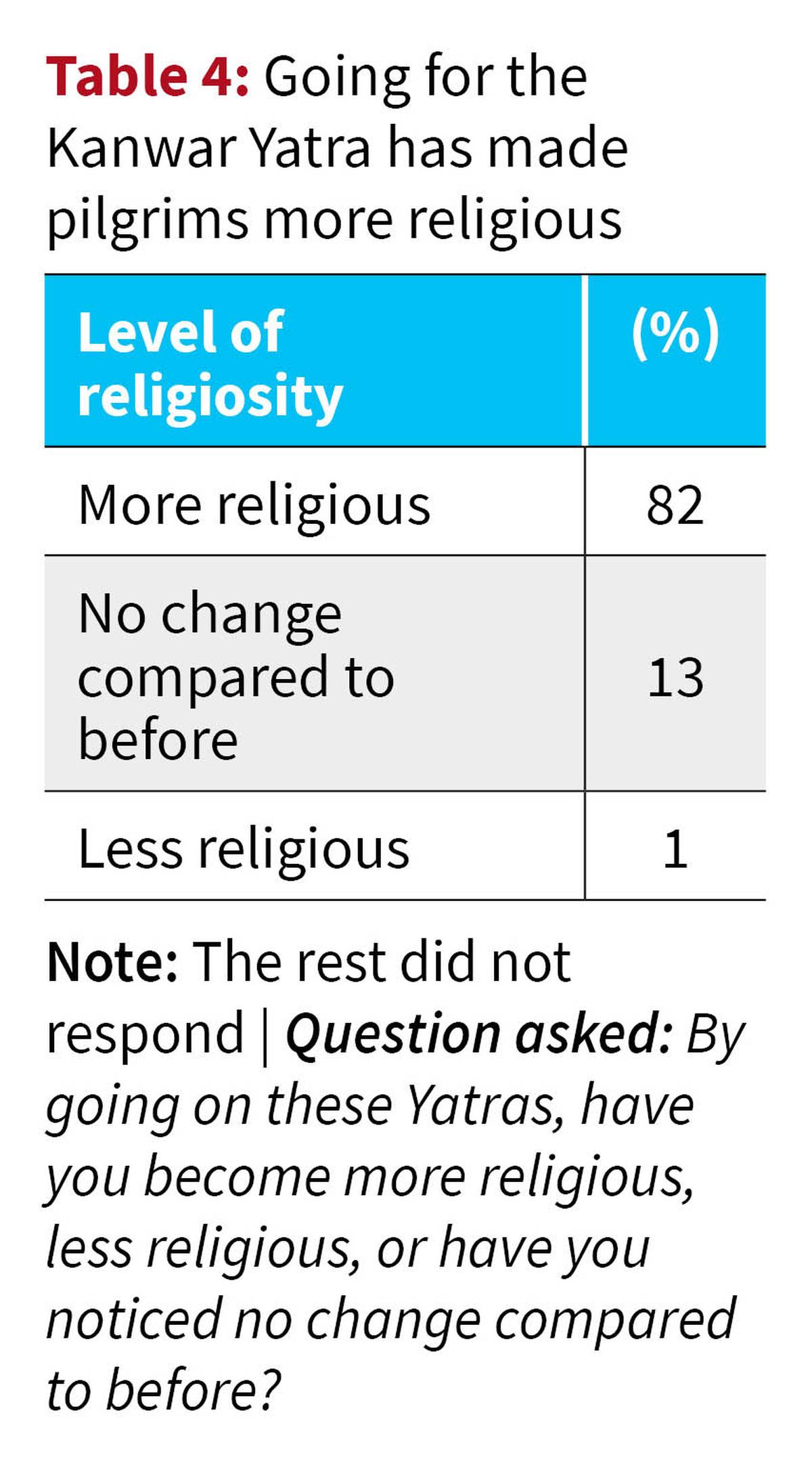
A very large proportion of the Yatris (82%) said that they have become more religious since undertaking the Kanwar Yatra. Such feelings can be induced by multiple factors including the shared experience of participation in the yatra, perseverance that it demands and the socialisation that pilgrims undergo during the journey (Table 4).
Besides participating in the Kanwar Yatra this year, 78% have previously undertaken pilgrimage in the last one or two years. Eighty two per cent plan to do so in the next couple of years. And more than half (59%) the pilgrims have extended some form of donation to religious institutions in recent years.
Nine percent hold a negative assessment. Perceptions in this regard seems to have developed on the basis of recent developments in the cultural sphere. A case in point is the construction of the Ram Mandir in Ayodhya. Ninety percent of the pilgrims are extremely proud about this while another 5% are somewhat proud. Only a miniscule proportion of the pilgrims do not take pride in its construction.
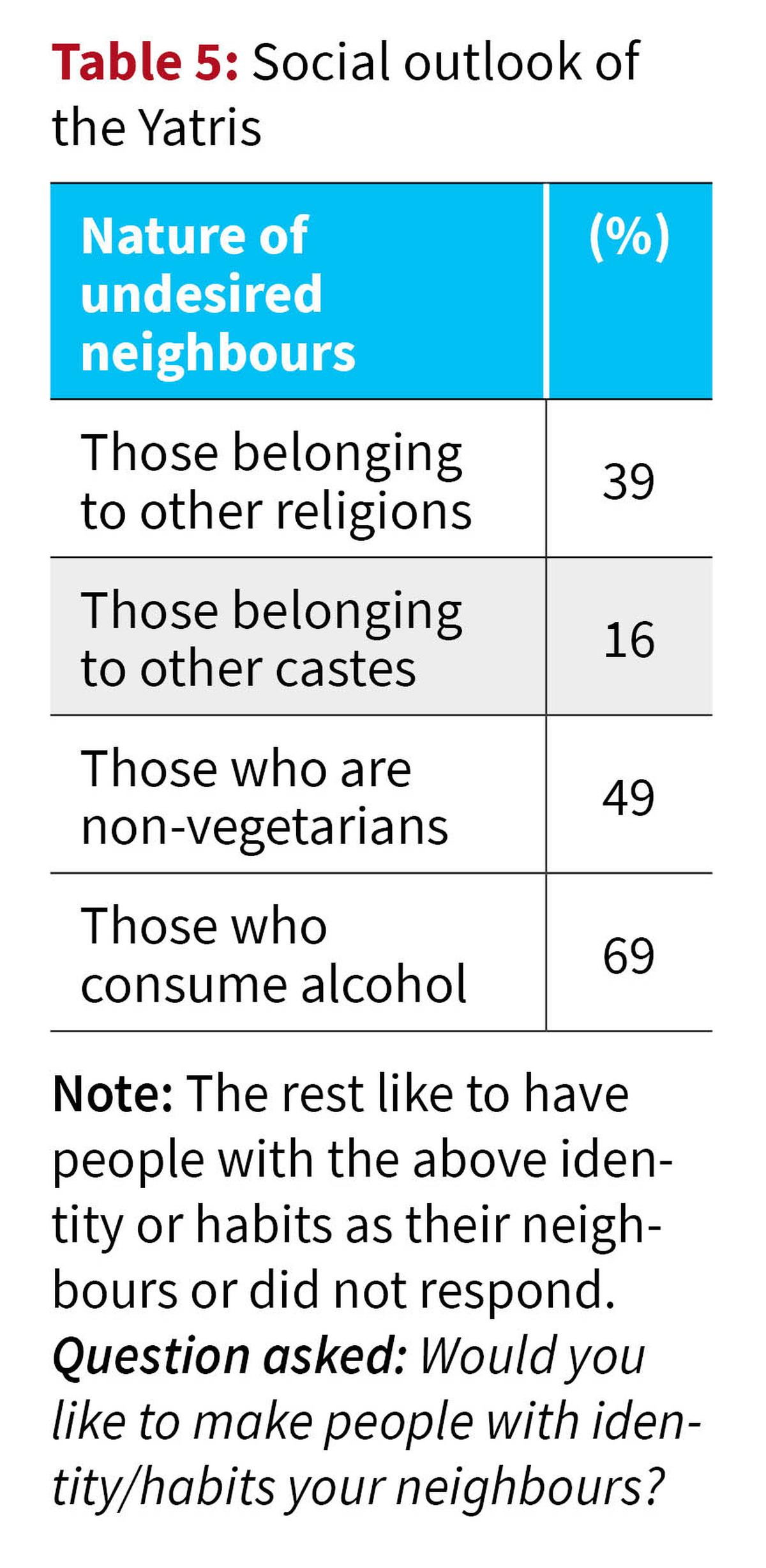
The pilgrims share a considerably inward-looking and insular social outlook. Among other things, it takes the form of a desire among many of them to insulate themselves from certain types of people. Thirty nine percent pilgrims do not prefer to live with people from other religions while 16% are hesitant about those from other castes. The dietary habits that certain people follow also influence the opinion of these pilgrims. Sixty nine per cent do not prefer to reside in the same neighbourhood as those consuming alcohol whereas 49% have a similar attitude about non-vegetarians (Table 5).
The degree of insularity preferred by the pilgrims tends to vary with the degree of religiosity. Among highly religious pilgrims, 32% also seek a highly insular social life while 29% desire a social life that is somewhat insular (Table 6).
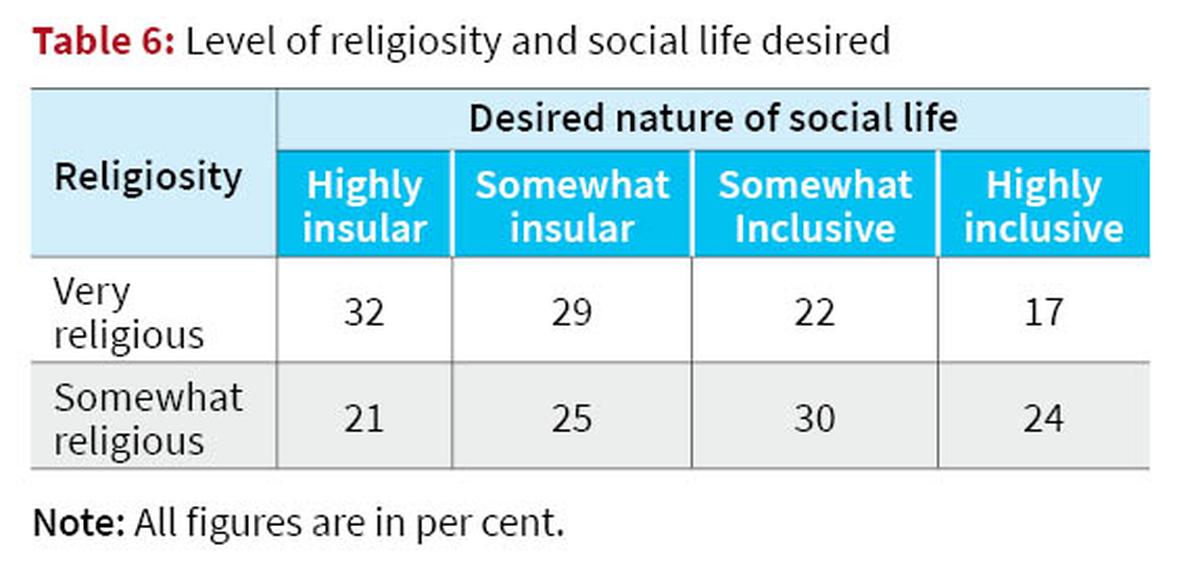
In comparison, among the somewhat religious, 21% seek the former while 25% desire the latter.
This rough sketch of the social outlook of the Kanwariyas only underscores the need for a more detailed study of not only the Kanwariyas and similar other pilgrims in different parts of the country but also the nature of religiosity and its relation to social co-existence. As religiosity becomes more and more central to public sphere and identity in the Indian context, this inquiry becomes all the more urgent.
Sanjay Kumar is professor and co-director at Lokniti-CSDS. Abhinav Pankaj Borbora and Rishikesh Yadav are researchers at Lokniti-CSDS.

