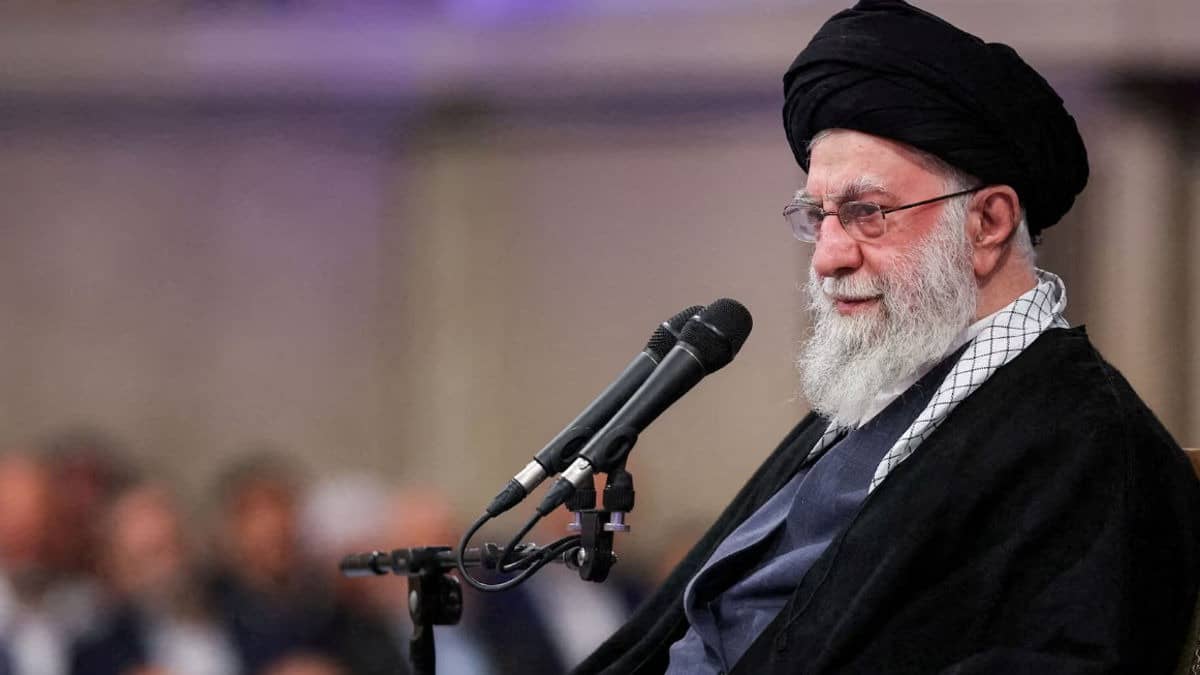
The photograph of Russian President Vladimir Putin, Indian Prime Minister Narendra Modi and Chinese President Xi Jinping in an animated conversation at the 2025 Tianjin Shanghai Cooperation Organization (SCO) summit in early September this year exhibited elements unifying them, which has been the hallmark of meetings of the G-7. Just a month later, at the Busan Summit 2025, the photograph of U.S. President Donald Trump, who looked uneasy, and Mr. Xi, who looked calm, at the “G2” summit, acknowledges the power shift to Asia.
The U.S. Secretary of State told the Senate that the story of the 21st century will be written in Asia. The global trend was then obscured by now U.S. Ambassador to India Sergio Gor laying out the U.S.’s priorities: ‘pull India’ to its side away from China and get India to stop buying cheap Russian oil. Mr. Modi later made clear that India’s future cannot be dictated by others.
A critical moment for foreign policy
India’s foreign policy is at an inflexion point as it is on the cusp of becoming one of the largest economies, and the U.S. is upending multilateralism and reducing India’s strategic policy space in several key domains as India’s relations with China improve and those with Russia strengthen. Is the U.S. thwarting India’s rise to prevent another China? With China, it should be a case of ‘trust but verify’ as negotiations for an international border in Ladakh advance with it having the potential to settle the Kashmir issue and investment that may follow. Russia is a 75-year-old tested partner and its S-400 was the game-changer in ‘Operation Sindoor’.
Editorial | Claim, counterclaim: On India and foreign policy
For India, the choice is not binary, as western analysts argue, tilting towards the U.S. or China. The new direction for India should be toward Asia, whose market will be larger than the U.S.
Asia is coming together in a form very different to the way the West came together, not based on colonialism or global rules but shared value chain interests. Countries in the region want partnership with India, as it has the technological capacity and economic heft to balance China.
Asia, with two-thirds of the global population and wealth, is again at the centre of the world. BRICS, with overlapping membership and policies, the SCO, with its stress on geo-security-economics, and the Association of Southeast Asian Nations, a political-trade grouping, are going to be intertwined. The door to re-entry into the Regional Comprehensive Economic Partnership is still open. This is where trade concessions should be made, which will be outside World Trade Organization rules, including modus vivendi on trade with China, as an alternative market to the U.S.
Hard decisions
India has moved away from the hesitations of a developing country, ring-fencing its growth, to an emerging power, confidently engaging others as a peer. U.S. pressure has led to a new national consensus on acceptability of hard decisions.
First, operationalisation of ‘strategic autonomy’ should be based on India’s uniqueness having two global agendas. It has the highest growth rate, huge potential till 2100, the largest labour pool and the highest number of the poor. Within the United Nations, India’s foundational sustainable development interests are closer to the Global South. India will need to clarify its understanding of ‘partnership’ linking value chains and adjusting priorities without diluting them to avoid accepting the agendas and frameworks of others.
Second, the new rules will be very different to the old ones. Asia had no answer to Europe’s gunboats and later leverage, and interdependence gave immense advantage to the West. Interconnectedness of the digital economy is reflected in technological capacity, not diplomacy, leading to military capability. Assumptions of foreign, technology and security policies are being questioned as innovation interconnections determine economic growth, political influence and military strength. For India, there can be no compromise on national data, endogenous technology innovation, local defence production and inclusive growth.
Third, cyber warfare should be the central pillar of national security, based on India’s comparative advantage, and not theatre commands as land-based threats have changed. China has stepped back from the China-Pakistan Economic Corridor which Pakistan has substituted with expensive Asian Development Bank loans. It has strategic support from the U..S, a mutual defence pact with Saudi Arabia and increased influence, along with the U.S., in Bangladesh. The U.S. is seeking the Bagram base in Afghanistan. India has also secured a six-month waiver from U.S. sanctions on Chabahar Port which gave India an opening into Iran, Afghanistan, Central Asia and Russia.
The evolving neighbourhood landscape suggests the need for a national debate on reorienting defence allocations — halving the size of the Army and reducing numbers of large (imported) platforms for endogenous Artificial Intelligence (AI), air defence, space, missiles and drones where India has world-class capability — to factor in the need for continuing innovation, with spin-offs for growth.


An AI future
Lastly, shaping the global AI future is necessary for double-digit inclusive growth. Bernstein, a wealth management firm, in a report has asked questions about India’s ₹10,372-crore AI mission, warning that it could become inconsequential on the global stage. It also said that U.S. companies could dominate AI. A Parliamentary Standing Committee has emphasised the need for indigenous research in foundational AI models to ensure sovereign capability. Funding should increase at least 20-fold to support national strategic collaboration, high-end computational resources, proprietary models and talent development driven by the Prime Minister’s Office. AI sovereignty is now the key requirement to be a global power by 2047.
Mukul Sanwal is a former United Nations diplomat
Published – November 22, 2025 12:08 am IST