

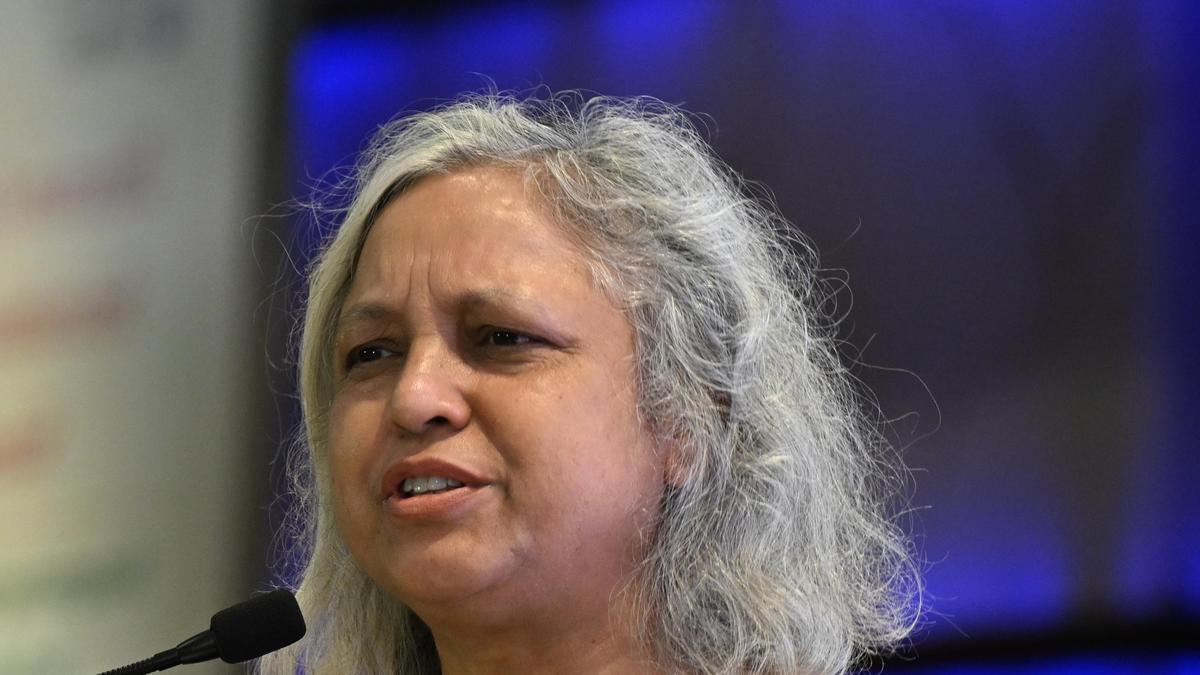
Neelam Shami Rao Secretary, Ministry of Textiles during the directors conference of sericulture practicing states/UTs at Radisson Blu Hotel, Atria in Bengaluru on January 03, 2026.
| Photo Credit: ALLEN EGENUSE J
Silk marketing, brand positioning, value creation, and expansion of domestic and global markets should be the immediate focus areas for India’s sericulture industry, urged Neelam Shami Rao, Secretary, Ministry of Textiles.
She was addressing industry players, silk farmers, and the scientific community at the opening day of a two-day Directors’ Conference of Sericulture Practicing States and Union Territories that commenced here on Saturday.
Ms. Rao said industry stakeholders have to work towards bridging the gap between the demand and the supply of silk by maintaining consistent quality standards and strengthening testing mechanisms, building consumer trust, and increasing production of the commodity.
According to her, Silk Mark authentication has been helping Indian silks in enhancing their credibility and value both in domestic and global markets. Ms. Rao also said, recent initiatives such as Seri Tourism at Manasbal in Jammu and Kashmir has been giving an extra boost to the industry.
According to her, the heat (climate) mapping of sericulture clusters and districts reflected the Ministry’s commitments towards spreading silk farming countrywide, a privilege not currently available for many other natural fibres.
Speaking at a session on Automatic Silk Reeling Machines (ARMs), K.N. Ravi, Joint Director, Department of Sericulture, Karnataka, said adoption of technology and introduction of e-markets in Karnataka have been helping all key stakeholders in the industry comprising farmers, reelers and bidders through tech interventions.
Karnataka, the lead player in sericulture industry, accounting for over 40% of the country’s total silk production, has a mandate to produce 14,150 tonnes of raw silk by March, 2026, as against 13,276 tonnes it produced in the previous year, according data shared at the conference titled “Strengthening The Silk Value Chain for Inclusive Growth.”
The State has 1,18,000 hectares of land under mulberry cultivation, involving around 1,48,500 sericulture farmers, and together they produced 93,624 tonnes of cocoon and 13,276 tonnes of raw silk during last financial year. The State has a total of 40 cocoon markets in which 16 of them are seed markets and 24 are commercial markets operated by the government.
Published – January 04, 2026 04:15 pm IST

