

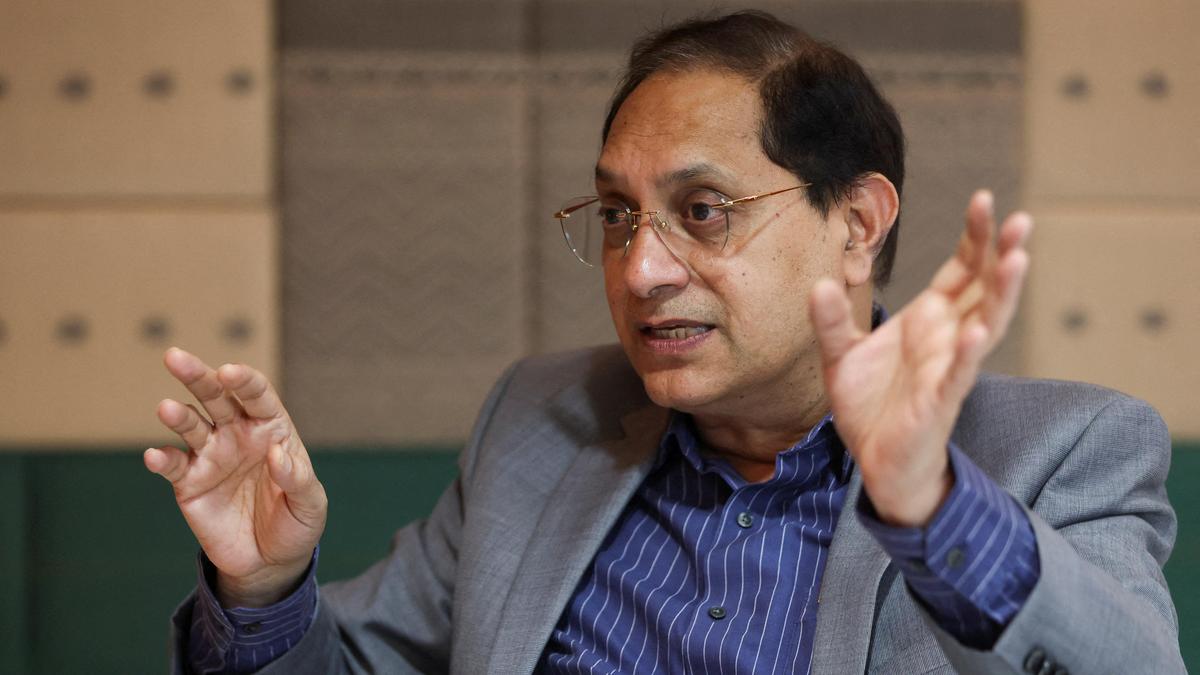
Tuhin Kanta Pandey Pandey said SEBI has already set up working groups to suggest measures to deepen the agriculture and commodity derivatives ecosystem. File
| Photo Credit: Reuters
Markets regulator SEBI is planning to constitute a working group to review the non-agricultural commodity derivatives segment, its chairman Tuhin Kanta Pandey said on Saturday (December 20, 2025).
He added that the working group will be notified shortly.
Speaking at the 11th International Convention of the Commodity and Capital Participants Association of India (CPAI), Mr. Pandey said SEBI is also engaging with the Reserve Bank of India (RBI) and the Insurance Regulatory and Development Authority of India (IRDAI) to enable the participation of banks and insurance companies in the commodity derivatives market.
According to him, enhanced institutional participation will bring in higher liquidity, making the market more attractive for hedging purposes.
“After due consultation with all stakeholders, we are going to form another working group to review the non-agricultural commodity derivative segment. This working group will be notified very shortly,” the SEBI chief said.
Mr. Pandey said SEBI has already set up working groups to suggest measures to deepen the agriculture and commodity derivatives ecosystem. These expert groups are examining, among other aspects, whether the existing regulatory framework governing margins, position limits, and delivery and settlement mechanisms can be optimised without compromising market integrity.
He said the recommendations of these groups would help the regulator take necessary developmental measures.
Beyond institutional participation, Mr. Pandey highlighted the need to address taxation-related hurdles. He said SEBI will continue its engagement with the government to resolve Goods and Services Tax (GST) issues faced by market participants, particularly those seeking to receive or deliver commodities through exchange platforms.
“There are several GST-related challenges that need to be addressed. We will have to work closely with the GST Council Secretariat and the GST Council to resolve some of these critical issues to truly spur the development of commodity markets,” he said, adding that this is especially important for both agricultural and non-agricultural segments, including gold.
Elaborating on the gold ecosystem, Mr. Pandey noted that Indian markets already offer a range of regulated gold products through commodity derivatives, gold exchange-traded funds (ETFs) and electronic gold receipts (EGRs), all of which ensure investor protection.
He said EGRs were envisioned to create a regulated market for gold trading and position India as a global price discovery centre for the precious metal.
However, he acknowledged that the EGR framework has not gained the desired traction so far, and requires a review.
“I think there are GST challenges around it,” Mr. Pandey said, urging industry participants to educate investors and encourage them to deal only in regulated gold products.
Published – December 20, 2025 09:42 pm IST

