

In a pivotal moment in actor-director Dhanush’s Idli Kadai, his character gives his all — almost — to replicate his late father’s legendary recipe. But no matter how well he tries to duplicate it, there’s an intangible something that he seems to keep missing out on. “This is good, but it doesn’t taste as good as your father’s,” says a regular customer to the titular idli shop. Like that idli, Tamil cinema in 2025 looked delectable, but missed giving us a taste of its secret sauce. Sure, each month of the year saw a film make a lot of noise in the theatres — like Kudumbasthan, Dragon, Veera Dheera Sooran, Good Bad Ugly, Retro, Maaman, Thalaivan Thalaivii, Coolie, Madharaasi, Idli Kadai, Bison Kaalamaadan, Dude, and Sirai.
On closer examination, however, one can see that a key flavour of Tamil cinema has been losing its popularity: the good old big-ticket mass masala films. Except for Rajinikanth’s Coolie, which itself garnered mixed reviews, and Sivakarthikeyan’s Madharaasi, none of the big stars fired like we expected them to — a surprise considering the avalanche of big-star films that were bottlenecked for the latter half in 2024. But, since time immemorial, small and mid-budget films have proven to be doing all the heavy lifting. A close observation of some of these little gems spells three dominant trends — one could say that these were the condiments that made even the sour idlis look delectable.
Films that sing middle-class melodies:
The plight of the common man has always been at the centre of stories in Tamil cinema. 2024 had many films that featured a middle-class backdrop, and 2025 took a leaf out of that by training a more specific lens on the beauty and hardships of the common man. The year began with a bang, as we saw the ever-impressive Manikandan continue to champion stories of middle-class youth with Kudumbasthan— a film that deeply cared about its many characters and their struggles. Manikandan played a young man who, after losing his job, must save himself from humiliation while also keeping his family financially afloat. Tourist Family and House Mates earnestly represented the struggles of finding an affordable rental house in the city; however, those films had other genre ambitions to veer toward. 3BHK, though rooted to the cause in telling a story about a family’s struggles to own a house in Chennai, wasn’t a well-rounded effort.
However, two titles stood tall in their humble dream to sing middle-class melodies: Madras Matinee and Paranthu Po. The former, from debutant director Karthikeyan Mani, is a terrific tale of all that a family of four wages through to achieve to lead a contented life in the city. Karthikeyan beautifully painted the many afflictions that a middle-class family faces — from corrupt local politicians to the need to adhere to societal norms that bear heavily on women.
Ace director Ram’s Paranthu Po, starring Shiva and Grace Antony, is a tale of hope and a gentle reflection on the need to step away from the Hamster Wheel we often find ourselves in. One of Ram’s most confident works, Paranthu Po, as we had stated in our review, “is a warm and funny musical road comedy that feels like a timeless bedtime story you could revisit at any age and always find a little more to love, cherish and think about.”
If anything, that we have such tales is a tribute in itself to the master of this sub-genre, filmmaker V Sekar, who passed away this year. Sekar enthralled audiences in the 90s and early 2000s with titles such as Varavu Ettana Selavu Pathana, Viralukketha Veekkam, and Koodi Vazhnthal Kodi Nanmai. Wonderfully weaving together some good comedy, drama, and masala movie sensibilities, Sekar’s films entertained and reflected the minds of a generation of working-class men and women who were stepping into a new millennium. Adios, dear sir.
Films that reflect the state of society:
From Sivaji Ganesan’s 1952 film Parasakthi to Sivakarthikeyan’s film of the same name that is set to release soon for Pongal, if something that hasn’t changed about Tamil cinema, it is our filmmakers’ belief in ushering a social change by addressing the gallery. No other regional industry in India wields the visual medium as a catalyst for change and social justice as much as Tamil. In 2025, we had thrillers like Maskand Sirai, a political drama like Shakthi Thirumagan, and social dramas like Thandakaaranyam and Bomb, that dabbled in social themes. In this regard, the year undoubtedly belongs to Mari Selvaraj’s superb social sports drama, Bison Kaalamaadan.
Apart from making razor-sharp cuts on the social fabric with its political statements, Bison Kaalamaadan also doubled up as an engaging sports film. Mari reinvented his popular tropes in this follow-up to his masterpiece Vaazhai, and despite being his most conventional (and violent) work yet, it is also his most political work in many ways. Inspired by the story of Indian Kabaddi champion and Arjuna-awardee Manathi Ganesan, Bison is a game-changer.

Meanwhile, even big-ticket commercial films took ample swings at social themes, like AR Murugadoss’ excellent comeback film, Madharaasi, which not only says something about empathising with mental health struggles, but also plays Nostradamus by warning what might turn out to be our future — a Tamil Nadu with gun control as poor as northern Indian states. That said and done, didactic pursuits to end films with a social message continue to peril many films — horror comedy Aghathiyaa, supernatural thriller Maargan, and social thriller Dieselall either bombed or fell short of their potential due to their sermonic climax. Even Coolie, a middling Rajinikanth film, featured the superstar advising his followers to stay away from alcohol — but it seems you can make an exception and chug some Mansion House if a dreaded gangster like Nagarjuna threatens to kill countless innocents.
Films that smell like petrichor and open fields:
There’s always that one film that attempts to cut through the cacophony of the urban locales and transport the audience to a place where life is as simple as it can get. 2025, in fact, began with the subpar rural dramas like Madraskaaranand Vanangaan; however, if we are featuring this trend here, it is primarily because of how life in the countryside was central in 2025, in both mainstream commercial titles — like Maaman, Idli Kadai, Thalaivan Thalaivii, Love Marriage — and niche dramas, like Paranthu Po, Bomb, and Angammal.
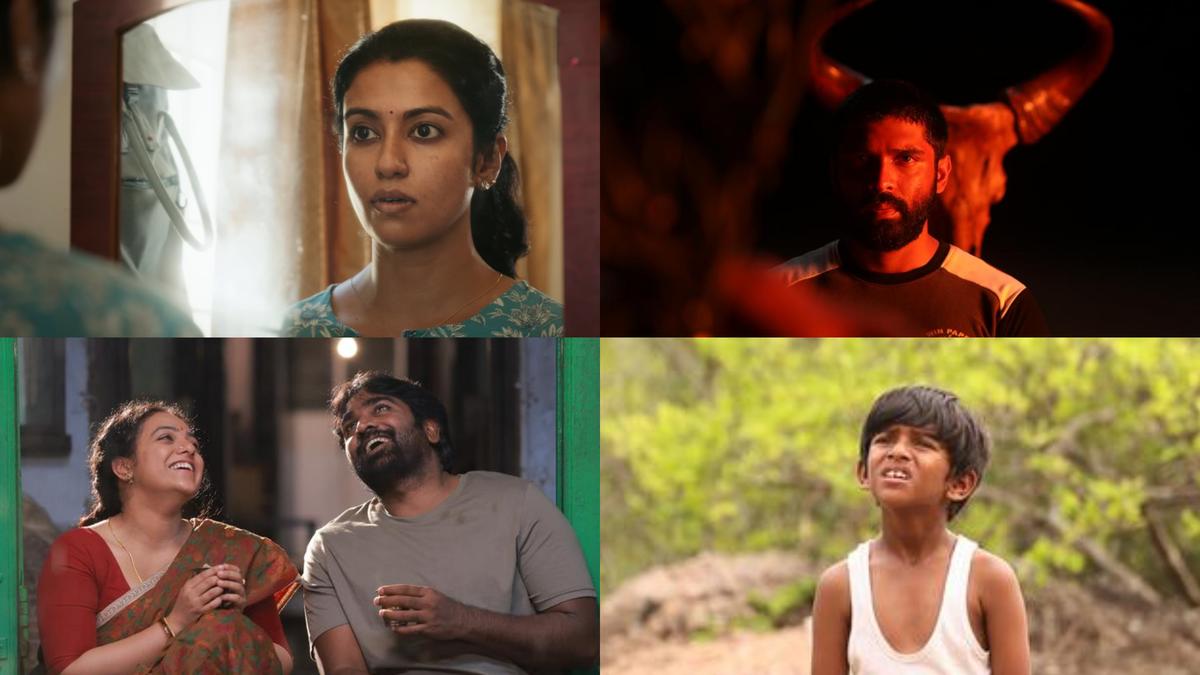
Interestingly, during the dry months of May and July, it was Soori’s Maaman— a story about how a boy’s equation with his maternal uncle creates friction in a family — and Vijay Sethupathy-Nithya Menen starrer Thalaivan Thalaivii — about a one-of-a-kind love-hate relationship between a married couple — that raked in all the moolah in southern Tamil Nadu. Amongst the more nuanced stories, we wish to highlight two films, which are interestingly also part of our top 10 best Tamil films of the year: Ram’s Paranthu Po and Vipin Radhakrishnan’s Angammal.

The latter takes us into a humble town where many, like the elderly Angammal (Geetha Kailasam), have to either mend their ways to the changing times or disappear, along with a generational wind that flows through the town. It’s an evocative film that transports you to a world far away from cities but with characters whose plight you can relate to. Then comes Paranthu Po, which makes a compelling case for the need to break from the cacophony that drowns you in the concrete jungles, and to ‘fly away’ with a child-like enthusiasm to the mountains, towards respite and fresh air. This is the kind of film that compels you to pause and reflect on the ways of our lives — and makes for an antidote to the toxic positivity of Idli Kadai, in which Dhanush takes quite a skewed stance against urban life, which brings down his otherwise heartfelt film.
Stories that reflect the plight of the common man, tackle societal issues, or evoke ‘manvasanai’ have always been integral to Tamil cinema. But in a dull year in which many of the big stars failed to pull in their best, it becomes even more pronounced that storytellers tend to lean on these evergreen themes and settings to mount their stories. Maybe nothing truly beats the comfort of home-cooked idlis.
Published – December 31, 2025 04:56 pm IST

