

Illustration: Sreejith R. Kumar
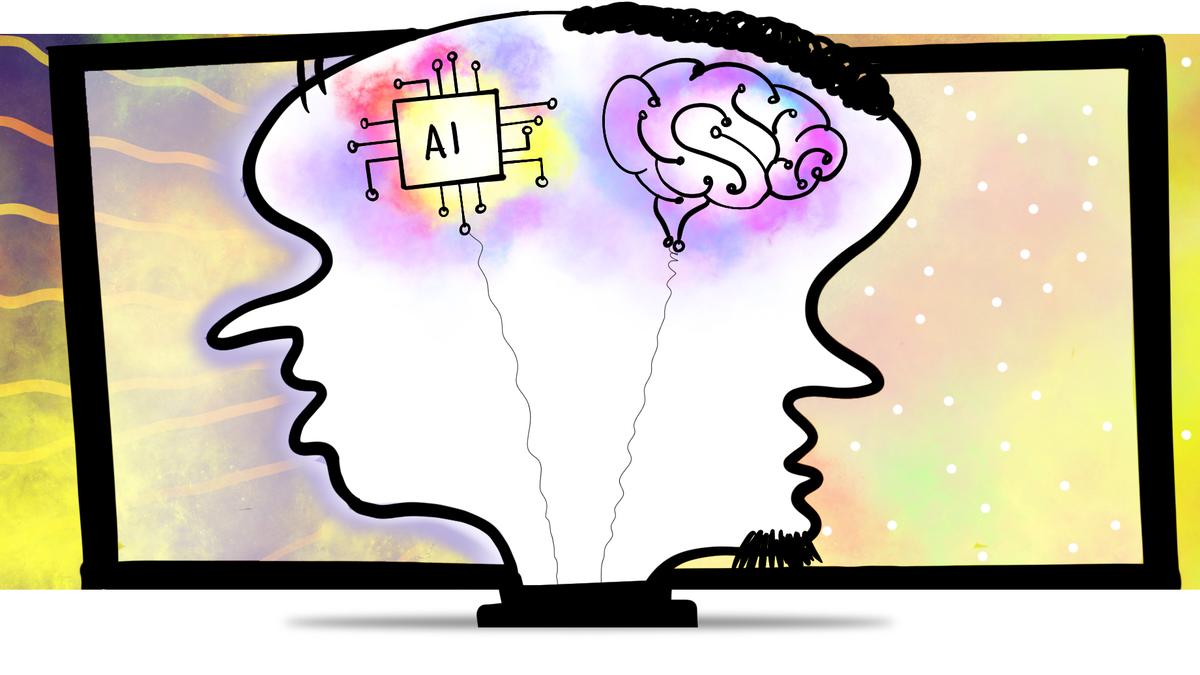
As a person working in the legal domain of my employer, my professional life has always been rooted in the realms of laws — legislation, legal intricacies, and research into legal matters. Technology, for me, was a tool that served basic functions: communication, documentation, and research. The complex algorithms and intricate mechanisms of artificial intelligence (AI) seemed like a distant world, far removed from the pragmatic and text-heavy environment of legal work. However, an unexpected journey into the fascinating world of AI has not only reshaped my perception of technology but has also significantly enhanced my work and life.
My initial foray into the world of AI was driven by a blend of curiosity and necessity. The burgeoning discourse around AI’s potential and its transformative impact on various sectors piqued my interest. Despite my limited technical background, I was eager to understand how AI could streamline my work and perhaps even bring about a paradigm shift in how legal tasks are approached.
I started with the basics, reading about AI applications in different fields and gradually exploring AI tools and platforms. My journey was filled with moments of awe and wonder. The idea that machines could analyse data, recognise patterns, and even make predictions based on vast datasets was both intriguing and intimidating. As I delved deeper, I realised that AI is not just a tool for tech-savvy individuals but a powerful resource that can be harnessed by anyone willing to explore its potential.
The integration of AI into my legal work was a revelation. The legal field is often characterised by extensive documentation, rigorous analysis, and meticulous attention to detail. AI, with its capabilities to process large volumes of data and identify relevant information quickly, proved to be a boon.
While the journey into the AI world has been rewarding, it has not been without challenges. The initial learning curve was steep, given my non-technical background. Understanding the fundamentals of AI, its terminology, and its functionalities required patience and persistence. There were moments of frustration when AI tools produced erroneous results or when their outputs did not align with my expectations.
However, these challenges were outweighed by the immense benefits that AI brought to my work and life. The key was to approach AI not as a perfect solution but as a powerful assistant that complements human intelligence. By acknowledging its limitations and learning to navigate its intricacies, I was able to harness its potential effectively.
AI has introduced a level of efficiency and innovation into my work that was previously unimaginable. It has allowed me to focus more on strategic thinking and policy formulation, areas where human expertise and judgment are indispensable. The ability to leverage AI for routine tasks and data analysis has made my work more impactful and fulfilling. Now, I think for a second if I use AI for a particular scenario, including while enjoying the reading newspaper articles. Overall, it has been a mesmerising journey.
sudh.2060@gmail.com

