

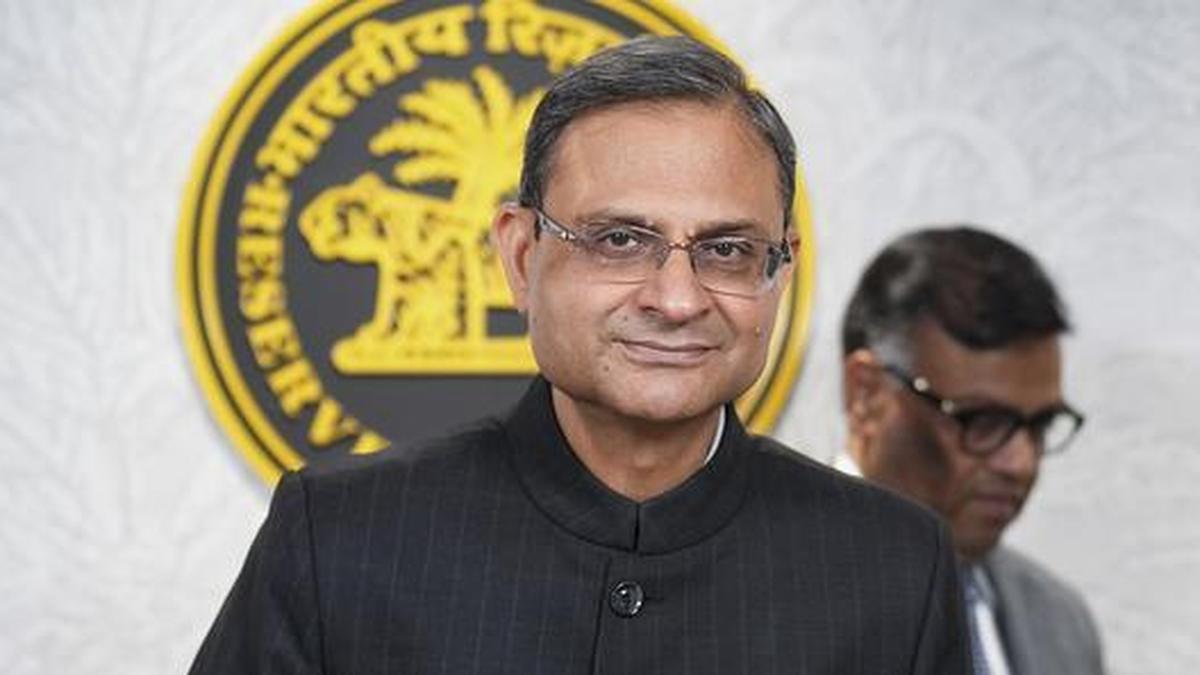
Reserve Bank of India (RBI) Governor Sanjay Malhotra.
| Photo Credit: KUNAL PATIL
With digital technologies dominating the financial landscape and redefining the operations of regulated entities, regulation and supervision by the regulator must remain risk-based, proportionate, and technology-neutral said Reserve Bank of India (RBI) Governor Sanjay Malhotra.
He was delivering an address on the topic ‘Regulation and Supervision – Adapting to the Digital Age at the Third Annual Global Conference of the College of Supervisors’ at Mumbai on Friday.
“Technology must embed compliance, not bypass it; and accountability must remain human, and automation should not dilute accountability —it should sharpen it,” he emphasised.
He said while digitalisation was widening access, enhancing efficiency, improving convenience, and enabling far more tailored financial services, at the same time, it was reshaping the nature and scale of risks.
“It is also accelerating the transmission of disruptions and risks underscoring the need for agility in regulatory and supervisory response,” he said.
Emphasising that the fundamental architecture of regulation and supervision remains the same even in the digital era, he said they still follow the guiding principle of risk sensitivity.
“Regulated entities still have their stakeholders’ interest topmost in mind. Nonetheless, digitalisation has altered the landscape in many ways,” he said.
He said regulated entities should better understand regulatory expectations and requirements, particularly in the areas where models, partners, data, and digital delivery create new forms of risk.
“They need to imbibe the essence of regulation and follow the spirit of it and not merely follow a tick-box based compliance culture. Our endeavour, rather, should be to develop common understanding which can reduce frictions and improve outcomes,” he pointed out.
Stressing that supervisors and regulators must provide timely inputs and clarifications, he said supervision should not only enforce existing regulations, but also help refine them by flagging regulatory gaps and inconsistencies observed during supervisory engagements.
“The amendments to the co-lending directions and lending against gold and silver jewellery last year were few recent examples where feedback from all the stakeholders helped us refine regulations. This feedback process is not just limited to supervisory engagement but also includes regulatory or supervisory reporting of data,” he said.
Highlighting the importance of use of technology for the benefit of customers he said digital channels facilitate financial inclusion and convenience.
“But, without guardrails, they can also facilitate opaque pricing, weak disclosures and inappropriate recovery practices,” the Governor flagged.
“Our aim should be to ensure that digitalisation and innovations are aligned with fair outcomes for consumers. A key element of this endeavour should be to protect customers from the menace of rising digital frauds, which has engaged national attention,” he emphasised.
“While banks and other regulated entities individually should continue to improve their tools, techniques and processes in preventing and tackling digital frauds, this is an area where we need to collaborate with each other to build analytics and tools to detect mule accounts and suspicious transactions timely and pre-emptively,” he said.
Published – January 09, 2026 09:17 pm IST

