

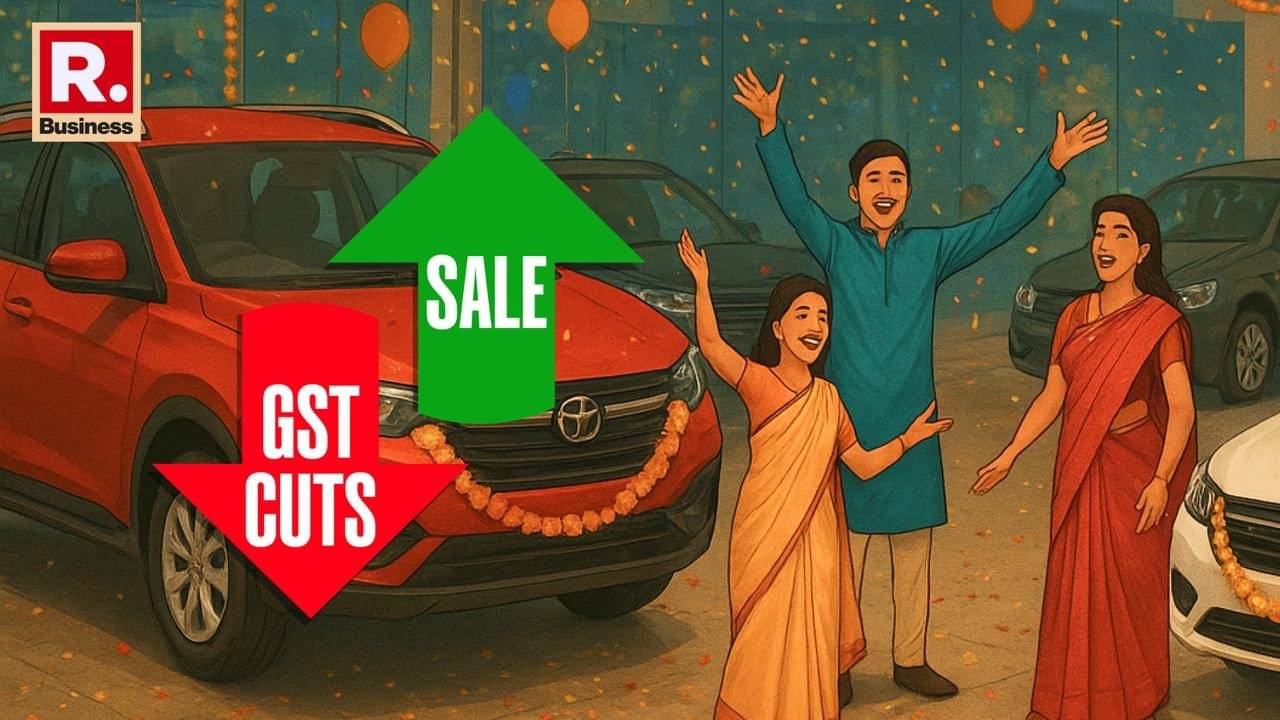
India’s passenger vehicle (PV) retail sales hit an all-time high in October 2025, with 5.57 lakh units sold — an 11.35% year-on-year increase — according to data released by the Federation of Automobile Dealers Associations (FADA). The strong momentum was propelled by the twin tailwinds of the GST 2.0 rollout and robust rural demand during the festive period.
Overall vehicle retails in October surged 40.5% year-on-year, marking the best-ever performance for India’s auto retail industry. FADA President C.S. Vigneshwar described it as “a landmark month where reforms, festivities, and rural resurgence came together to deliver record-breaking results.”
The month began on a muted note following the transition to GST 2.0 but quickly rebounded as the Dussehra and Diwali season overlapped with the tax reforms. The government’s rationalisation of GST rates — especially for entry-level two-wheelers and small cars — played a decisive role in boosting affordability and first-time purchases.
Passenger vehicles were the star performers, decisively breaching the five-lakh milestone for the first time in India’s retail history. Dealers also reported a correction in inventory levels by 5–7 days, now averaging 53–55 days, indicating healthier supply alignment.
Rural India emerged as the growth engine for the auto retail sector. PV sales in rural markets grew three times faster than in urban areas, aided by a good monsoon, higher farm incomes, and increased infrastructure activity. The “Bharat factor” also played out in the two-wheeler segment, which saw over 50% growth year-on-year.
During the 42-day festive period — spanning from Navratri to Diwali — PV sales rose 23% year-on-year to 7.67 lakh units, another record high. FADA called it a “Viksit Bharat moment,” underscoring how policy reforms, festive sentiment, and rural prosperity combined to ignite demand.
Looking ahead, FADA expects the positive momentum to continue through the year-end, supported by the marriage season, harvest-related cash flows, and upcoming model launches. “The industry enters 2026 on a firm, confident footing,” Vigneshwar added.
With GST 2.0 anchoring affordability and rural markets driving growth, October 2025 stands as a defining chapter for India’s automobile retail sector — one that signals stronger consumer confidence and a broad-based recovery in mobility demand.

