

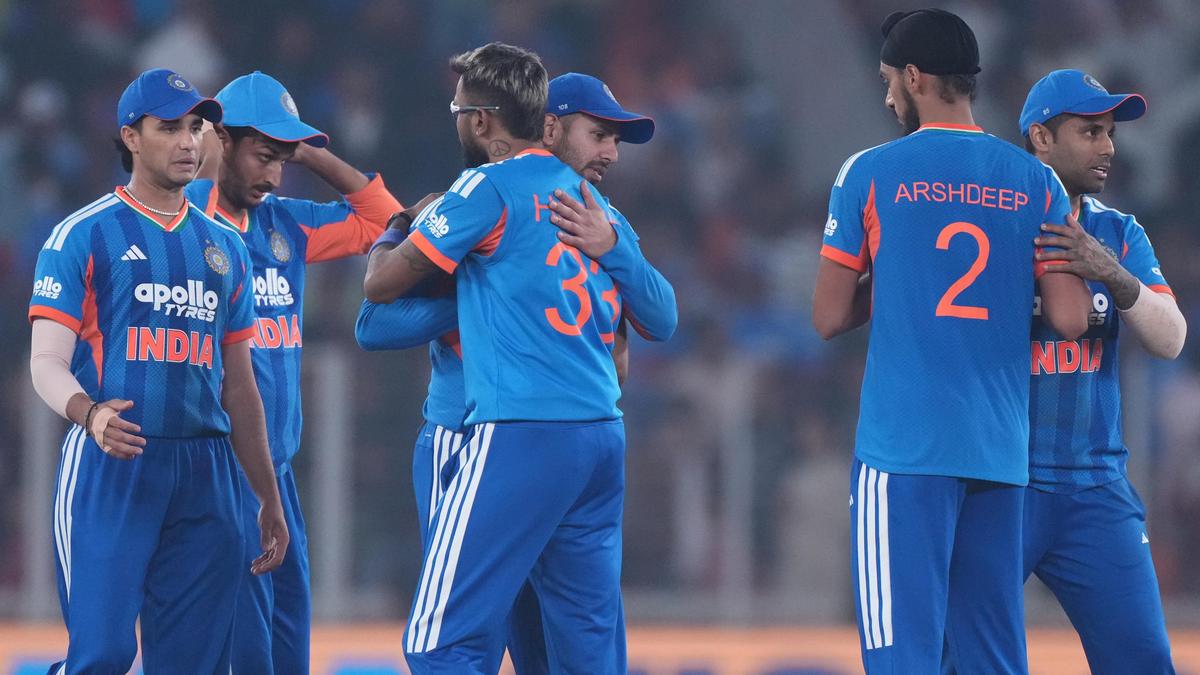
The abiding image of 2025 for Indian cricket fans will remain Rohit Sharma holding aloft the Champions Trophy in Dubai in March. Few, the Mumbaikar included, knew at the time that it would be his last assignment as India’s captain. In May, Rohit retired from Test cricket and five months later, Ajit Agarkar’s selection panel stripped him of the 50-over captaincy, thrusting it instead on the shoulders of his deputy, Shubman Gill, with an eye on the World Cup in 2027 and beyond.
Petulant
The Champions Trophy is the second most prestigious 50-over competition after the World Cup, but Suryakumar Yadav lifting the T20 Asia Cup would still have almost paralleled the jubilation of March, if only… If only he had actually lifted the trophy, that is. India mounted a fabulous campaign, also in the Emirates, winning all seven matches, including on three successive Sundays against their arch-rivals from across the border, Pakistan. However, they had no silverware to show for their exploits after an unbecoming standoff involving Mohsin Naqvi, the president of the Asian Cricket Council.
Naqvi is Pakistan’s federal Minister of Interior and Narcotics Control, which perhaps was the final trigger. In the wake of the Pahalgam attack on unsuspecting tourists which claimed 26 civilian lives in April, relations between India and Pakistan had deteriorated alarmingly. The Asia Cup was played against the backdrop of India’s retaliatory Operation Sindoor; Indian players refused to shake hands with their Pakistani counterparts before or after any of the three matches, and the leadership group had made it clear that Suryakumar would not accept the trophy from Naqvi.
Naqvi’s insistence on presenting the trophy led to an anti-climactic end to a gripping tournament and a befitting finale settled by Tilak Varma’s calm and class. The sight of the Indian players lolling on the Dubai International Cricket Stadium outfield even as Naqvi walked away with the silverware – shades of a neighbourhood bully’s ‘My bat, I will take it home once I am dismissed’ philosophy there? – was hardly the ending the competition deserved. India made light of the situation by hoisting an imaginary trophy; to paraphrase the tut-tutting old-timers, it simply wasn’t cricket.
Suryakumar Yadav has done remarkably well as a captain despite his struggles with the bat.
| Photo Credit:
AFP
Suryakumar might have been denied his moment under the DICS lights by the petulance of a cricket administrator, but he can emphatically lay that episode to rest in a little over two months when the 2026 edition of the T20 World Cup wends to its denouement. The final is earmarked for March 8, though whether it is played at Ahmedabad’s sprawling Narendra Modi Stadium or at the R. Premadasa Stadium in Colombo will be determined by how far Pakistan go in the competition. If the Pakistanis reach the title round, the final will be played in the Sri Lankan capital; if they don’t make it that far, Ahmedabad will host a second World Cup final in 28 months, no matter who the protagonists are. In an ideal world, India would love for an Ahmedabad final with Suryakumar’s intrepid band constituting one half of the playing group. A fairytale finish will entail India taming Australia, the team that ended their dream run in the 50-over final in November 2023, as small consolation for the heartbreak that nearly sent Rohit into retirement. It will catapult Suryakumar into cricketing stratosphere, placing him on par with Mahendra Singh Dhoni and Rohit, India’s previous T20 World Cup-winning captains.
Sizzling run
Sport as a whole seldom throws up fairytale finishes, but there is no harm in hoping, right? Hoping that India translate their remarkably consistent run in the most unpredictable of international formats to a deserved trophy. Nobody, not even Naqvi, will be able to grudge them their success, were it to eventuate. After all, ahead of the five-match series against New Zealand beginning later this month, India are sitting on an unbeaten streak in T20Is stretching to 15 series, are unequivocally the No. 1 side in the world and possess an array of riches capable of holding its own in any conditions anywhere in the universe.
So assiduously planned is the cricket calendar that every year, there is at least one World Cup. In 2026, there will be two at the senior level alone – the men’s and women’s T20 flagship competitions, with the latter to be held in England in June. Buoyant after clinching their maiden 50-over World Cup crown in Navi Mumbai in November, Harmanpreet Kaur’s spirited outfit will have their eyes set on a fabulous double. But long before the ladies mount their campaign, the focus will be trained on the home World Cup in what is otherwise a rare light year for the men’s team.
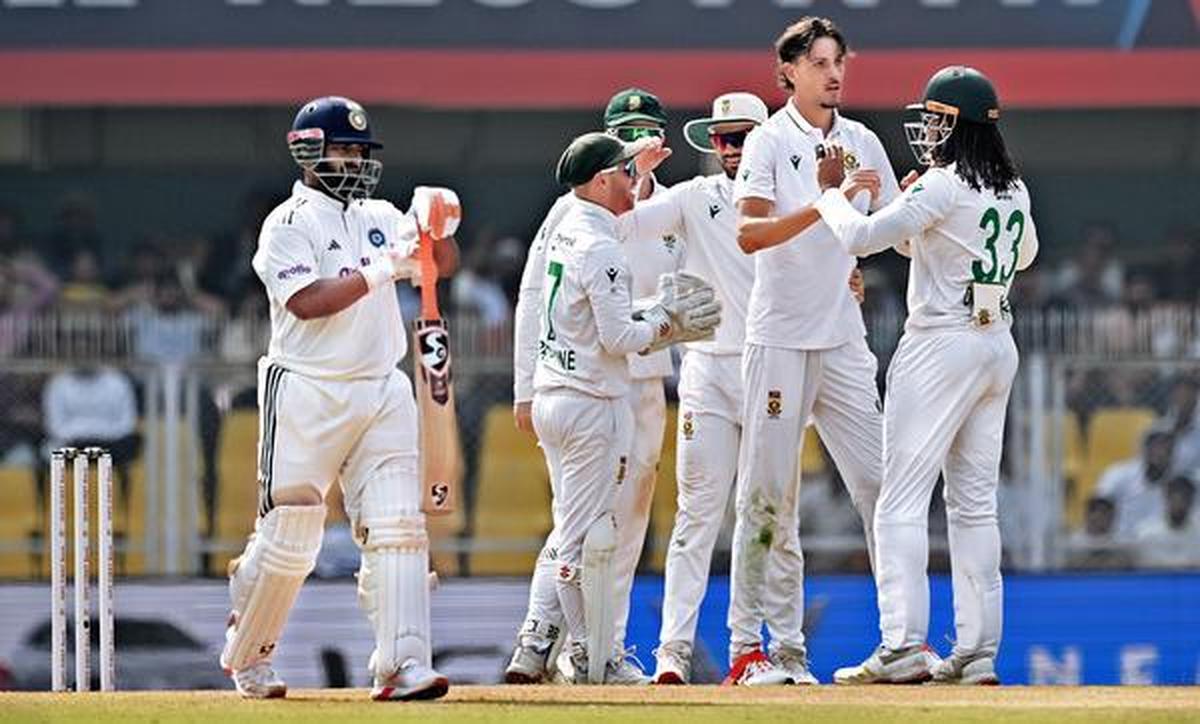
Hosts India were outplayed by the Proteas in the recent Test series.
| Photo Credit:
RITU RAJ KONWAR
India won’t play a single home match in 2026 in the ongoing World Test Championship cycle. Indeed, had it not been for the pencilling in of a token one-off Test against Afghanistan in June, there would have been no home Test at all for the first time in ages. India play just five Tests in the entire year, the last four split equally on away tours of Sri Lanka (August) and New Zealand (October). India haven’t played a Test in Sri Lanka since 2017, while their last visit of New Zealand was back in 2020, just before the onset of the COVID-19 pandemic.
Both these series assume greater than normal importance because of how the two-Test home series against South Africa panned out in November. The 0-2 rout has left India’s WTC campaign hanging by a slender thread at the halfway stage. India have won just four of nine Tests in the current cycle and need a bushel of victories to get their campaign back on track. The task ahead isn’t easy. While they have won their last two series in Sri Lanka, it is impossible that the islanders wouldn’t have taken note of India’s travails against the turning ball in their own backyard against New Zealand in 2024 and South Africa last year. Sri Lanka at home are a formidable outfit even without recently retired former Test skipper Angelo Mathews. They know how to play the conditions and their assortment of spinners will Test India’s batters, now aware that they are in the crosshairs, repeatedly and unforgivingly.
In New Zealand, India’s last Test, and series, win came way back in 2009, under Dhoni. On their last tour, they were well beaten inside three days in both Wellington and Christchurch. As always, the Kiwis will lay out green seamers, a challenge as different from the turners in Galle and Colombo as chalk is from cheese. In the space of two months, India’s batters will be asked to adapt to vastly contrasting challenges and even though they have the bowling to cash in on whatever assistance, will have their work cut out to keep themselves in the fray for a place in the final ahead of the five-Test series at home against Australia in early 2027.
The second half of 2026, post the IPL, will largely be about 50-over cricket with an eye on the next World Cup, but the clear and undisputed highlight of the calendar is the T20 World Cup. India’s preparations have been on point. They defeated Australia in Australia 2-1 in a rain-affected five-match series before comprehensively outclassing South Africa 3-1 to partially, minimally, atone for the 2-0 Test series hammering. Most of their batters have been in red-hot form, though there linger growing concerns over the lack of meaningful runs from the once-scything willow of their captain.
For near on two years, Suryakumar lorded the T20 landscape internationally, stacking up one spectacular edifice after another, but since becoming the full-time skipper in July 2024 after the retirement of Rohit, he has gone singularly silent. Last year was particularly disappointing with not a single half-century in 19 innings. There is a school of thought which believes half-centuries are overrated in the 20-over format, and there is some merit to that line of thinking if the batter in question regularly bats at No. 5 and lower. But the 35-year-old captain has primarily occupied the No. 3 and No. 4 slots, which is why returns of 218 runs with a highest of 47 not out and a strike-rate of 123.16 over the entirety of the last 12 months has raised multiple eyebrows.
There is no question, though, of India looking beyond Suryakumar till the World Cup. While Agarkar’s panel was compelled to leave out Gill after his return to T20Is at the Asia Cup was an unqualified failure, they have still kept their faith in the Mumbaikar, not least because he has run a tight ship. The consensus is that he is too good a batter to not work his way back among the runs, and that he is one good knock away from rolling the clock back. Suryakumar will be hoping that ‘one good knock’ comes early in the New Zealand series, as early as the first game in Nagpur on January 21, so that it sets him up nicely for the rest of the showdown and, more importantly, for the World Cup starting on February 7.
Perfectly balanced
It isn’t fanciful to expect India to become the first side to successfully defend the World Cup or to covet champion status for an unprecedented third time. Alongside England and West Indies, they are the only two-time winners and seem to have most bases covered. The return from injury of Hardik Pandya is the perfect tonic as it lends balance; firepower in the middle-order and handy fast-medium combine to make the all-rounder the fulcrum around which the team will revolve, while in Jasprit Bumrah, India possess the most complete all-format bowler of his generation who will be superbly complemented by late bloomer Varun Chakaravarthy.
It doesn’t take a lot for the direction of a T20 game to turn in a contest between equals, but the rest of the pack is well aware that if India play anywhere close to their potential, maybe at even 90%, they will be impossible to stop. The only thing that could weigh India down, apart from the obvious glorious uncertainties of the sport, is the pressure of expectation that’s magnified while playing at home. But then again, pressure is a constant in any Indian cricketer’s kitbag, isn’t it?

