

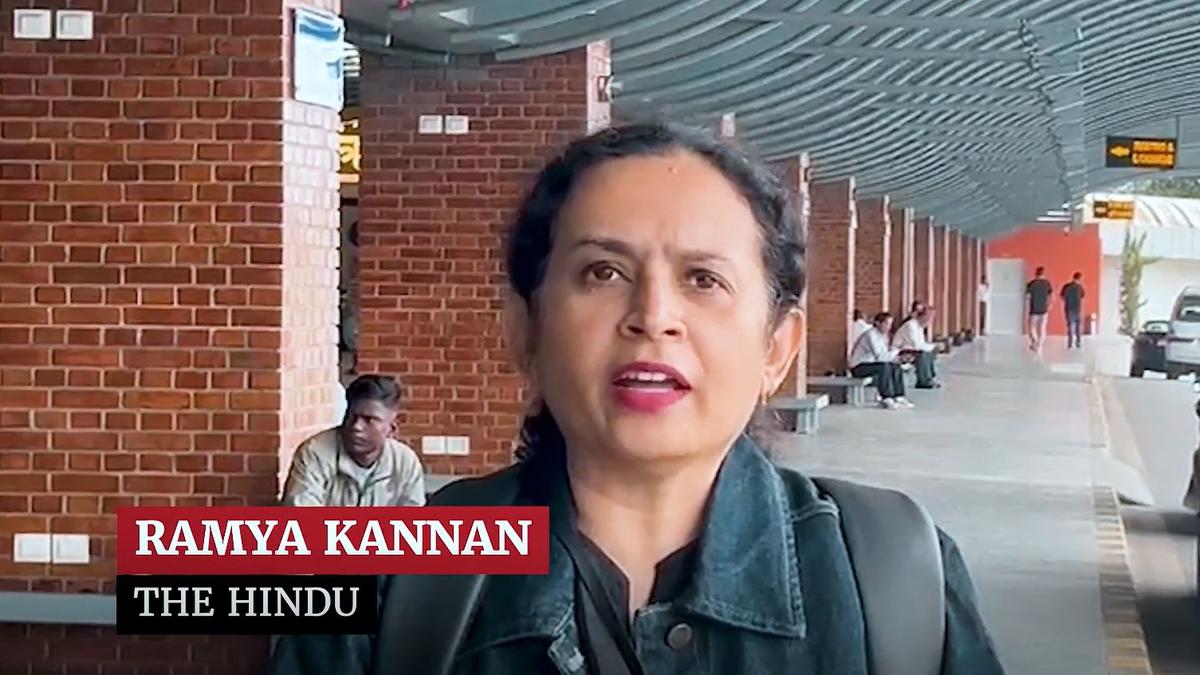
“For a journalist, there is also a measure of headiness. As vulgar as it may sound, even an unintended encounter with chaos counts as ecstasy for a reporter — to be amidst such a crisis and report on it.” Photo: Screengrab from video
| Photo Credit: Ramya Kannan
What are the chances of landing in the lap of a “revolution”, completely unintentionally? In the Indian subcontinent, there is a pretty high chance, given what we have seen in recent years. After the uprising in Sri Lanka against the fall in the island nation’s economic fortunes, and the protests in Bangladesh against the job quota system, the guarantee of peace in the region is shaky. The possibility of flights getting disrupted, arson and looting on the streets, curfews shutting down cities for days on end, and a palpable fear everywhere is not that remote.
For a journalist, there is also a measure of headiness. As vulgar as it may sound, even an unintended encounter with chaos counts as ecstasy for a reporter — to be amidst such a crisis and report on it. Something in our DNA takes us to the midst of rage-filled streets to report and record events, even if the purpose of visiting the place is different.
Editorial | Generational rage: On the upheaval in Nepal
Who could have imagined that in the five-odd hours that it took to hop on to a flight in Chennai and hop off — first in New Delhi and then in Kathmandu — that things would fall apart so rapidly in Nepal? Protesters had initially turned up with flowers and books. They sang songs, demanding that the ban on social media be lifted. However, the situation deteriorated after reports of deaths began trickling in. The first few reports from the Himalayan kingdom stated that the number of dead stood at 19, and included a child.
Despite this, there is no panic among those who were already on the ground in Kathmandu and not part of the protests. Conference mates in the city lend assurance, recording how other people had arrived by air without any issues and how there are no disruptions on their side of the city.
On the first evening (September 8, 2025), everything seems fine. The airport is milling with people walking about normally. That the quotidian routine went on undisrupted is falsely calming. There are never-ending traffic jams on the way from the airport. This changes drastically overnight.
The next morning dawns with the smell of smoke. Thick, grey columns rise to blur the blue of the distant Himalayas. Protesters have set government buildings, institutions, and homes of politicians on fire. They have occupied a couple of media houses. The youth burn property in the middle of the road, unnerved by shoot-at-sight orders. On the sidelines of the “revolution”, and roads, people stand fearlessly, watching the burning piles. As can be expected during such a mass upheaval, bystanders mutter: “This government needs to go.” There is no fear on the main roads, but no cheering either. Pictures shot then tell the ambivalent side story of this South Asian equivalent of the Arab Spring.
That changes that evening: the youth cheer and give each other high fives and take out a victory march, a show of mostly testosterone. They sit on bikes, waving flags, sticks, even a rifle, yelling “victory”. It seems to some that the protests have quickly ended.
The next day dawns in sharp contrast. There is a calm and a curfew in place. The annoying hoots of pigeons holed in the eaves of buildings replace the sounds of the previous day’s raucous victory cries. Every shop is shut, and army pickets are within viewing distance on both sides of the winding roads. Army trucks whizz past, their sirens blaring. Hotels lock their gates and gently warn visitors against venturing out.
But that is for everyone else to follow. The journalist DNA drags one by the nose to the empty streets, the army pickets, into the centre of action. A video shot on an empty street seems disquieting. But for a journalist responding to the news, there are adrenaline hits with every photo and video recording history being rewritten, mostly in swirls of smoke.
Published – September 19, 2025 12:15 am IST

