

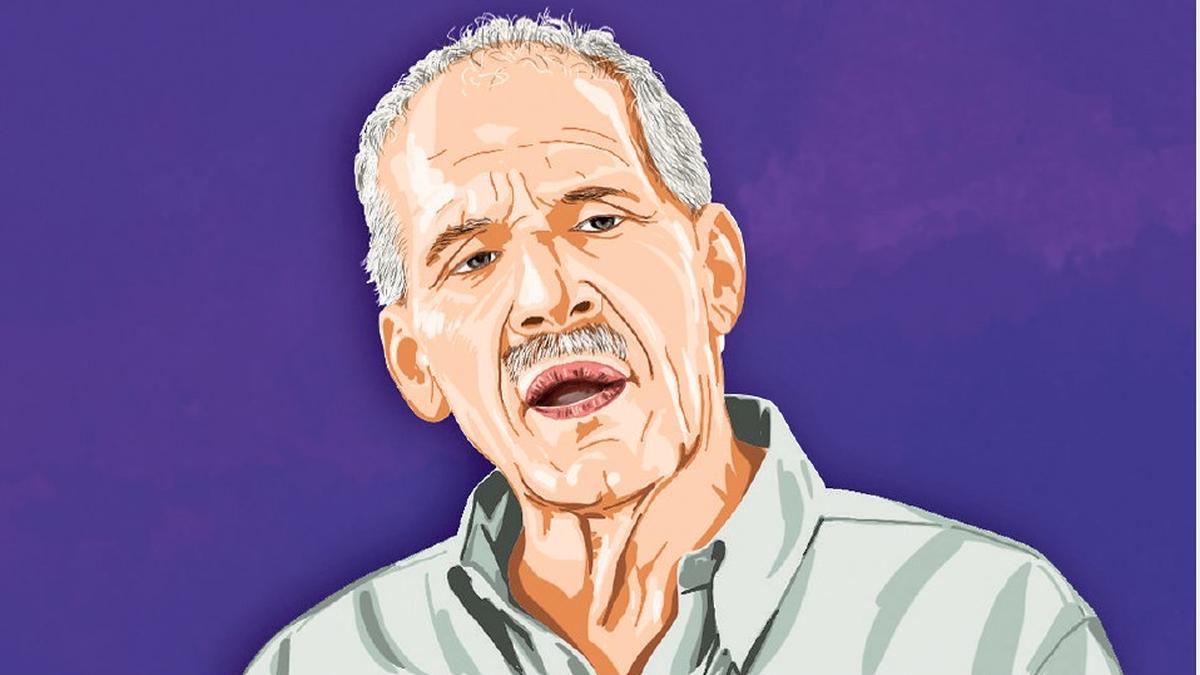
Illustration: Sreejith R. Kumar
Nasry Asfura, a 67-year-old construction magnate and former Mayor of Honduras’s capital, Tegucigalpa, has emerged as the president-elect of the country after a long-drawn-out and contentious electoral process. Mr. Asfura, representing the National Party of Honduras (PNH), won 40.27% of the vote against 39.53% for Salvador Nasralla of the Liberal Party with a narrow margin of just 28,000 votes. The victory followed weeks of delayed vote counting, attributed to the country’s difficult topography, which slowed the counting of the rural ballots. These two parties have traditionally dominated Honduran politics, forming a long-standing two-party system that was only briefly interrupted, such as by the outgoing tenure of the left-wing LIBRE party’s Xiomara Castro.
Mr. Asfura’s chances were win was significantly boosted when U.S. President Donald Trump explicitly endorsed him days before the November 30 election, coupled with threats to cut American aid if anyone other than Mr. Asfura won. LIBRE’s candidate, Rixi Moncada, who came in third place with approximately 19% of the vote, alleged electoral fraud and called the process illegitimate, citing U.S. interference and irregularities in the vote-counting system.
Mr. Trump’s endorsement, in which he called Mr. Asfura someone he could work with to tackle “narcocommunists”, was followed by his pardoning of former President Juan Orlando Hernández just two days before the election. Mr. Hernández, who also belonged to Mr. Asfura’s PNH, had been convicted in U.S. courts and was serving a 45-year prison sentence for accepting millions in bribes to protect cocaine shipments. This move making clear who was his favourite in Honduras pointed to a striking irony. Mr. Trump has announced a naval blockade on Venezuela targeting President Nicolás Maduro, whom he claims, without proof, to be heading a narcotics network, while releasing a known drug trafficker in Mr. Hernández, convicted by the U.S. justice system.
These actions are a re-assertion of a U.S. foreign policy that treats political processes as geopolitical moves in its backyard and are an extension of a subtler pro-oligarchic position taken by the U.S. since the coup in 2009 that deposed popularly elected President José Manuel Zelaya. Then, U.S. Secretary of State Hillary Clinton had supported the coup-installed interim government, refusing to classify the military action as a “coup”, which would have triggered suspension of American aid, and indirectly facilitated the return to power of the conservative oligarchy that had dominated Honduras before Ms. Castro, Mr. Zelaya’s wife came to power in January 2022.
Mr. Asfura’s victory is a major boost for the oligarchy, which includes a wealthy elite from influential families of Syrian and Palestinian descent who migrated to the country in the 20th century (and includes both the right-wing candidates in Mr. Asfura and Mr. Nasralla) and have maintained a strong grip over economic and political power.
During his tenure as Mayor, Mr. Asfura was indicted in 2020 on charges of embezzling public funds, money laundering, fraud, and abuse of authority. He was also named in the 2021 Pandora Papers for operating offshore companies while serving as a public official. These charges were controversially dismissed by the Supreme Court on December 15, just nine days before his official victory declaration.
‘Narco state’
During Mr. Hernández’s regime between 2014 and 2022, Honduras effectively transformed into a “narco-state“ with a nexus among the public sector, the oligarchy, and drug smuggling networks mediated by the President himself, who facilitated what the U.S. prosecutors called “a cocaine superhighway to the United States”. During this administration, corruption and political murders were rampant, even as poverty increased and economic mismanagement resulted in thousands fleeing the country.
Ms. Castro attempted to alter the oligarchic status quo during her tenure. Her regime’s most significant move was the repeal of the controversial Zones for Employment and Economic Development (ZEDE) law instituted by Mr. Hernández, which allowed for the creation of self-governing economic zones by foreign investors outside the country’s legal jurisdiction. However, ZEDE investor Próspera Inc. filed a $10.7 billion lawsuit (a figure equivalent to two-thirds of the nation’s annual budget) while Washington criticised the repeal as undermining investment protections.
Ms. Castro worked towards closer ties with Cuba and Venezuela and ended Honduran recognition of Taiwan to foster ties with Beijing. These moves created tensions with the U.S. following Mr. Trump’s return to power, forcing Ms. Castro to adopt pragmatic policies in favour of the existing power structures and also cooperation with the U.S. on migration control policies and its corporate interests in Honduras.
Mr. Nasralla was himself a former ally of Ms. Castro but contested on a right-wing platform against Mr. Asfura, but Mr. Trump’s overt support for the ex-Mayor helped him sail through, thanks to the fear of reduced aid in a country where nearly two-thirds are poor and close to 40% live in extreme poverty. As left-wing scholars in Latin America have described it, the return to power by the right wing in Honduras is in line with the “Angry Tide” that has swept across other Latin American countries against left-wing regimes, such as in Argentina and Chile recently.
Published – December 28, 2025 02:05 am IST

