

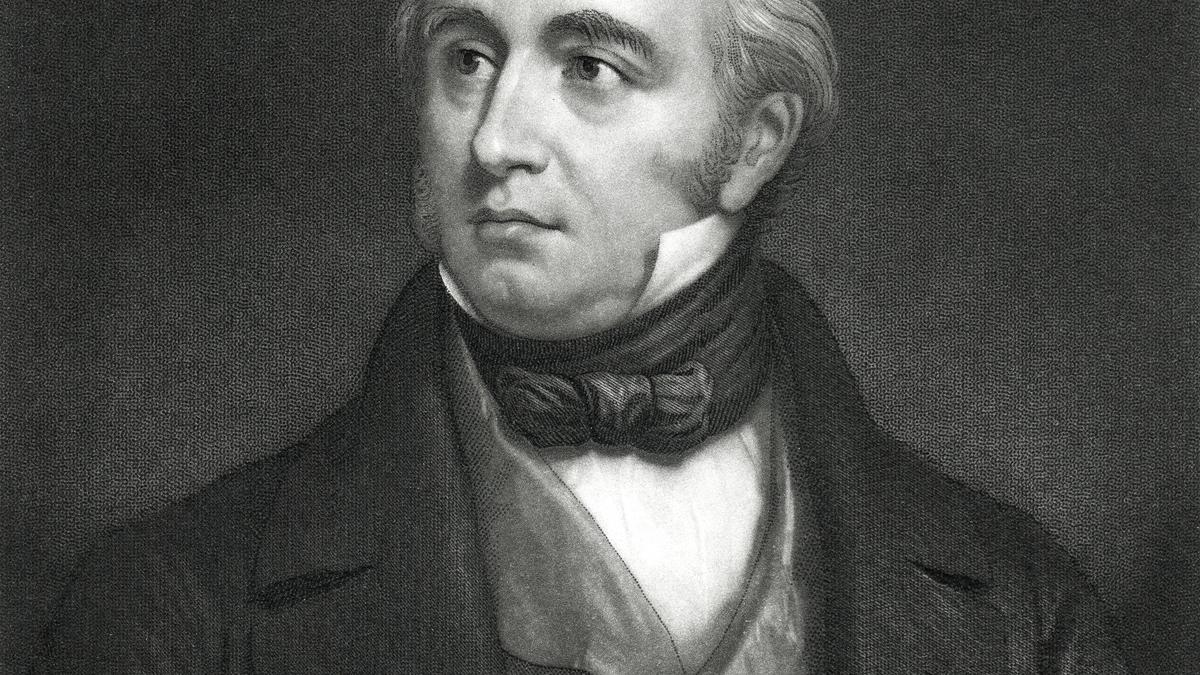
In recent years, Macaulay has been resuscitated as a convenient ideological villain in Indian political discourse, especially in Prime Minister Narendra Modi’s denunciation of a “Macaulayite culture” supposedly perpetuated by English-educated elites, the so-called brown sahibs, “more English than the English”. This framing claims to reject the cultural legacy of colonialism, but, in fact, it misunderstands the intellectual history of postcolonial societies. What the Prime Minister calls the Macaulay mindset was already critiqued, dismantled, and re-examined by generations of postcolonial scholars whose work emerged precisely from the experience of colonisation: Fanon, Said, Césaire, Ngũgĩ wa Thiong’o, Ashis Nandy, and countless others. The repudiation of Eurocentrism did not originate in right-wing nationalism; it originated in anti-imperialist scholarship. The current rhetoric appropriates the language of resistance, but redirects it toward cultural purism and jingoism, not toward decolonisation or intellectual freedom.
To indict Macaulay of having single-handedly tainted the soul of India has become a convenient trope in contemporary politics. Every now and then, a Minister or cultural crusader resurrects the ghost of the 1835 Minute on Education, announcing that India must finally rid itself of the “colonial mindset” by exorcising Lord Macaulay. It is an accusation so overworked that it now functions less as historical enquiry and more as a slogan thriving on outrage, selective memory, and political utility. Macaulay has been reduced to a symbolic proxy for fears about cultural erosion, Western influence, and the shortcomings of India’s English-speaking elite.
This caricature, however, has survived largely because few critics have actually read Macaulay’s Minute in full, let alone engaged with its internal tensions. No serious scholar disputes that it is a deeply colonial text. Macaulay’s hierarchy of languages, his vilification of Indian knowledge systems, and his conviction that English was the avenue to “true” learning were inseparable from the imperial project. Yet to understand the power of this document, one has to read it as a strategy of governance rather than a mystical blueprint for cultural destruction. Macaulay argued that an English-educated Indian elite would become interpreters between rulers and subjects, “Indian in blood and colour, but English in taste, in opinions, in morals.” Knowledge was wielded not as a disinterested pursuit of truth, but as an instrument of imperial power, with English literature serving as a subtle yet potent apparatus of colonial control.
Rebels and subjects
Where the modern debate falters is in assuming that this project succeeded exactly as Macaulay intended. It did not. Colonial pedagogy created rebels no less than it created compliant subjects. It produced an elite that would later stand at the forefront of anti-colonial struggle as is evident in the leanings of Nehru, Gandhi, Ambedkar, Lajpat Rai, and Tagore. The English-educated Indian did not simply become a facsimile of the English gentleman. Instead, English became a medium through which colonialism was intellectually challenged. To ignore this dialectic is to misunderstand the history of resistance itself.
The present political discourse’s troubling aspect lies in its turning Macaulay into history’s punching bag, thereby justifying a retreat from modernity under the guise of cultural preservation. This hypercritical invocation of Macaulay’s legacy betrays a misleading deployment of anti-colonial sentiment to legitimise a narrow ideological agenda, one that elides the complex historical realities of pre-colonial India, including the entrenched caste hierarchies, gender disparities, and epistemological stagnation that characterised indigenous knowledge systems. By positing a simplistic narrative of colonial disruption, this discourse conveniently absolves itself of confronting the profound internal inequalities and intellectual stultification that pre-dated British rule.
Moreover, the simplistic dichotomy between Indian tradition and Western modernity ignores the long processes of intertextual exchange that have defined intellectual life everywhere. Knowledge is not a sealed civilisational property; it travels, collides, transforms. To study Plato, Shakespeare, Marx, Darwin, Fanon or Du Bois is not an act of cultural betrayal. It is to inhabit the universal conversation of ideas. The notion that reading English texts produces cultural alienation betrays a lack of confidence in Indian identity rather than a defence of it.
Preaching, not practising
A further irony lies in the invocation of tradition to support English-language polemics against Macaulay. The same political forces that publicly condemn the “colonial mindset” are deeply embedded in English-medium institutional power — courts, bureaucracies, universities, and global diplomacy. Their children do not study in gurukuls or madrasas; they attend elite English-medium schools at fees exceeding the annual income of working families. What is demanded of others is not what is practised at home. The campaign against Macaulay is therefore less a cultural debate than a moral performance as political expediency.
Unquestionably, Macaulay’s Minute on Education was a paradigmatic expression of colonial hubris, marked by a deep-seated racial bias and a profound disregard for indigenous knowledge systems. However, to posit Macaulay as the singular author of modern India’s cultural trajectory is to indulge in the tyranny of the past, a museum of memory that neglects the complex ensemble of power relations, institutional structures, and economic forces that shaped the colonial project.
The more important task is to distinguish the politics of language from the politics of knowledge. Macaulay believed that English would transmit European knowledge; critics today believe Indian languages alone can transmit Indian culture. Both views are reductive. A language is not merely a vehicle of values but the entry point into a cultural universe, a community’s inner life. What matters is not whether children learn in English, Hindi, Tamil or Punjabi, but whether education is democratic, critical, and liberatory. The insistence that Indian languages are inherently liberating ignores the fact that they have also historically been instruments of exclusion. Truly democratic knowledge requires thinking critically beyond linguistic and cultural divides, unencumbered by an overemphasis on English or a romanticised view of tradition.
There is also a personal dimension to this debate, and I can assure you I had no defence prepared for having allegedly been named after Shelley the poet, as if that alone indicated a colonised sensibility. My father admired P.B. Shelley because he was a romantic at heart, drawn to ideals of freedom and compassion — not because he wished to manufacture an Englishman at home. The assumption that an Indian who loves English poetry is psychologically displaced speaks volumes about the anxiety of those who cannot accept that identity can be plural without being hollow.
The real challenge before India today is not whether we must choose between Macaulay and Manu, or between Sanskrit and Shakespeare. It is whether we can safeguard education from ideological capture. When governments use curriculum to silence dissent, erase histories of marginalisation, or promote uniformity over inquiry, freedom of thought becomes the true casualty. The present rewriting of textbooks, where historical complexity is replaced by cultural triumphalism, resembles not the correction of colonial distortions but the reproduction of political convenience.
Intellectual honesty
Macaulay’s Minute should be studied, not worshipped and not demonised, to illuminate how power shapes knowledge. To confront its colonial undertones requires intellectual honesty, not rhetorical fury or narrow nativism. To reject its racial hierarchies does not require rejecting modernity, science, literature or the global circulation of ideas. A civilisation’s true strength lies in its capacity to engage with and learn from diverse traditions, whereas its insecurity manifests as a defensive parochialism that masquerades as heritage.
Rather than seeking to exorcise Macaulay’s spectre, India must confront the deep-seated insecurity that its identity is incapable of withstanding global engagement. The path forward lies in fostering intellectual freedom, where education empowers students to think autonomously, unshackled from the legacy of colonialism and its attendant anxieties.
Shelley Walia has taught Cultural Theory at Panjab University, Chandigarh; views expressed are personal
Published – December 16, 2025 12:20 am IST

