

From sails to steam engines, from bullock carts to motor cars, from huts to skyscrapers, every stage of human history has been marked by breathtaking technological progress. Each new invention has made life faster, easier and more comfortable. Yet, amid all this change, one aspect of human experience has remained strikingly constant: how we communicate.
The medium has evolved dramatically — from messengers and handwritten letters to telephones and instant messaging, but the essence has not. It is still one human being reaching out to another. The town crier’s drumbeat in the village square has become a digital notice on a government website, but both are acts of connection. The tools have changed but the impulse to communicate has not.
Artificial Intelligence (AI) is now rewriting the rules of learning and work. It solves equations, drafts essays, designs buildings and composes music. It can act as a tutor, a translator, a researcher, and even a companion. In subjects that rely on logic, structure and fixed systems — mathematics, physics, engineering — AI has already become transformative. Students can now get instant explanations of complex formulas or visualise difficult scientific concepts at the click of a button.
What a machine cannot feel
Language, however, belongs to a different realm. It is not only a system of rules but also a living, breathing expression of culture and emotion. AI can process grammar and vocabulary, but it cannot capture humour, irony, affection or hesitation. A sentence translated by a machine may be correct in words, yet wrong in spirit. When someone says “I miss you” or “Te extraño”, the meaning is inseparable from emotion, something a machine cannot feel.
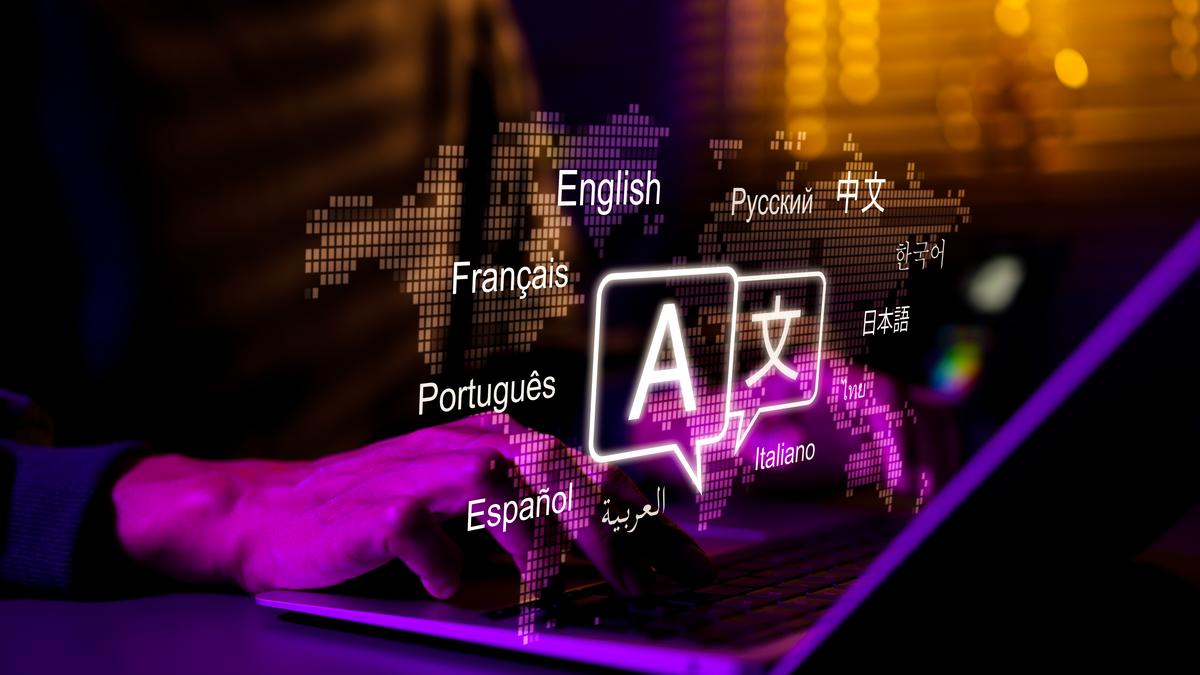
Technology has made translation almost effortless. A Hindi email can appear in flawless English; a Japanese article can be read in French in seconds. Yet, these translations, however precise, may sound sterile. The tone, the rhythm and the subtle warmth that define human speech are easily lost. Translation can transfer meaning but not experience. Understanding a language requires more than decoding its words. It demands entering its world.
In the lived moments
That is why learning a language has always been different from learning a formula. It is not an abstract skill but a human interaction. It happens in conversation, in laughter, in mistakes. It happens when someone struggles to express a thought and is gently corrected, or when a joke finally lands after weeks of practice. These small, lived moments build confidence and connection, something that no app or chatbot can replicate.
AI tools can certainly assist. They can correct pronunciation, explain grammar and offer personalised practice. For teachers, they make lesson planning and feedback faster and more efficient. But they cannot replace the very heart of language learning, the emotional effort of trying to be understood by another person. Fluency is not achieved by perfection alone, but by empathy. To speak a language well, one must also learn how others think and feel.
Moreover, languages constantly evolve. Slang, idioms and even tones of politeness change from year to year. A machine can record these shifts, but it cannot belong to a community. It can predict usage, but it cannot participate in the living rhythm of speech. True mastery requires being part of that rhythm — listening, adapting, responding.
The biggest risk
Perhaps the greatest risk is not that AI will replace language learning, but that it will make people believe they no longer need to learn. If machines can translate instantly, the temptation to skip the effort grows. Yet, in doing so, we would lose something vital: the humility and the patience that come from learning another’s tongue. When we learn a language, we do not just acquire words. We learn another way of seeing the world.
AI will continue to build our bridges, design our cities, and analyse our data. But when it comes to building bridges between people, it will remain an assistant, not a substitute. The process of learning a language — slow, emotional, and deeply human — will outlast every technological revolution.
Technology can help us talk across borders, but only effort and empathy can help us truly understand one another. And that is something no machine, however intelligent, will ever be able to automate.
Nidhi Arora teaches Spanish at The Shriram Millennium School, Noida, Uttar Pradesh
Published – October 31, 2025 12:08 am IST

