

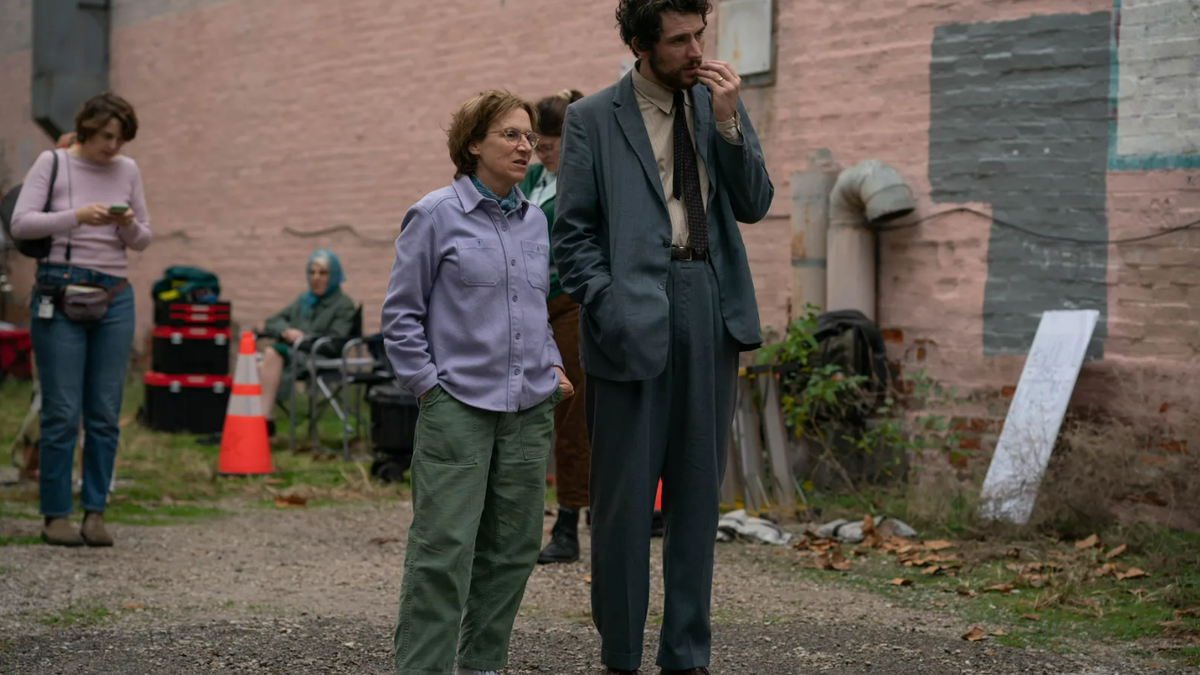
Kelly Reichardt has spent three decades making films about an Americana adrift. Since River of Grass in the mid-1990s, her work has returned again and again to figures caught between economic reality and private desire, including a woman searching for her dog in Wendy and Lucy, pioneers stalled in the desert in Meek’s Cutoff, and eco-radicals undone by their own plan in Night Moves. Her later films are some of my personal favourites, including Certain Women, a triptych set in rural Montana, and First Cow, an Oregon-set period drama about friendship and survival on the edge of early American capitalism. Across her spare and deliberately unresolved filmography, Reichardt favours patient observation, shaping her work through long takes, minimal dialogue, and an attentiveness to labour, routine, and moments when momentum falters.
Her ninth feature, The Mastermind, premiered in competition at Cannes this year. It is a 1970-set art heist film starring Josh O’Connor, Alana Haim, Hope Davis, Bill Camp, John Magaro, and Gaby Hoffmann. Though seemingly a departure from her genre sensibilities, it still sits squarely inside Reichardt’s body of work.
The story centres on Josh O’Connor’s James Blaine “J.B.” Mooney, an unemployed carpenter and former art student living in suburban Massachusetts with his wife Terri and their two young sons. He organises a small, daylight theft of four Arthur Dove paintings from a local museum, financed in part by money borrowed from his mother. The robbery happens early and the plan collapses quickly. The film lingers on what follows.
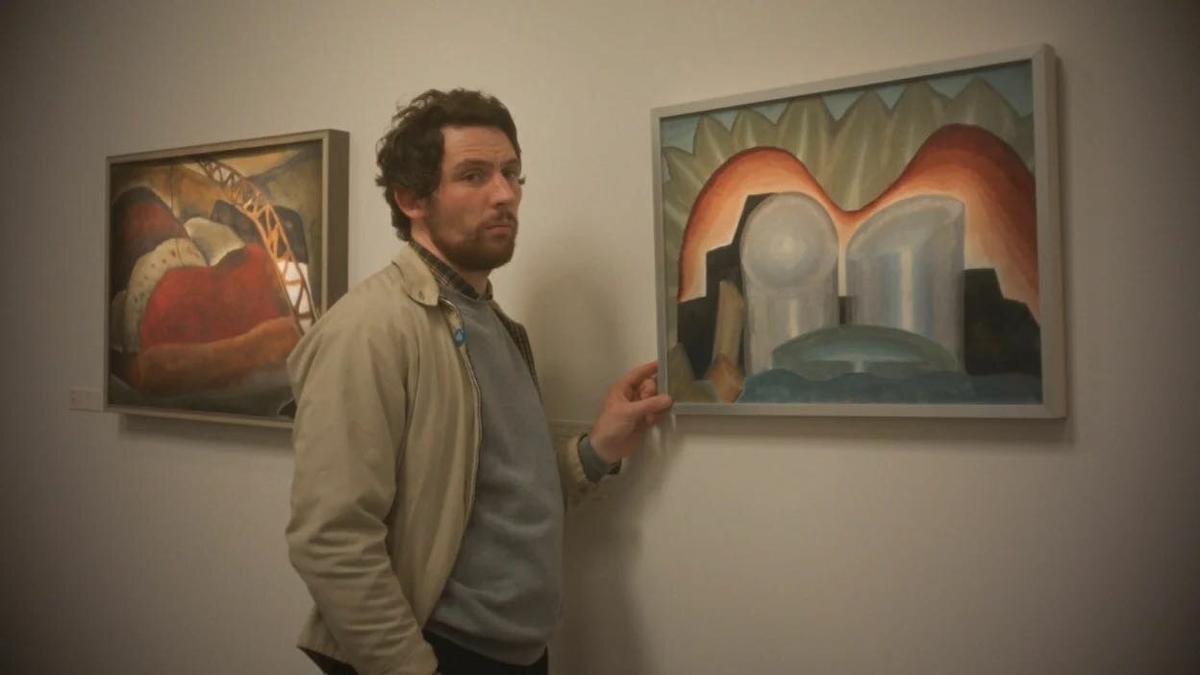
Josh O’Connor in a still from ‘The Mastermind’
| Photo Credit:
MUBI
Unlike many Reichardt protagonists, J.B. is not structurally excluded from society. She is explicit about that distinction. “James could very well be in the centre of society,” she says. “He has all the luxuries of coming from a middle-class family. He’s a handsome white man, tall, has a skill of woodworking, he’s been educated, his family’s educated, so he has a lot.” That access interested her precisely because J.B. rejects it without fully understanding why. “He could fit quite well in society, but he’s not content there. I think he doesn’t really even know what he wants.”

What J.B. does know, or believes, is that things will resolve themselves. Reichardt sees that unfounded confidence as central to the character. “I think he can go through life with a general sense that things will work out for him,” she says. “And I think that’s different from the other characters I’ve worked with in the other films.”
That assumption drives the film’s moralities. J.B.’s restless, half-formed crime isn’t motivated by hunger or desperation. “I think he’s rebelling against his privilege,” she says. “And at the same time, he’s pretty reliant on his privilege and willing to fall back on it whenever it happens.”
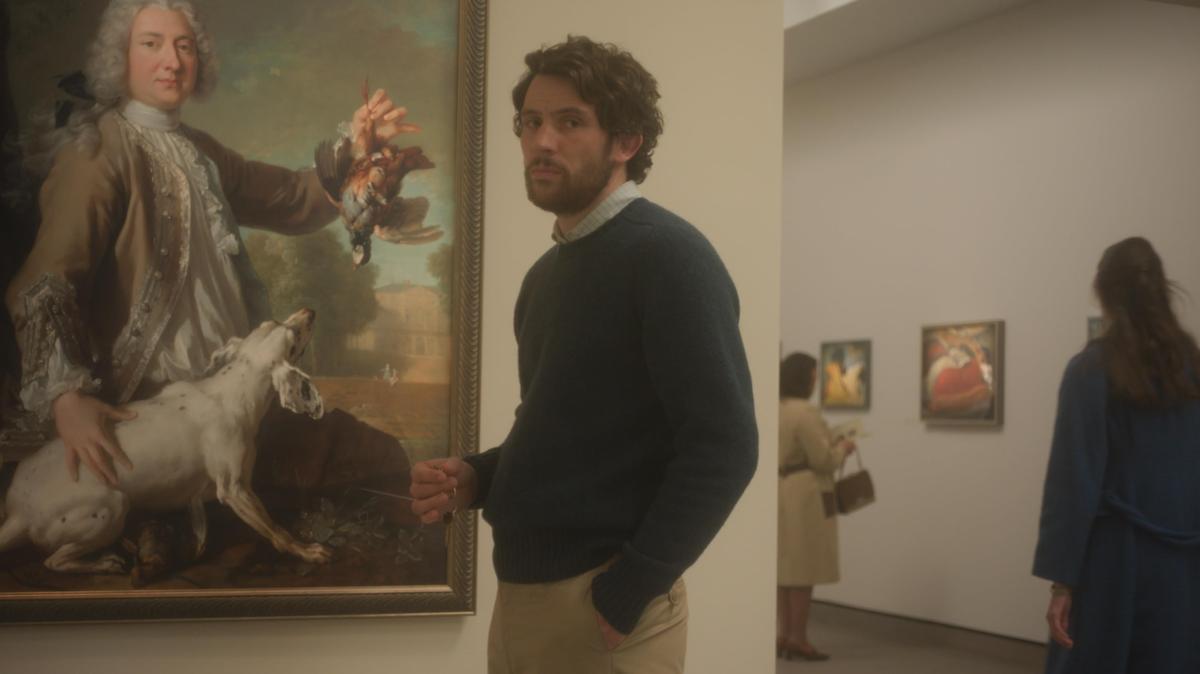
Josh O’Connor in a still from ‘The Mastermind’
| Photo Credit:
MUBI
Reichardt situates that contradiction in a very specific historical moment. Vietnam War broadcasts, anti-war protests, and police violence appear throughout the film, often at the edges of scenes. J.B. moves through this environment largely insulated from it, until he isn’t. “It’s the end of the 60s, not quite the 70s yet,” Reichardt says. “I wanted to set it in this kind of murky time where the 60s ideals haven’t really worked out. And so what comes next I guess, is the question.”
But the film’s origins were smaller and more local. Reichardt began researching art thefts and came across a newspaper article from Massachusetts marking the anniversary of a 1972 heist involving teenage girls. “It was the 50th year anniversary of these four high school girls that got caught up in an art heist in 1972, which was really intriguing” she says. “At first, I sort of spent a lot of time writing about these four girls, but then the James character kind of took over and it developed more into a sort of following this one man kind of event.”

That narrowing shaped the film’s relationship to genre, but Reichardt hesitates to claim the label at all. “I don’t know if I would define the movie as a heist movie,” she says. Rather than building toward the robbery, she dismantles the structure from the get-go. “In a genre film, the first act is going to be like all the guys get out of jail and they get together and they’re just going to do one more heist,” she says. “And I put it at the beginning of the film, which left me in a little peril for how the rest of it would shake out”. The Oceans trilogy-style adrenaline-rush of momentum is swapped here in favour of frustration and uncertainty. “He has a plan and he follows the plan,” she says. “And then he kind of has to improvise the next part of his life because there’s no longer a roadmap.”
Kelly Reichardt and Josh O’Connor in a behind-the-scenes still from ‘The Mastermind’
| Photo Credit:
MUBI
It was hard not to notice how real life collided with Reichardt’s reconsideration of the heist form. Earlier this year, thieves brazenly walked into the Louvre’s Galerie d’Apollon, cut through glass cases, and made off with eight pieces of French crown jewellery. The daylight robbery lasted mere minutes, but reverberated across the art world, prompting arrests and still leaving the jewels unaccounted for months later.
In the film, Arthur Dove’s paintings are the ones that get unceremoniously nicked from the museum. “I put in Dove because I like Dove’s paintings and they sort of speak to me,” Reichardt says. “I found an image of a gallery show in 1970 of Dove’s work, and that was such a relief to me.” His marginal status in that period aligned with the setting. “He wasn’t really popular in the 70s,” she says. “It was kind of a low point in his career.” She also sees a parallel between Dove’s abstractions and J.B. himself. “The character of Mooney, he’s a little bit of a blank and you have to project onto him, and I think Dove’s work is like that, too.”

One of the film’s most noticeable departures from Reichardt’s usual engagements is its score. Jazz musician Rob Mazurek provides a nervy, percussive soundtrack that Reichardt describes as transformative. “I was in way over my head,” she says, recalling early edits made with Chicago Underground tracks. “If you’re not a music editor and you’re trying to cut free jazz, it’s like, I was really butchering it.”
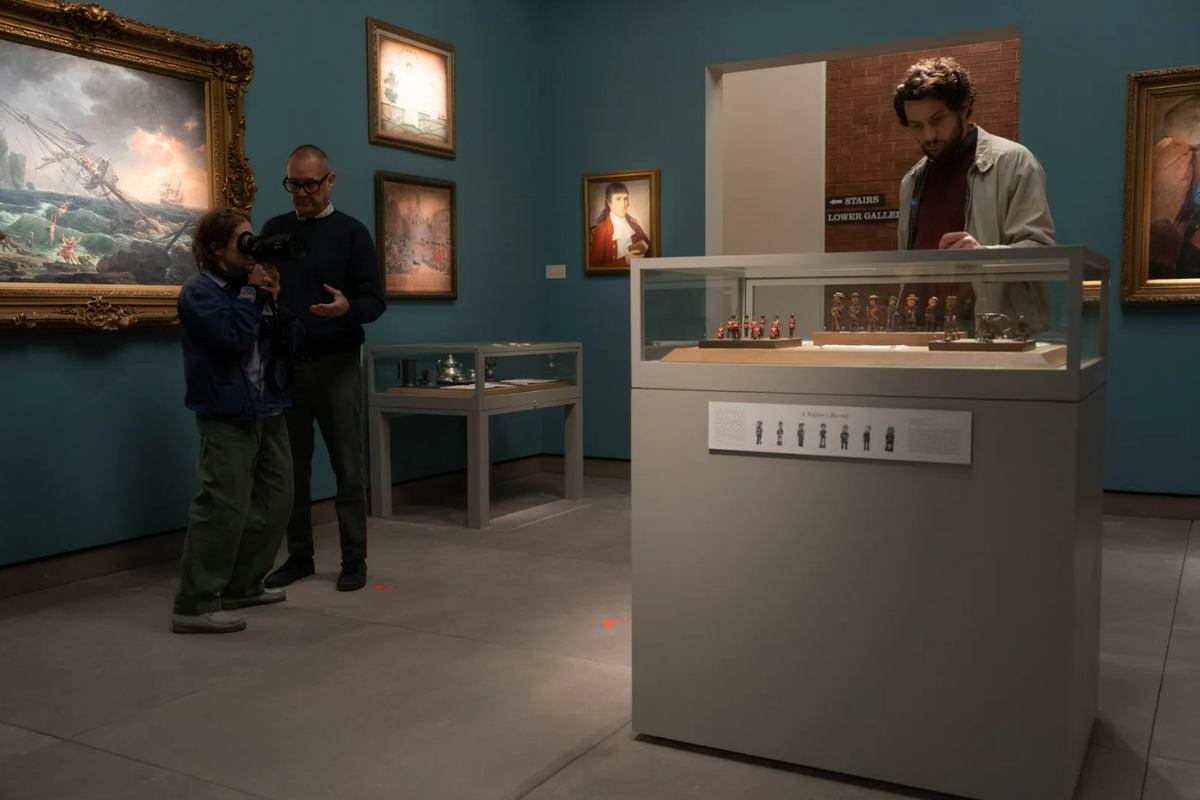
The film’s title remains quite tongue-in-cheek, but Reichardt resists fixing its meaning when I nudge her about it. “I just like to leave it a bit ambiguous,” she chuckles. “If you ask Josh O’Connor, he still thinks he’s the mastermind and it’s a great idea.” The joke works because J.B.’’s certainty so clearly exceeds his competence — a soft, overfed male ego nursing itself on boredom, minor grievances, and the vague sense that life in a small town has somehow failed him personally. His idea of mastery is a bid for relevance and that self-mythology extends to his relationship with art; Reichardt is decidedly unsentimental about his thwarted creativity, “or some artistic life he was really too lazy to pursue”.
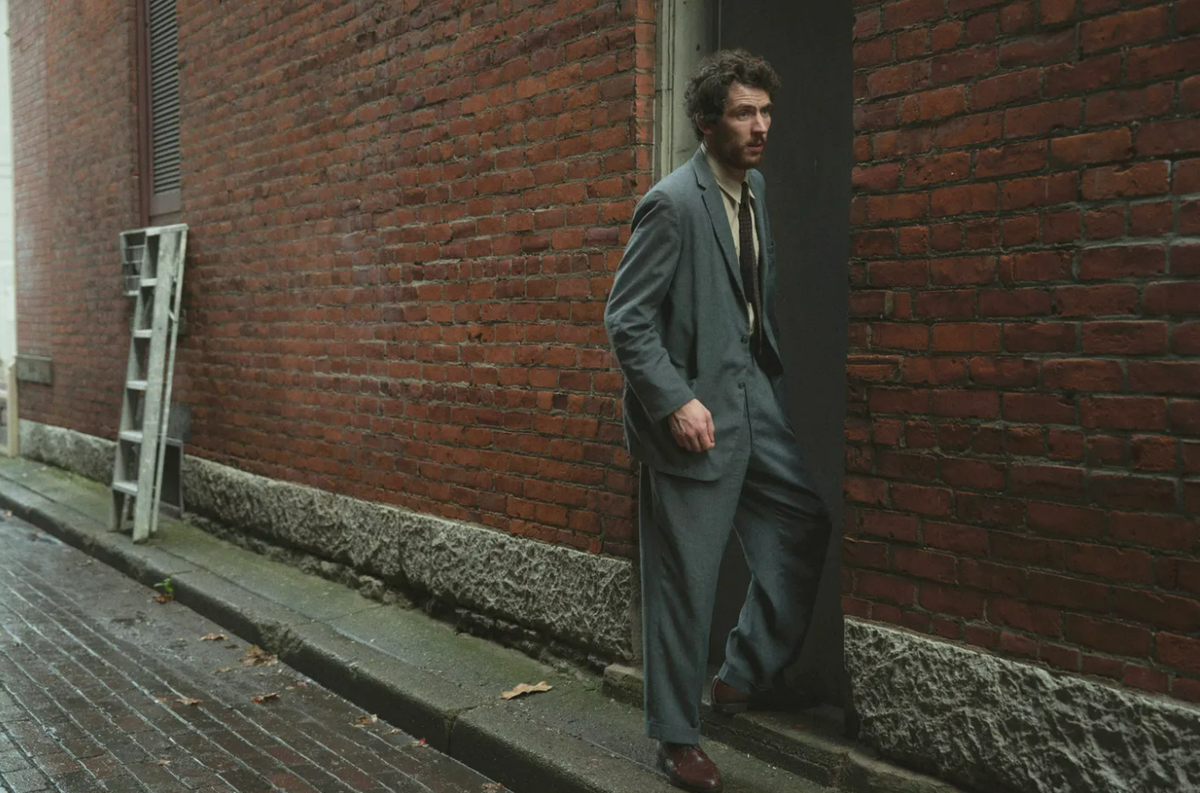
Josh O’Connor in a still from ‘The Mastermind’
| Photo Credit:
MUBI
Reichardt also speaks about independent filmmaking in the United States without any sense of security or arrival. She teaches film at Bard College in New York and has no intention of leaving, framing her film career as contingent and perpetually surprising. “I would never give up my teaching job because I don’t really ever have that kind of faith in filmmaking… I wouldn’t put all my eggs in one basket,” she says.

She explains how each film feels like something she can’t quite believe survived the process. “You just can’t believe you pulled it off… maybe it’s the last one and you feel so lucky.” It also keeps her from believing too fully in the idea of sustainability within a culture saturated with franchises and commerce. She has heard predictions about the end of independent cinema her entire career, and yet somehow, the films keep coming. “I don’t want to jinx myself, but I’ve had a nice run of being able to make these films. I’ve made films about a guy stealing milk or someone with broken ceramics or a hurt bird, and it’s kind of amazing that they have ever even happened”.
The Mastermind is available to stream on MUBI
Published – December 16, 2025 05:24 pm IST

