

There is a new wave of optimism among both Palestinians and Israelis after United States President Donald Trump revealed his peace plan in the presence of Israel’s Prime Minister, Benjamin Netanyahu, a week ago. With Hamas agreeing to release all Israeli hostages and Mr. Trump welcoming the move and asking Israel to stop bombing, optimism has increased further. But there is little hope of a lasting peace if one looks back at Israel’s conduct since the Hamas terror attack two years ago.
A savage response
Last month, the day after a United Nations commission of inquiry found Israel guilty of committing genocide against Palestinians in Gaza, a senior Israeli Minister revealed a plan for the occupied territory. Far-right Finance Minister Bezalel Smotrich told a real estate conference in Tel Aviv that the Gaza Strip was a potential real estate “bonanza” and that he was in talks with the U.S. on how to divide up the coastal enclave after the war.
Mr. Smotrich’s comment came 24 hours after Israel launched its long-awaited ground offensive in Gaza City with a new wave of killings and destruction. Lakhs of Palestinians were forced to flee their homes again, and if one believes Mr. Smotrich, they will never be able to return.
Israel claims that it has been fighting to destroy Hamas in Gaza. But its military has targeted the entire Palestinian community and tried to dehumanise it. Yoav Gallant, who was Defence Minister at the time of the Hamas-led October 7, 2023 terror attack on Israel, said that Israel was fighting “human animals”.
Soon after Israel launched its military campaign in response to the Hamas attack in 2023, Mr. Netanyahu compared the Gaza war to the story of the Jewish fight against an enemy known as Amalek. In the Old Testament, God tells the Jewish people to eliminate all the Amalek men, women and children, as well as their possessions and their animals.
This suggests what the Palestinians are up against. The use of brutal military force has emerged as the main pillar of Israel’s security policy since the Hamas attack. This policy is backed by the U.S., which provides unflinching military and diplomatic support to Israel.
Mr. Netanyahu has already declared that there will be no Palestinian state, despite most of the world, including several western governments, recognising Palestine. Last month, he signed an agreement to go ahead with a controversial settlement plan for Jews that will cut across the occupied West Bank territory, which Palestinians seek for a state. The far-right Israeli parties have always opposed a Palestinian state, and their leaders have been calling for the annexation of the entire West Bank and Gaza.
Across borders
Israel’s military doctrine of using brutal force against its enemies goes beyond its borders. The Netanyahu government now acts like a regional hegemon in West Asia. After he launched air strikes against Iran in June, Mr. Netanyahu declared his intention to change the regime.
Earlier, Israel used to kill its enemies abroad but would not acknowledge it. Not any more. Its actions in Syria, Iran, Yemen, and the recent attack on Hamas negotiators in Qatar show that it is not hesitant to go after its enemies.
There is no doubt that Israel has achieved remarkable military successes against its enemies in the past 23 months. It has decapitated the leadership of Hamas and its ally Hezbollah in Lebanon, killed thousands of their fighters and inflicted a severe blow to the Iranian military with the U.S.-backed air strikes.
But Israel has failed to defeat Hamas — its stated objective of the war — underlining a reality that the use of brutal force alone cannot achieve results. It remains the most powerful group in Gaza and retains the ability to recruit new fighters. Although Mr. Trump’s peace plan does not give any future role to Hamas and demands that it lay down arms, the group is unlikely to accept that.
The global response is changing
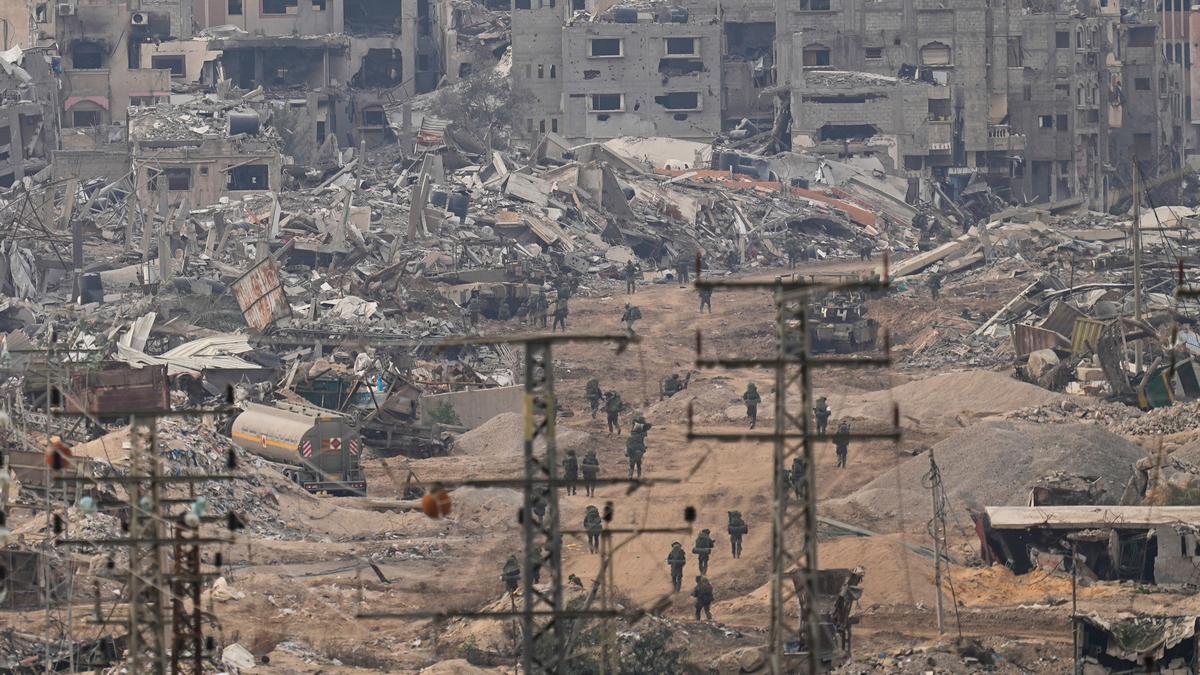
There is an even more important issue that should worry Israel. After killing over 67,000 people, most of them civilians, in Gaza, destroying its infrastructure, flattening most of its buildings and creating a famine-like situation, Israel is becoming sidelined internationally.
The European Commission plans to restrict trade with Israel and impose sanctions on its extremist Ministers. Norway is removing Israel-listed companies from its sovereign wealth fund. In Hollywood, there has been a signature campaign going on to boycott Israeli companies.
This has made many Israelis worried. According to a recent opinion poll, 74% of Israelis are in favour of ending the war. Israel’s generals are also not happy with Mr. Netanyahu. Many opposition politicians accuse him of prolonging the war to stay in power.
Most Israelis are nervous that the current military doctrine will only make Palestinians more desperate, driving more of their youth towards Hamas.
Mr. Trump’s pressure on Israel to accept its plan suggests that even American support is no longer certain. But can the world trust Mr. Trump, who is known to chicken out? Is he really committed to peace and willing to rein in Mr. Netanyahu?
Naresh Kaushik is a former editor at Associated Press and BBC News, and is based in London
Published – October 07, 2025 12:08 am IST

