

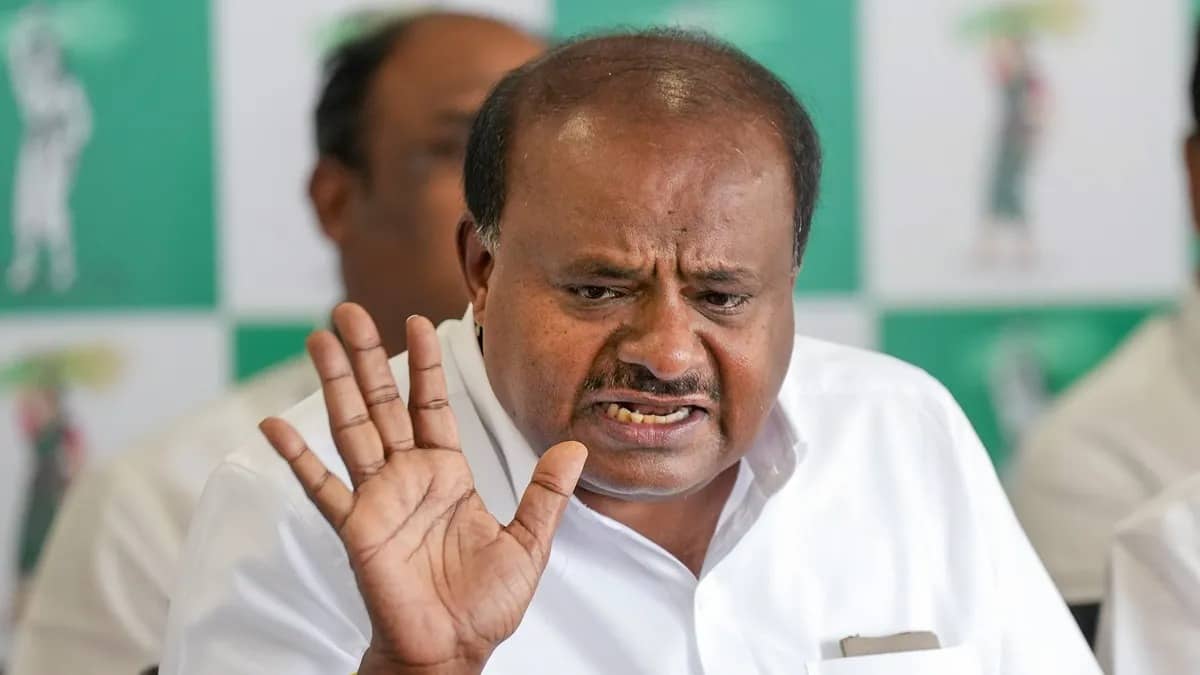
Heavy Industries Minister H. D. Kumaraswamy | Image:
File Photo
With the global rare earth material supply under strain, the government is set to launch an incentive programme to promote domestic production of these critical minerals, stated Heavy Industries Minister H. D. Kumaraswamy. The scheme, aimed at subsidizing rare earth magnet manufacturing, is expected to roll out within the next 15-20 days.
Stakeholder consultations are ongoing to determine the incentive amount, and if the total support exceeds Rs 1,000 crore, it will be presented to the Union cabinet for approval.
China’s dominance and export controls
China, which dominates over 70% of global rare earth element (REE) production and more than 90% of refining capacity, recently tightened export controls on seven REEs and finished magnets. The revised regulations require detailed end-use disclosures and client declarations, extending clearance timelines to at least 45 days. These measures have led to supply bottlenecks, affecting global manufacturing, including the automotive and semiconductor sectors.
Alternative procurement and local production
Kumaraswamy noted that India is exploring alternative procurement sources, such as Japan and Vietnam, while domestic production ramps up. One Hyderabad-based company has committed to delivering 500 tonnes of rare earth materials by year-end. The minister emphasized that actual domestic production of rare earth magnets will take roughly two years, making interim import strategies crucial.
Also Read: India Accelerates Development of Rare Earth-Free EV Motors Amid China Export Curbs | Republic World
Why rare earth magnets are critical
Rare earth magnets, made from alloys including neodymium, dysprosium, terbium, and praseodymium, are essential for Permanent Magnet Synchronous Motors (PMSMs) in electric vehicles (EVs) and hybrid vehicles, offering high torque, energy efficiency, and compact design. In internal combustion engine (ICE) vehicles, they are mainly used in electric power steering and other motorized systems. About 30 automotive firms have already sought authorisation to import rare earth magnets from China to mitigate production disruptions.
The proposed fiscal incentives will provide “targeted support” for capital and operational expenditures, helping bridge cost gaps, ease high tariffs on key equipment, and ensure continuity of supply. Kumaraswamy highlighted that this move would strengthen India’s participation in global value chains and support the country’s localization agenda in the automotive sector.
Role of auto parts sector
A day back, while addressing the 64th ACMA annual convention, Kumaraswamy underscored the auto component sector’s significant contribution to India’s GDP—currently 2.7%—and employment, with over five million people engaged. He lauded initiatives such as the Production Linked Incentive (PLI) scheme and FAME II for driving investments exceeding Rs 29,500 crore and promoting localization. The sector achieved a trade surplus of $300 million this fiscal year, despite global challenges and rising logistics costs.
Kumaraswamy also noted ongoing efforts to develop specialized steel for the auto industry and announced that the Electric Mobility Promotion Scheme (EMPS) will continue until the launch of FAME III, with the new subsidy expected within 1-2 months. These measures, he stressed, aim to enhance domestic capabilities, reduce import dependence, and position India as a competitive player in advanced automotive technologies.

