

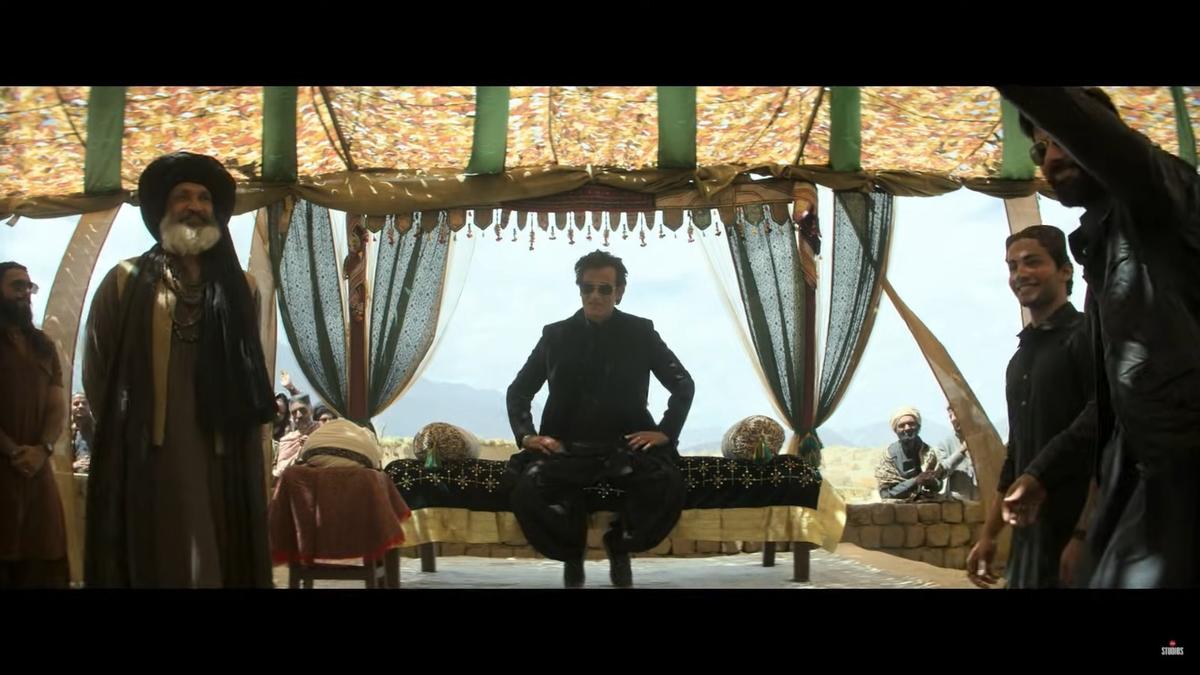
The Hindi film Dhurandhar is becoming a sensation and a debate. It shows an Indian spy (Ranveer Singh) infiltrating a Pakistani gangster/terror network through Operation Dhurandhar. But the film, ironically, displays another kind of infiltration, putting it under a genre called “government-embedded filmmaking’, as coined by American writer Peter Maas. If the concept refers to the government giving special access to military/intelligence documents to induce favourable filmic portrayals of the security apparatus, here, I use it to mean how the ideological narrative of the government is being faithfully reproduced — a regular phenomenon now in India.
Different responses
Dhurandhar is different from many other government-embedded films in that it has combined commercial film elements with some technical finesse in direction, screenplay, cinematography, art direction, and acting. Besides, it has infused some realism at the expense of melodrama. This distinguishes the director Aditya Dhar from the Sudipto Sens (Kerala Story) and the Vivek Agnihotris (The Kashmir Files; The Bengal Files).
Dissenters of the politics of the film, like film critics, and actor Hrithik Roshan, have faced intense online hate and harassment. There have been two kinds of responses towards the film from its fans. One strand has proudly owned the film, whether it is propaganda or not. For it, the film depicts real Pakistan-perpetrated terror events. It asserts there is nothing wrong in showing patriotism in films, and that Bollywood has historically produced propaganda hiding the “real truths” of Pakistani terrorism, and advocated for peace with Pakistan. Dhurandhar, therefore, is “a cinematic correction,” and a “cultural counterstrike.” As a person wrote in response to Hrithik Roshan: “You literally glorified this barbaric Akbar and today you have the audacity to call Dhurandhar as propaganda. Shame on you,” referring to Mr. Roshan playing Akbar in Jodhaa Akbar (2008). Notably, these sentiments, which speak to nationalism, as well as deep Hindu victimhood, are not just restricted to the Hindu far right.
The second response denies that the film is propaganda, and asserts that it is an espionage drama with a nationalist-perspective, similar to the likes which Hollywood regularly churns out. Even if it selectively dramatises events, it falls within legitimate genre conventions. The latter is a misreading for, as the biggest practitioners of political propaganda have shown, the most effective propaganda is one which is barely noticed. Dhurandhar’s distinctive quality is that it is not in your face with ideological sloganeering, yet it is in sync with Hindu nationalism and, specifically, policies of the present government.
Reinforcing the official narrative
Scenes of the film depict a Kandahar plane hijacker saying, “Hindus are cowards” (there is no historical record of this); there are scenes interspersed with real audio footage from 26/11, which evokes the barbarity of the terrorists; and brutal killings are celebrated by the conspirators with chants of ‘Allah uh Akbar’. Without any scenes that show a Pakistani Muslim opposed to terrorism or enmity with India, the film preps the viewer to adopt the Pakistani state/terrorist view of “Muslim Pakistan” versus “Hindu India.”
The film dramatises the frustrations of a central character, intelligence chief Ajay Sanyal (resembling National Security Advisor Ajit Doval, and played by R. Madhavan), with the Indian State’s weak-kneed responses to Pakistani terror attacks in the 1990s/2000s. Instead of dovish initiatives such as Aman ki Asha, an India-Pakistan peace project, Sanyal advocates for proactive anti-terror policies like Operation Dhurandhar.
While Dhurandhar makes a moderate criticism of the Bharatiya Janata Party (BJP) government in power during the Kandahar hijack and 2001 Parliament attacks, serious criticism is directed at the Congress/non-BJP governments at the centre and in Uttar Pradesh. A Union Minister is accused of having links with a Pakistani fake currency racket in 2005; slaughterhouses in U.P. are linked to it too, with any action on them leading to riots (leaving the audience to guess the identity of the community running slaughterhouses). It is stated that the real enemies of India are within, not outside — a familiar Hindu nationalist trope. Another similar stereotype is of Pakistani conspirators mocking Indian cowardliness in not responding to the 26/11 attacks of 2008.
There is a running reference in the film to still persist with diligent intelligence work hoping that a future “nationalist CM” of U.P. can use it (an explicit nod to Yogi Adityanath). The film ends with the slogan ‘Yeh Naya Bharat Hain, Ghar Mein Ghuske Maarta Hain’ (this is new India, it will enter your [enemy’s] home and attack you), which is a reference to Prime Minister’s Modi’s popular slogan. The film becomes propaganda because it lionises a powerful security figure of the present government, and partisanly lauds the government which has made muscular military and counterterrorism strategies as its distinguishing feature.
Moreover, Dhurandhar, despite bringing some human elements to gangsters and breaking some stereotypes by depicting modern nightlife, still does not change an average Indian’s view of Pakistan. Pakistan is monochromatically monstrous: it is the source of all terrorism in the world, says a character. We largely only see gangsters, ISI, politicians and the Army who concertedly want to inflict a thousand bleeding cuts on India. Even the gangster from the dissident Baloch community parrots this. From Dhurandhar, we would not know that there were Pakistani newspaper articles post 26/11 urging Pakistanis to see the horrors perpetrated in the name of Islam, and those even apologising to Indians. We would not know that the Lyari neighbourhood in Karachi, the den of crime and terror networks in the film, is also “Mini Brazil,” famous for its hip hop and passion for football.
Selective memory
Dhurandhar’s success is also a commentary on the abysmal nature of Bollywood filmmaking, and the cartoonish, comic military and spy thrillers that it churns out, like the Yash Raj Films Spy Universe. Thus, for its admirers, the male-centric Dhurandhar, in which blood curdling violence is aestheticised, appears more relatable than thrillers showing Indian intelligence operatives either romancing Pakistani counterparts or turning rogue to aid the enemy.
The Dhurandhar debate also shows how public memory is selective. While many assert that this is a cultural reclaiming of Bollywood, they ignore that since the 1990s there has been an explosion of jingoistic Bollywood films, even before political shifts in 2014, centred on Pakistani terrorism, Kashmir Islamist militancy, Pakistan wars, and even Indian agents infiltrating Pakistan (Roja, Border, Sarfarosh, Mission Kashmir, Maa Tujhe Salaam, Gadar, The Hero, LOC-Kargil, Ab Tumhare Hawale Hai Watan Saathiyon, Attacks of 26/11, D-Day, Baby, Phantom, etc.).
A vast majority of these films demonised Pakistani people and not just the Pakistani state/terrorists. Dhurandhar says nothing new; but its deep and partisan immersion in the present government’s avowed narratives, even when they remain in the background and couched in a believable world, puts it as another addition to the growing camp of government-embedded filmmaking.
Nissim Mannathukkaren is with Dalhousie University, Canada.
Published – December 19, 2025 08:30 am IST

