

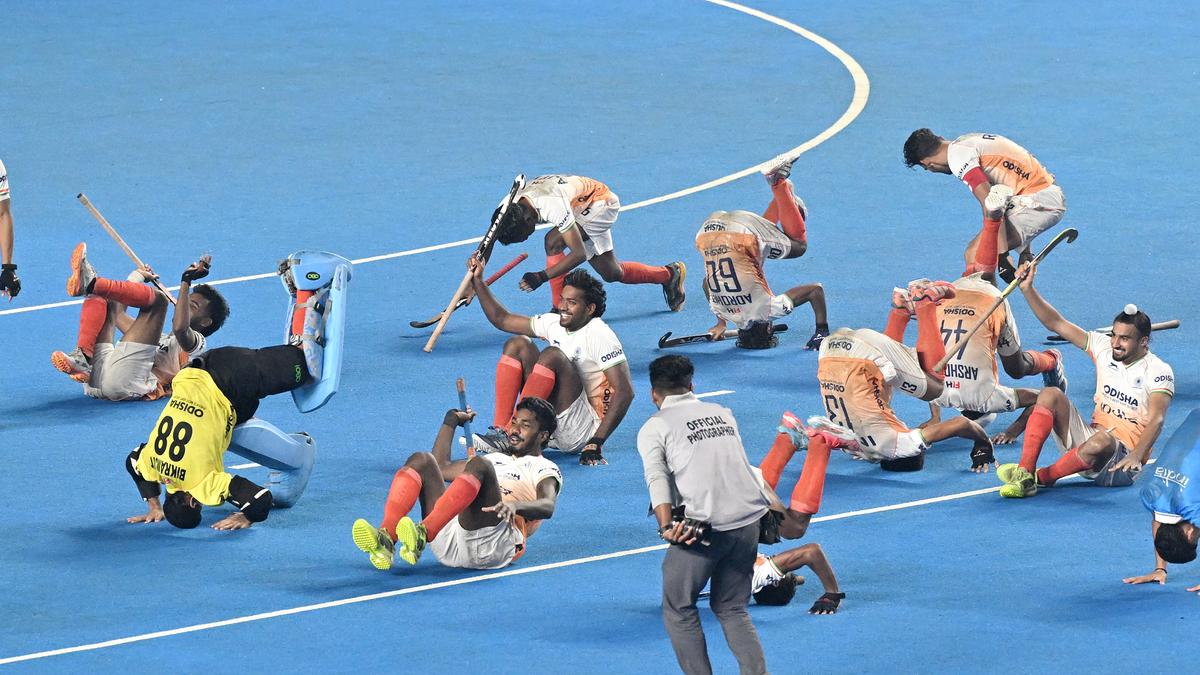
P.R. Sreejesh has shouldered the burden of a nation with his experience and expertise.
As a goalkeeper, he has stood between glory and heartbreak on many occasions.
Standing outside the goalmouth this time, the two-time Olympic bronze medallist found himself guarding something else — expectations.
The FIH junior men’s hockey World Cup in Tamil Nadu (Chennai and Madurai), Sreejesh’s first major international assignment as a head coach, was wrapped in nostalgia and hope.
Host India was well-prepared, well-drilled and well-equipped. The feeling was unmistakable: this was meant to be the tournament where the long drought ended.
The Indians hadn’t stood on the podium since lifting the gold in 2016. In 2021 and 2023, they had come close before stumbling in the bronze-medal matches to France and Spain. The scars were fresh, but the hunger was real.
This time, though, the preparation was different. The squad that assembled for the World Cup had been given exposure and opportunity in equal measure. A four-nation tournament in Berlin against Germany, Australia and Spain had tested the side early. The Sultan of Johor Cup followed, where India pushed Australia all the way before settling for silver. These weren’t just tours; the side was getting ready for the bigger battle.
By the time the team assembled in Chennai, belief was everywhere — on the turf, in the stands, and in the training sessions. Sreejesh, now 37, ran the camp like a man who knew time was precious.
Training days were intense and unrelenting. Penalty corners were rehearsed until muscle memory took over, defensive structures drilled to exhaustion, forwards urged to shoot without hesitation.
Goalkeepers were put through their drills while assistant coach Birendra Lakra quietly ensured that no one slipped through the cracks.
The early matches only added fuel to the narrative. India swept aside Chile (7-0), dismantled Oman (17-0) and brushed past Switzerland (5-0). In the quarterfinals, when Belgium refused to fold, India showed real nerves of steel, surviving regulation time and winning the shootout 4-3. It felt like the kind of escape only a confident team can make.
Then came Germany. Seven-time champion. Ruthless and unimpressed by atmosphere or occasion. If the league phase had allowed India to express itself, the semifinal was an examination, and Germany its toughest paper!
From the opening exchanges, the European powerhouse dictated terms. It pressed high and and forced India into uncomfortable spaces. Possession became precious, and suddenly the host was defending deeper than it wanted to.
Germany was clinical without being flashy. Its defence held shape, its transitions were sharp, and India’s mistakes were punished without any mercy. By half-time, the scoreboard read 3-0, but the deeper damage was psychological. India was left to chase shadows.
The final score– 5-1–told its own story. Germany didn’t just win; they exposed the host in all aspects possible. When India finally found the net, it felt more like relief than resurgence.
Inside the dressing room, Sreejesh didn’t hide his anger. This wasn’t the fury of a man disappointed by defeat, but of one frustrated by avoidable errors: loose passes, lost possession, moments of hesitation.
Later, at training the next day, the message was stripped of emotion and boiled down to fundamentals: keep the ball, respect pressure and don’t get overwhelmed by it, eliminate the basics errors.
The semifinal loss hurt because it revealed uncomfortable truths. No doubt, India’s juniors are talented, ambitious, and well-drilled, but when the game tightens and the pressure intensifies, there is still ground to cover against tougher and bigger teams.
After all the build-up and expectation, had India lost its bronze medal match to Argentina, it would have raised a lot of uncomfortable questions about the team and the man at the helm, Sreejesh.
India, however, rose to the occasion in emphatic fashion. Trailing 0–2 for most of the match, the hosts produced a stirring final-quarter comeback, scoring all four goals in the last 15 minutes to stun the South American side 4-2. Three penalty-corner conversions turned the game on its head, two of them coming via brilliantly executed deflections that showcased both composure and belief.
It was a result forged under pressure, and one that resonated deeply with the head coach.
Painful relationship
For all his success as a player, Sreejesh’s relationship with the World Cup has been a painful one. A double Olympic bronze medallist (Tokyo and Paris), he had never managed to win a medal at either junior or senior World Cups. He featured in the junior World Cup in 2005 and went on to represent the Indian senior team in four senior editions — 2010, 2014, 2018 and 2023 — but a podium finish always eluded him.
As he candidly admitted at a virtual press conference ahead of the junior World Cup, the regret lingered.
“In the four (senior) World Cups, we couldn’t reach the semifinals. We were not able to touch the World Cup. It’s always a regret in my career,” he had said.
That made the bronze-medal triumph against Argentina all the more meaningful.
“How I came back! I’m going back with a medal. I’m happy,” Sreejesh told mediapersons, the relief evident.
All about trust
According to the head coach, the turning point was the trust the players had in themselves and in the process.
“They trusted themselves, created opportunities and converted them. For the juniors, this is a great journey. I told these guys, ‘If you can survive this pressure, this is the base. Because this is what is going to happen in the future’”, he said.
Having been with the team for a year, and a bronze medal to show for his efforts, what is Sreejesh’s next plan?
“It has just started,” he replied. “It’s been only 12 months for me. One win doesn’t mean anything. I missed my final. I missed that semifinal. That a big drawback for me. If you want to win an Olympic gold medal, if you want to win a World Cup [gold] medal, you need to win that semifinal. That’s really important,” he said.
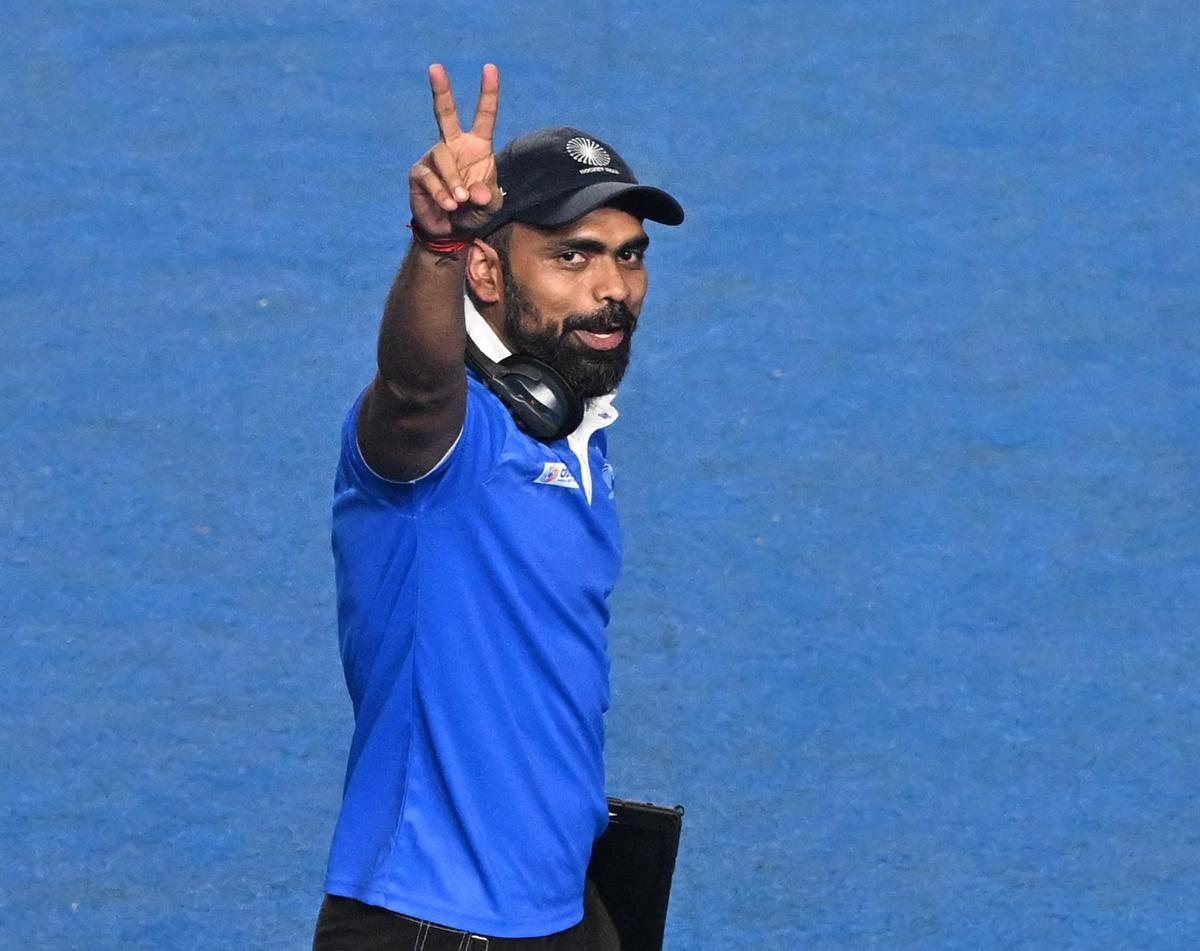
Sreejesh.
| Photo Credit:
FILE PHOTO: R. RAGU
The head coach said he’s learning from his experience and would continue to learn and share. ”It’s really important for me to learn how to prepare for semifinals. Being a player, I know how to face it. It’s important for me how to control these 18-20 young players or 20 and prepare them. Therefore, I need my experience. I’m collecting it. I’ve just shared those lessons, what I learnt during the Olympic Games,” he said.
The players delivered, ensuring India its first-ever bronze medal at the junior men’s World Cup and completed the full set — silver in 1997, gold in 2001 and 2016, and now bronze.
Watch out for…
Several names from this squad are likely to feature prominently in the years ahead: goalkeeper Prince Deep Singh, midfielders Rosan Kujur, Ankit Pal and Manmeet Singh, defenders Rohit and Anmol Ekka, and forward Arshdeep Singh. They have announced themselves, but they also should understand that this is only the beginning.
Sreejesh, no doubt, will continue to drill home the message to the boys.

