

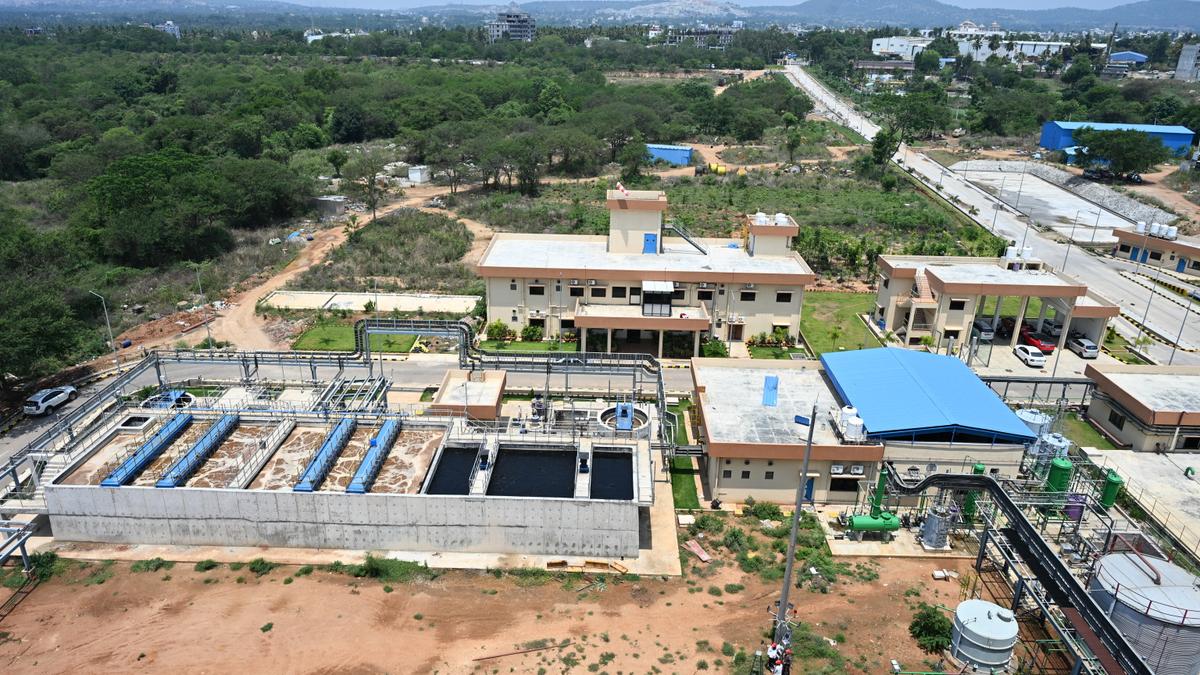
The waste-to-energy (WtE) plant at Bidadi is a joint venture of Karnataka Power Corporation Limited (KPCL) and Bruhat Bengaluru Mahanagara Palike (BBMP).
| Photo Credit: Ravichandran N
On one side, the civic administration is finding it difficult to manage the waste in Bengaluru. On the other side, the waste-to-energy (WtE) plant at Bidadi, which is a joint venture of Karnataka Power Corporation Limited (KPCL) and Bruhat Bengaluru Mahanagara Palike (BBMP), is looking for more dry waste to produce energy, but is not getting it.
Karnataka’s first of its kind WtE plant was set up across 10 acres of the vast 163-acre premises of the KPCL. While one may expect a waste processing plant to generate a stench that stretches a few hundred metres, this plant spanning four levels looks surprisingly tidy. Except for the place where garbage is dumped and transported, there is no stench at any other place.

After an accident claimed the lives of five persons in January, the plant resumed operations on April 4. However, the plant has not been able to generate 11.5 Megawatts (MW) of electricity every day, which is its full generation capacity, due to the lack of dry waste.
The plant requires 600 metric tonnes of properly segregated dry waste every day to produce 11.5 MW of electricity. The KPCL officials say that they have been receiving not more than 400 metric tonnes of waste every day from the BBMP. Since the plant was commissioned in October 2024, it has run for a total of 115 days, and the gross generation has been 20.4636 Million Units (MU).
“We have received 67,529 metric tonnes of waste till now. If we had received the required quantity of 600 tonnes a day, then we could have generated 31 MU more power,” said Satish Kumar H., executive engineer (Bidadi), KPC Gas Power Corporation Limited.
How the plant works
Once the waste arrives at the plant, it is dumped into a storage pit whose total capacity is 4,200 metric tonnes (to hold enough waste for power generation for one week). The waste is treated, and all the moisture is removed before sending it to the combustor where it burns at high temperatures. This heat is used to heat the water inside boilers, which forms steam, which is then used to rotate the turbines and produce electricity.
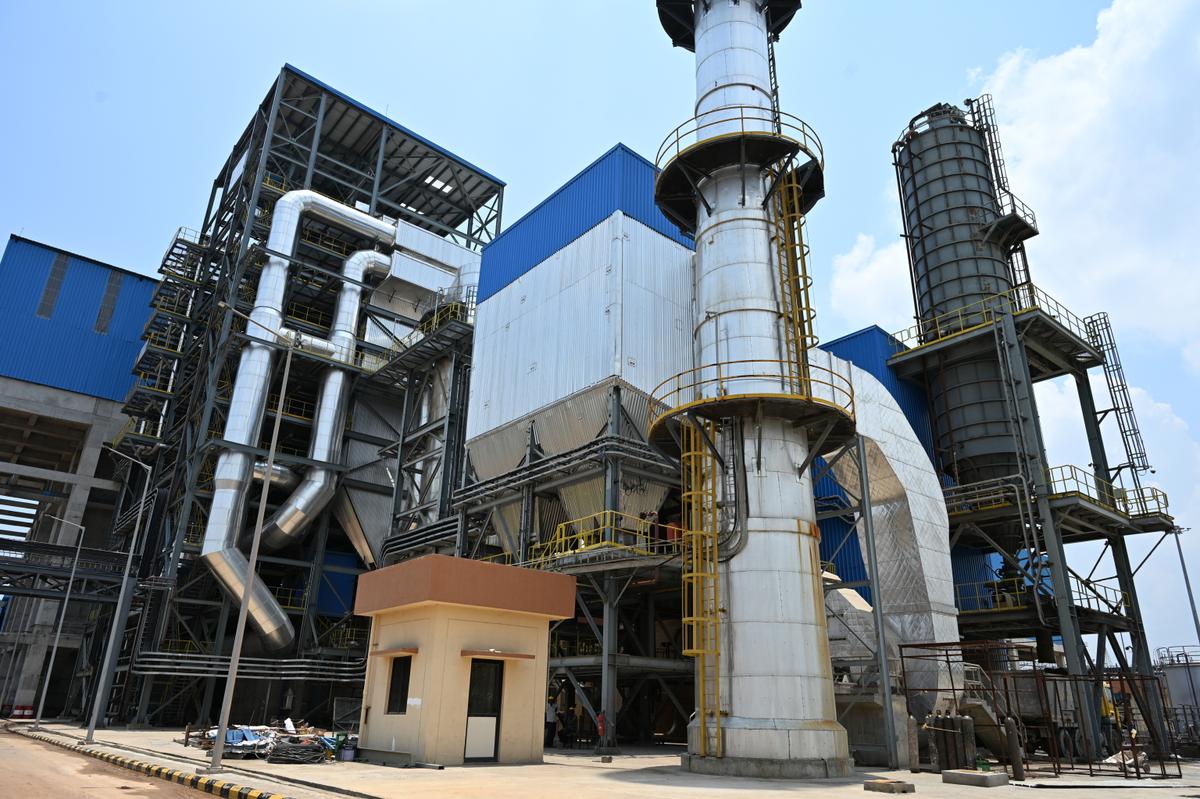
Karnataka’s first-of-its-kind Waste-to-Energy plant was set up on 10 acres of the vast 163-acre premises of the Karnataka Power Corporation Limited at Bidadi near Bengaluru.
| Photo Credit:
Ravichandran N
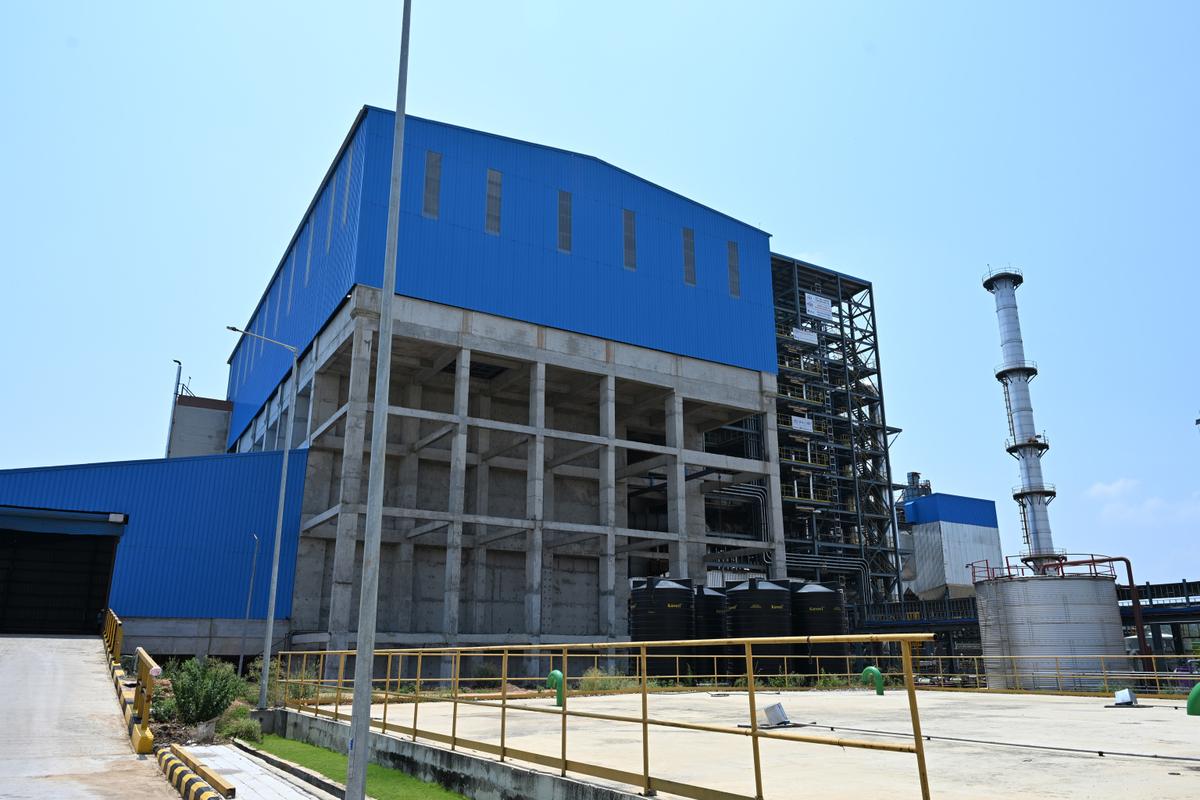
While one may expect a waste processing plant to generate a stench, this plant spanning four levels looks surprisingly tidy. Except for the place where garbage is dumped and transported, there is no stench at any other place.
| Photo Credit:
Ravichandran N
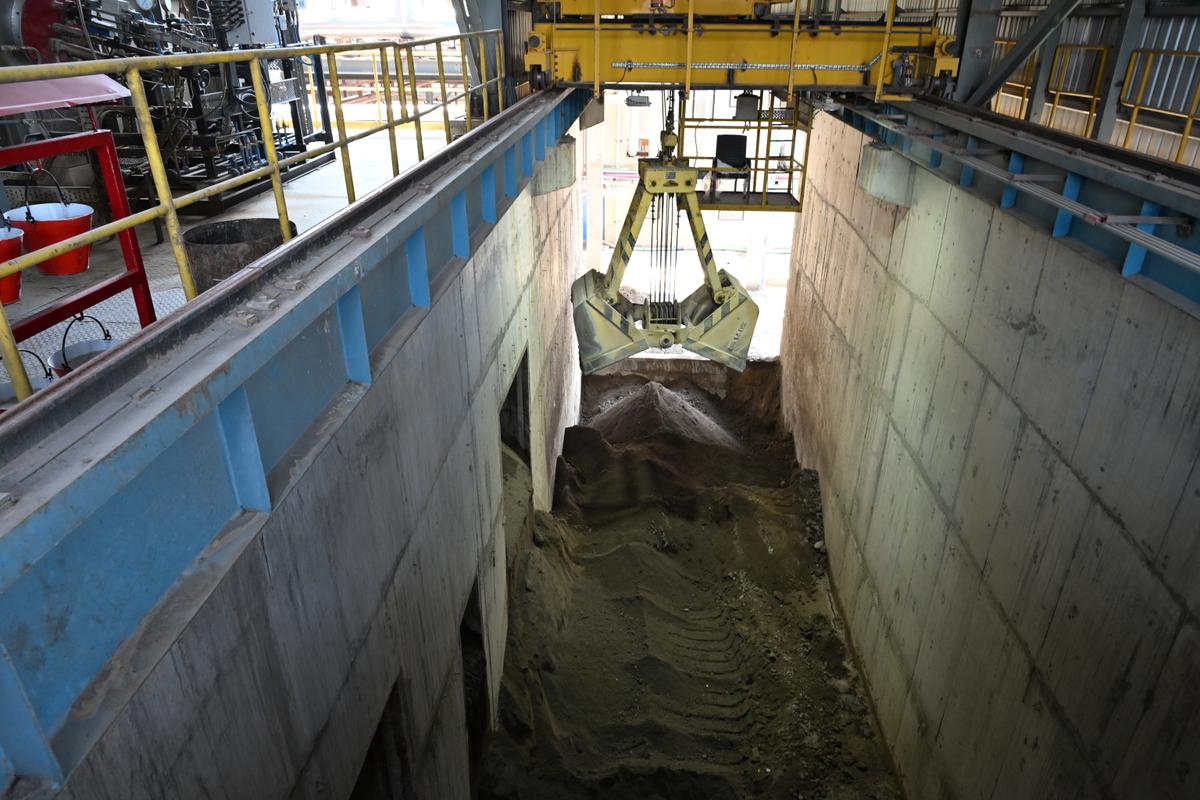
The Waste-to-Energy plant at Bidadi near Bengaluru requires 600 metric tonnes of properly segregated dry waste every day to produce 11.5 MW of electricity.
| Photo Credit:
Ravichandran N
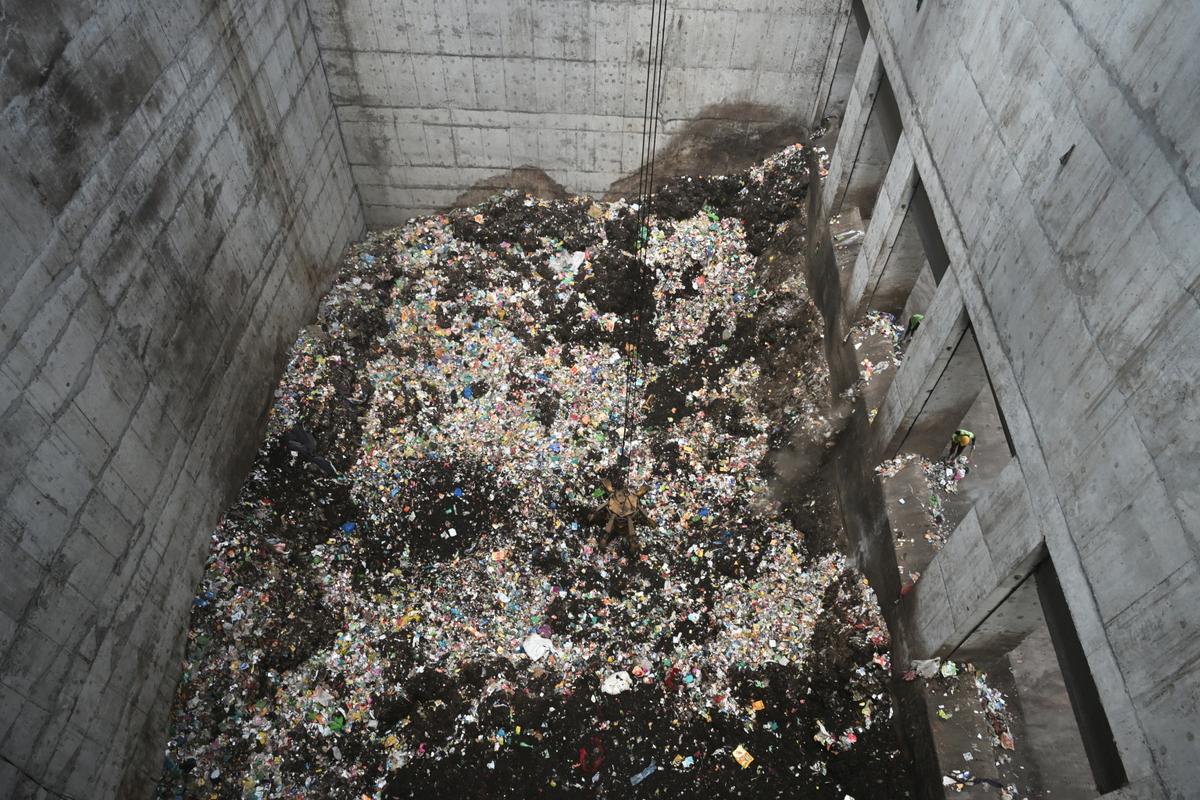
The KPCL officials say that they have been receiving not more than 400 metric tonnes of waste every day from the BBMP. Since the plant was commissioned in October 2024, it has run for a total of 115 days, and the gross generation has been 20.4636 Million Units (MU). If the plant had received the required quantity of 600 tonnes a day, then it could have generated 31 MU more power.
| Photo Credit:
Ravichandran N
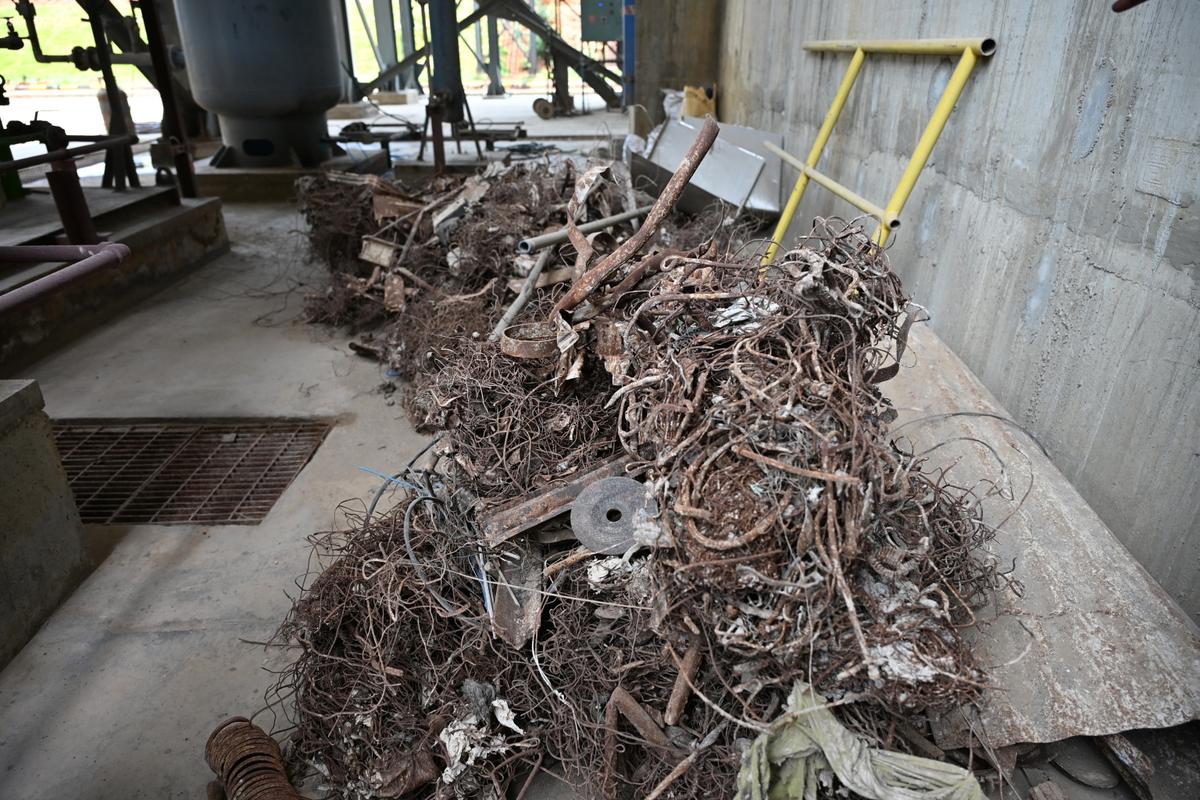
The waste required by the plant is called refuse-derived fuel (RDF), which is essentially combustible waste, which is obtained at the dry waste collection centres after sorting items that can be recycled or reused. This RDF should ideally be free of metals, which hamper the working of the plant. KPCL officials say that this is not the case with the RDF they receive.
| Photo Credit:
Ravichandran N
The electricity is evacuated to a Bidadi sub-station to be integrated into the grid. The fly ash goes out through the chimney while other ash is aggregated and sent back to landfills.
The waste required by the plant is called refuse-derived fuel (RDF), which is essentially combustible waste, which is obtained at the dry waste collection centres after sorting items, which can be recycled or reused. This RDF should ideally be free of metals, which hamper the working of the plant.
KPCL officials say that this is not the case with the RDF they receive.
“The RDF often contains metal, which gets stuck in the grates. We cannot run the machines until we clear the grates. There have been instances where we had to shut down the plant for a day or two to remove the metal. As we also get our RDF from Mandur landfill, which has a lot of legacy waste, we get spring mattresses and gas cylinders, which are our biggest problems,” Mr. Kumar explained.
The accident in January reportedly occurred when workers were trying to pull out metal from the grates.
KPCL officials said that they are constantly in meetings with the BBMP to get higher quantity and better quality RDF so that the plant, whose cost is ₹310 crore, can achieve maximum generation.
KPCL also plans to install solar panels across a major part of the 163-acre premises to enhance the overall generation capacity in Karnataka.
Problem of mixed waste continues
A total of 5,000 tonnes of waste is generated every day in the Bruhat Bengaluru Mahanagara Palike (BBMP) limits. However, among this, only around 2,000 tonnes are segregated while the other 3,000 tonnes come in as mixed waste.
“The problem is that there is no segregation at the source. We still get a large quantity of mixed waste. We have been creating awareness about segregation, but it is not happening. In our next tender, we have decided to implement the rule that waste collection should only happen separately,” said Lokesh, Chief Engineer, Solid Waste Management (SWM), BBMP.
Published – April 30, 2025 11:13 am IST

