

Filmmaker Nirmal Chander, astonishingly, has made two commissioned films on the reclusive musician.
Musician Annapurna Devi led a deeply reclusive life, and remained an enigma for most. But, filmmaker Nirmal Chander, who never had the opportunity to meet the legendary musician, got to make two films on her — Guru Ma in 2019 for the Sangeet Natak Akademi, and a more recent one, 6-A, Akash Ganga, for the Annapurna Devi Foundation.
The latest film has been screened so far in Mumbai, Bengaluru, Pune and Delhi.
Much has been written about the life of Annapurna Devi or Ma, as she was known. Her birth in Maihar in 1927, her father Ustad Allaudin Khan teaching her music only after he saw evidence of her extraordinary musical grasp, her father getting her married to Pt Ravi Shankar in 1941, and how the tumultuous marriage turned her into a recluse.
To add to it, the couple’s son Shubhendra chose to leave his mother in 1970 and went to the U.S. with his father, where he died in 1992, having broken off all contact with his mother.
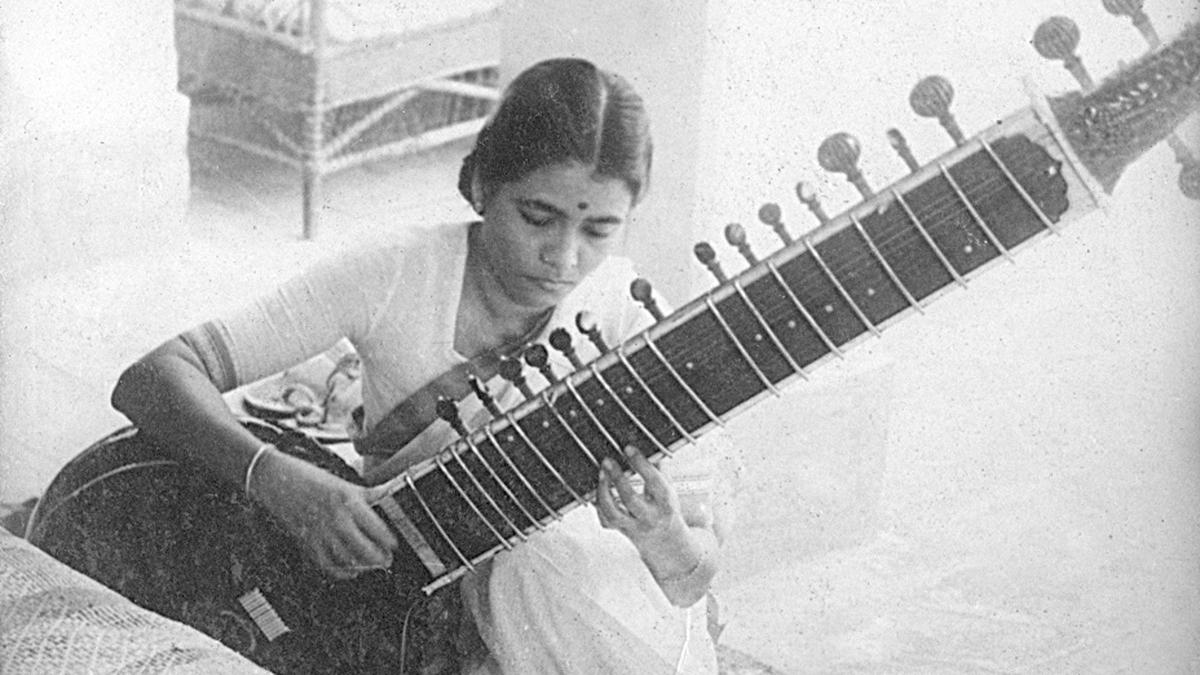
Annapurna Devi played the surbahar, often described as a bass sitar. The relatively few people, who heard her before she stopped performing early in her career, were amazed by her mastery of it.
| Photo Credit:
The Hindu Archives
Towards the end of her life, Annapurna Devi wanted her story told. She had given an interview in Bengali to Tathagatha Ray Chaudhury, and had also spoken to Shekhar Sen, but that was on her father and his musical legacy. Agreeing to this movie was a sign of her total trust and dependence on Nityanand Haldipur, who looked after her like a son. Annapurna Devi’s superiority as a musician is traced in the film, through the accounts of disciples Dr. Vinay Bharat Ram and Carnatic singer Shakuntala Narasimhan, who describes Ma’s last concert with Pt. Ravi Shankar in 1955, at the Madras Music Academy.
Annapurna Devi broke her vow to never play in public again only once, in Calcutta in the mid 1960s.

Ustad Allaudin Khan.
| Photo Credit:
The Hindu Archives
It is said Ustad Allaudin Khan told his daughter she need not ever play for the public, and should devote her music to the divine, as she did not like performing (quoted in Jyotin Bhattacharya’s book on Allaudin Khan).
In another instance, Nityanand Haldipur quotes Ma as saying that the audience taste has now been so diluted by panditji and bhaiya (Ustad Ali Akbar Khan) that “my music, which is only what Baba taught me, won’t satisfy listeners”.
According to Nirmal Chander, the Annapurna Devi Foundation gave him total freedom in the making. “Nityanand did not even see the rough cut. It is a blessing to get such trusting producers.” The film, however, narrates Annapurna’s life through Nityanand’s eyes — he is present in practically every frame, interviewing even Oliver Craske, who, as Ravi Shankar’s biographer, attempts to present the other side of an incident in their marriage.
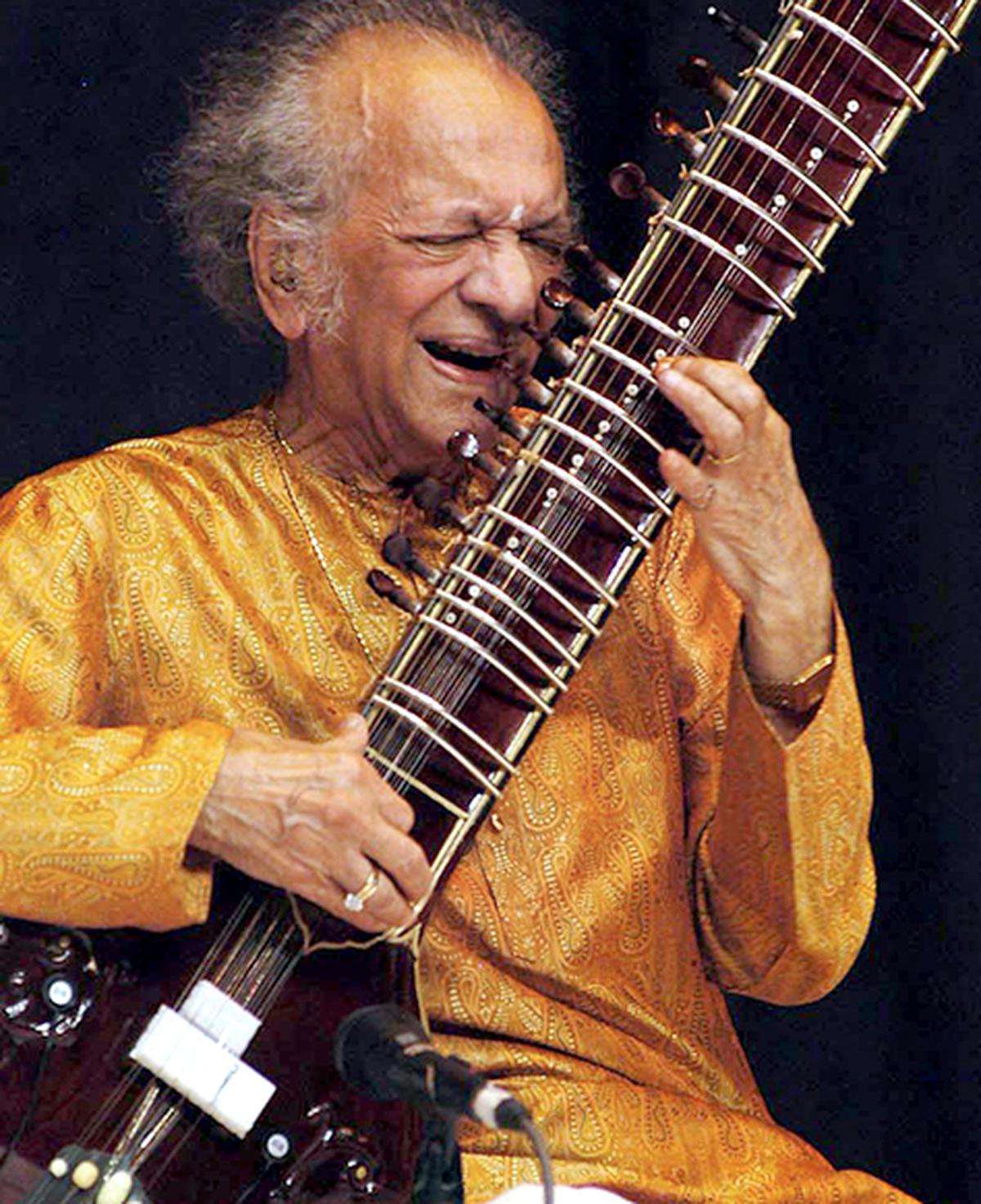
Sitar maestro Pt. Ravi Shankar .
| Photo Credit:
PTI
The 80-minute film covers aspects of Annapurna’s life, including controversial aspects of her stormy marriage (which ended in divorce in 1982), skims over her teaching techniques, features a heart-tugging excerpt from her diary in Bengali, and excerpts from an audio interview. There is a lot untouched, including her marriage in December 1982 to her disciple Rooshi Kumar Pandya.

Annapurna Devi with Pt. Ravi Shankar at a jugalbandi concert.
| Photo Credit:
Courtesy: Annapurna Devi Foundation
Nirmal Chander says she did not set out to make a biographical film. “For me, the film is about her legacy of teaching.” Yet, the film sticks mostly to the personal and does not really engage significantly with any disciples other than Pt. Hariprasad Chaurasia, Basant Kabra, Dr. Vinay Bharat Ram, Hemant Desai and Nityanand Haldipur.
This could be, perhaps, because Guru Ma had already focussed on her disciples, and her teaching technique.
Work on the film began 10 days before Annapurna’s death in 2018. There’s not a single shot of her, as Nirmal was not granted access. There are scenes, though, after her death, of her over-filled bedroom, crowded with evidence of memories of a long life. One wonders why her wish for privacy was not respected after her death.
This film dwells on the untold story of Annapurna Devi, as hinted to her disciples. Her diary might reveal more, but Nityanand, as chief trustee of the Annapurna Devi Foundation, has decided to not make it public for now.
And so, even after watching the film, Annapurna remains an enigma.

