

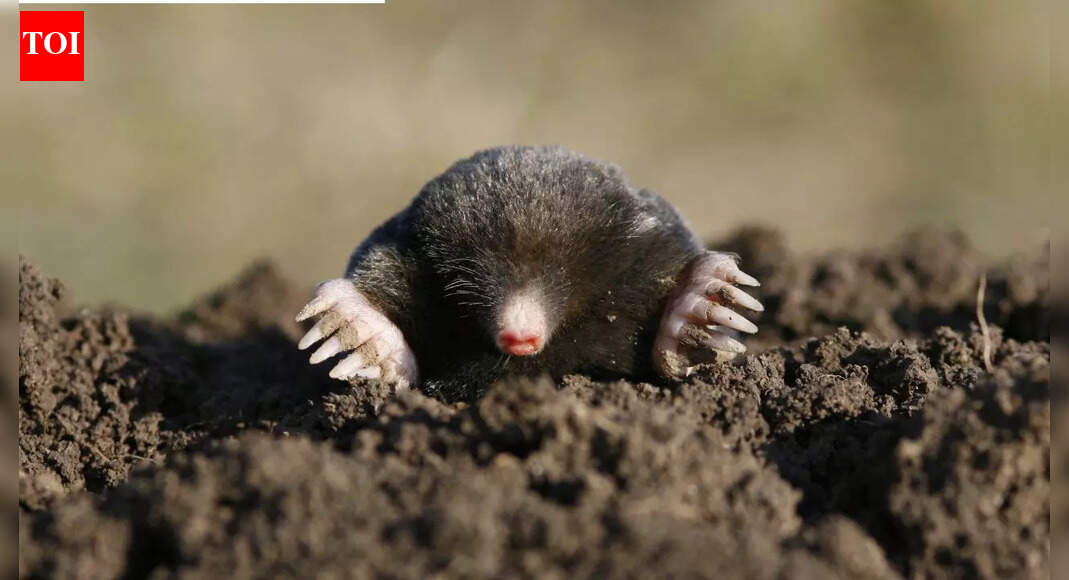
Moles may be small, but the damage they do to gardens and lawns can be quite significant. Most of the times their underground tunnelling results in raised ridges, loose soil, and ugly molehills that seem to have popped up overnight. Although a lot of people immediately take action once the damage becomes visible, nobody really thinks about what got these burrowing animals here in the first place. The truth is that your gardening habits may have attracted moles to your garden by producing perfect soil conditions for them to live in.There can be a number of reasons, such as abundant insects, wet ground, dense planting, and poor seasonal maintenance, that can unknowingly invite moles in just because of a few everyday mistakes. Knowing these triggers is the main thing if you want to keep control of the situation for a long time; thus, you will be able to protect your lawn and stop them from coming back again and again.
Garden conditions that encourage mole burrowing and nesting
Moles thrive when lawns provide easy food, moisture, and shelter. Here are the most common mistakes that unknowingly invite them in:Letting insects thrive beneath your lawnMoles diet is mainly insects, grubs, and earthworms. They actually eat up to 80 percent of their body weight every day, which makes them constantly search for food. A yard with a good insect population can become a mole haven in a very short time. Sometimes, even lawns that look healthy and are not damaged can have grubs hidden under the soil. When moles find a steady food source, they will dig continuously, thus making your lawn look ridged and spotted with mounds. To lower insect populations, you should take care of grubs with beneficial nematodes in the early summer, which is usually from mid-June to mid-July in most areas of the United States. For pests like billbugs, insect treatments done at the beginning of the season are more efficient. At first, be ready for more tunnelling, as moles will become more active while food sources are getting scarce.Overwatering your grassMoles like soil that is soft and wet, as it helps them to make their tunnels fast and with little effort. Lawns that have been watered too much are great places to dig in, and so are gardens that have a few insect pests.Typically, lawns in the US require just about 1 to 1.5 inches of water per week, and this amount also includes rain. If you can see that your lawn is not flattened after you step on it, then it is obviously not in need of watering. A rain gauge or even a shallow baking dish can be used to measure rain and thus avoid overwatering.Creating too much shadeMoles usually prefer cool and shaded places where the earth is still damp for a long time. Lawns under trees, shrubs, or thickly grown garden beds are particularly mole-friendly areas because the soil does not dry out that fast.By pruning the branches of trees, thinning the shrubs, or cutting the overcrowded plants, you can let the sun’s rays come to the earth and make it less attractive for digging.Leaving fallen leaves on your lawnAs a matter of fact, leaves that have tumbled from the trees could be employed as natural mulch; however, they hold moisture and attract bugs while rotting. Those bugs, in turn, bring moles that go for the easy-to-get prey.In case moles are making a mess of your yard, be sure to rake off and get rid of fallen leaves without delay, particularly in fall and early winter. You can also compost the leaves, as far as the lawn is concerned, so that there won’t be a place for moles to come and feed under the grass.Neglecting the area around bird feedersMoles do not eat birdseed, but insects definitely do. If seeds are spilt and birds defecate on them, ants and other insects will be attracted to the mess. These insects will then attract moles to your yard.Do the cleaning of the earth under bird feeders, and think of a seed-catching tray as well. By cleaning regularly, you reduce the number of insects and eliminate another reason for moles to be in your place.Ignoring mole control during winterMoles are not hibernating animals. Even in the cold season, they keep digging their tunnels looking for food. If you give up on mole control during the cold period, they might settle in burrows for good and get ready for the mating season.Generally, in the US, moles mate in late winter, and the offspring are born in early spring. So taking measures against a possible mole infestation at any time of the year is a guard against a bigger mole problem when the temperature rises.Failing to block access under fencesMoles are great at digging tunnels, and they’ll use the easiest way to get into your yard. Fence lines are often the moles’ means of getting in.One way to stop moles from coming under your fence is to put metal protection there. To prevent the moles from going under, dig a trench about 12 inches deep and place an L-shaped sheet metal barrier solidly in the ground to fence off underground access.Allowing ants to multiplyMoles rely heavily on ants as a major part of their diet. On top of that, garden-friendly aphids, the droppings of birds, and some flowering plants can add to the attractiveness of your yard to ants.By employing slow-acting ant baits and also controlling the aphid population on plants, the number of ants can be lowered substantially. With fewer ants around, moles will be less likely to come to your place.Relying on ineffective home remediesNumerous house owners experiment with some organic repellents such as essential oils, cat litter, or even mole-repellent plants. Regrettably, the majority of these ways provide almost no or very little protection over time.These sources are more effective in a far safer way: by using traps, treating the soil, and putting up a physical barrier. Do not use contaminants that you pour into the tunnels to kill moles, as these can kill your pets, other animals, and the water that is under the ground.Providing ideal burrowing sitesMoles like to have a safe place for their nests, so you will mostly find them next to sheds, tree roots, fences, or high ground that is not easily flooded. Dropping the supply of hiding places, exposing food sources, and closing holes will keep moles from making your yard their home and reproducing there.Planting garden beds too denselyOvercrowded garden beds offer rodents ample cover and food supply in the form of insects, thus becoming a perfect habitat for moles. Besides, thick growth retains moisture in the soil and shields it from the sun. Simply cutting back the plants, ventilating the area, and putting wire mesh under the beds will go some way to stopping burrowing.Mole control is most effective if you use different methods at the same time. Just trapping will not keep new moles from coming. Barriers alone will not get rid of existing ones. To be most effective, use a combination of insect control, fencing barriers, and traps. Usually, a single mole can do so much damage that removing only one may be the solution to the whole problem.

