

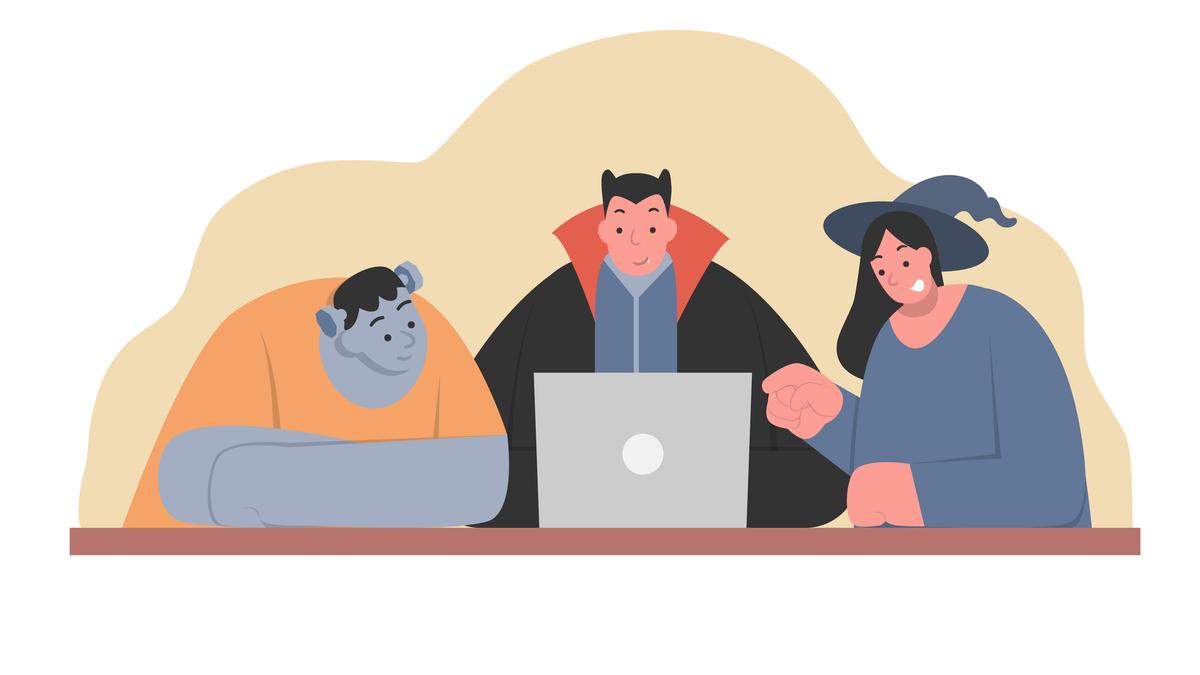
“Robust discussion goes on at dusk on the best news stories to be featured.”
| Photo Credit: Getty Images/iStockphoto
If Count Dracula should ever find a need to make a living, he would do well to apply for the role of a sub-editor in a newspaper. He could catch up on his beauty sleep during the day and be ready, as twilight falls, to taste copy, letting the words swirl in his mouth before prepping to feed on the news frenzy.
Sub-editors are, as Byron might describe, creatures of the night, “mellowed to a tender light that heaven to gaudy day denies”. We wake up and let coffee run in our veins, catching up on the day’s news and getting ready for the story list that will inevitably shape-shift before we can pin down the front-page line-up.
To reporters, those unfathomable creatures of the light, every story they write is important. But it is the sub-editors who must curate them, negotiating the tightrope between content and form, and story and space. Not for us the mad dash for a scoop or a quote; the nocturnal hunt is of a different kind. Like an owl waiting for the tiniest movement in the grass, we must remain alert to the possibility of errors, double-check facts, and find the right words for a headline that will fit a three-column, two-deck space in a 30-point size. This is why a reader may find ‘bats for’ as the go-to phrasal verb in a headline instead of ‘recommends’, which takes up far more space. Or why the verb ‘flays’ is used more frequently than the sober ‘criticises’.
Multitasking while watching the clock is par for the course. Copy must be subbed for the Internet, a different headline worked out for print, pictures added, captions given, paragraphs trimmed, the revisions played back to the reporter, layouts swapped if a more important story arrives, and pages scrutinised before they are released and typeset. Indeed, we still use the word ‘typeset’ that originates from the letterpress era, when type was composed by hand for each page.
All these tasks need to be done at an hour when most people are tucked into bed, deep in slumber. This is when we need to be most active, keep our focus sharp and stay alert to the possibility of a late news break or, god forbid, a missing ‘l’ in the word ‘public’.
Such an environment is a happy place for members of the nocturnal tribe, who work best when the stars twinkle. Our headlines for the ‘city edition’ (that takes shape after midnight) have more zing, the team’s wisecracks have more sting, and leftover snacks get finished in a blink.
Our doctors are not pleased with the schedules we keep. You are going against the natural circadian rhythm, they say. There will be long-term health problems, they warn. Melatonin patterns will be disrupted, they counsel. But what if you are already on a delayed phase and have been a natural night owl? Become a sub-editor in a newspaper. Everyone has a place under the moon.
It is likely that you will not have many friends outside work. Pleasant evenings on the beach or going to a play at a theatre will have to be scheduled for rare days off. Relationship problems could creep in. Family may disown you because you rarely turn up for wedding ceremonies in the mornings.
Still, sub-editors persist. There is satisfaction in producing an edition that regular folks will wake up to in the morning, in wrapping up the minutiae, in having the last word.
When our work is done and we are on the way home in the office cab, we have a glimpse of the other night workers: sanitation staff sweeping roads, call centre employees huddled near a late-night tea shop, bleary-eyed security guards, factory-workers, police personnel, and more. Unsung heroes who work out of sight, whose names may not light up bylines, but who are the keepers of the fire and the gatekeepers of content.
The hands of the clock show it is 4 a.m., or maybe it is 5. The sun will rise, the sub-editor will sleep.
Published – December 19, 2025 12:40 am IST

